Train fault on East-West Line sparks confusion amid lack of SMRT updates
A train fault near Aljunied station on 2 December 2025 disrupted evening peak services along Singapore’s East-West Line, with commuters reporting confusion, delays and a lack of official updates from SMRT.
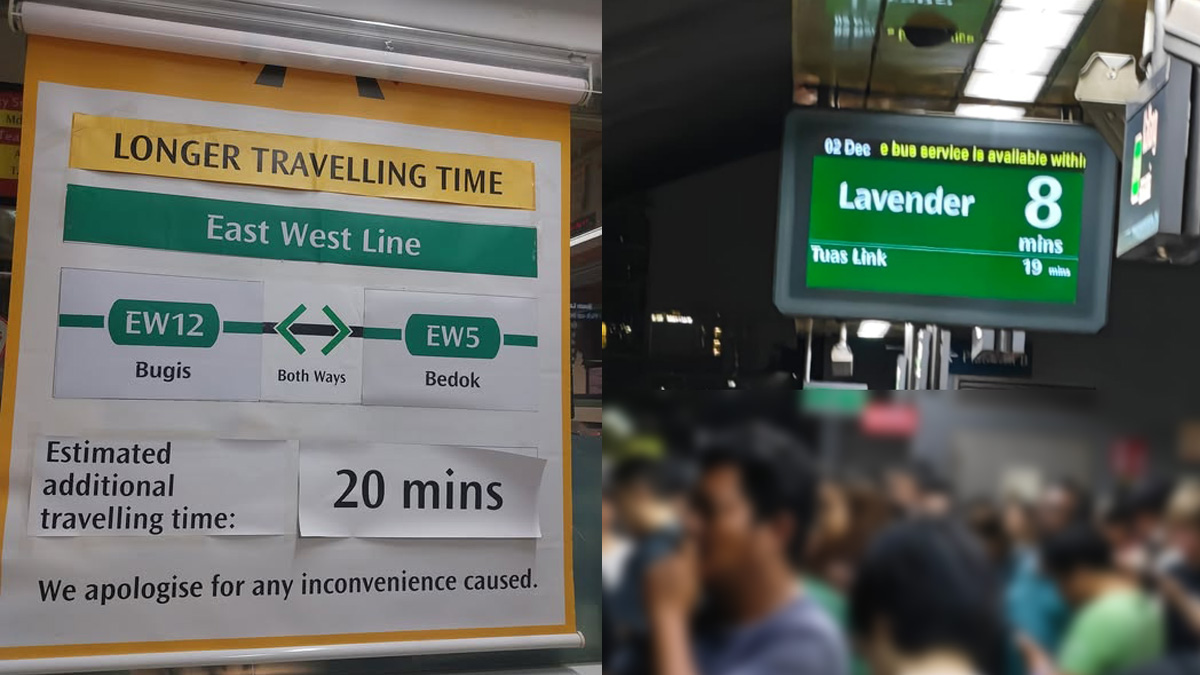
- A train fault near Aljunied station on 2 December caused delays between Bugis and Bedok MRT stations.
- Commuters reported a lack of social media announcements from SMRT, leading to confusion and crowding.
- Questions have been raised about SMRT's adherence to LTA’s communication requirements.
A train fault along Singapore’s East-West MRT Line during peak hours on 2 December 2025 led to significant disruptions, leaving many commuters stranded and frustrated due to unclear and delayed communication from SMRT, the operator of the affected line.
The fault, which was first publicly announced at Lavender MRT station around 8.00pm, was attributed to a track fault near Aljunied station. SMRT’s station announcements advised commuters to expect an additional 20 minutes of travel time between Bugis and Bedok stations and informed them that a free shuttle service was being arranged.
However, no corresponding update was posted on SMRT’s social media platforms during the incident, prompting commuters to question the company’s responsiveness.
Ground-level confusion and congestion
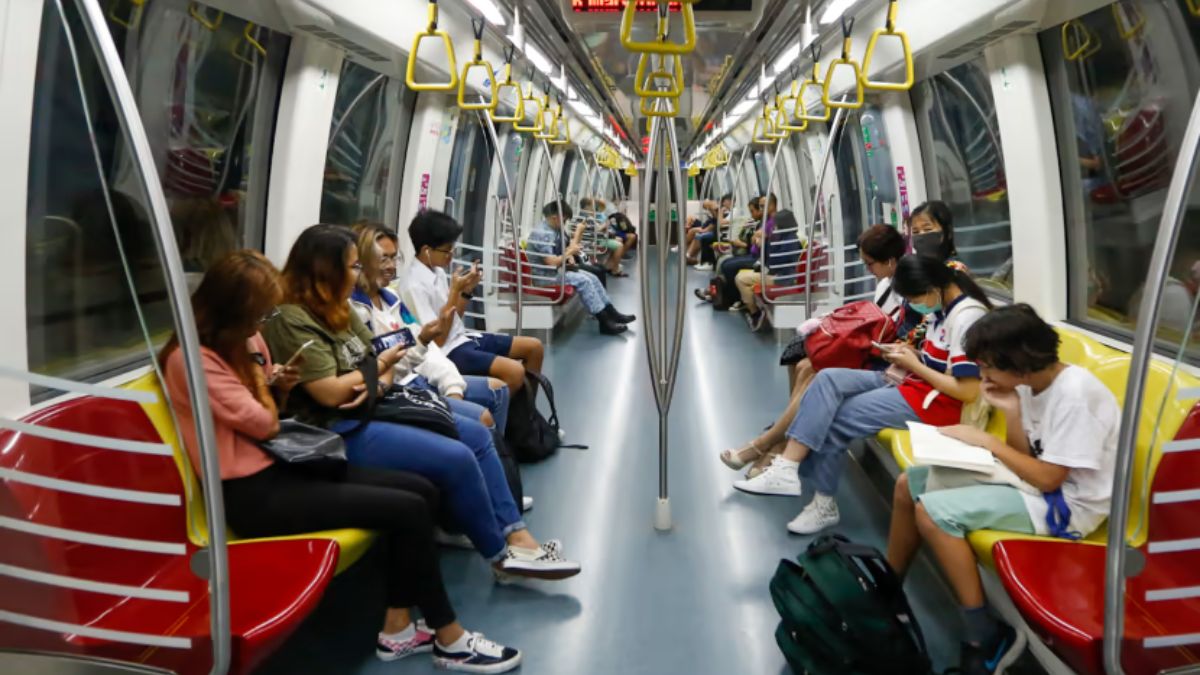
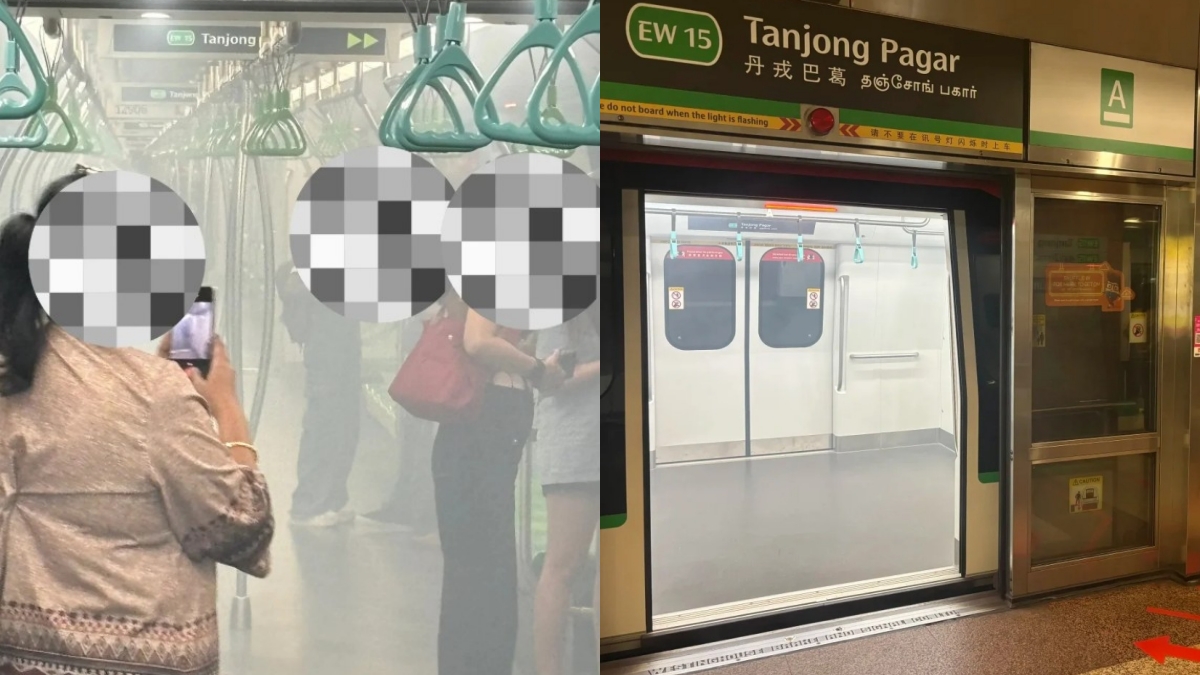
Images and eyewitness accounts described crowd control measures and growing commuter frustration across several stations.
One commuter, speaking to The Online Citizen (TOC), said, “I want to go from Eunos to Jurong. I have to change a few times — Eunos to Paya Lebar, Paya Lebar to Lavender, Lavender to…,” illustrating the inconvenience caused by the unanticipated route disruptions.
The same commuter shared an audio clip of an SMRT station announcement confirming the fault near Aljunied station and the delays along the affected stretch. Still, others pointed to inconsistencies in SMRT's communication.
Social media criticism and conflicting responses
As the incident unfolded, one commuter left a comment on SMRT’s most recent Facebook post, stating:
“Train fault at EW line. Currently at Lavender MRT and no trains going to the west. Why wasn’t this announced?”
In response, SMRT’s social media team wrote: “To facilitate the ongoing track works to connect the East-West Line to the new East Coast Integrated Depot, we need to regulate train services along the line. This includes turning around some trains at Bugis. Westbound train services are still available.”
The response triggered further backlash from the public.
Another commuter replied, “Your comment is a blatant lie! At about 2020 hrs, there was an announcement at Kallang MRT that there is a track fault near Aljunied MRT.”
The original commenter also responded later in the night, stating that MRT staff had confirmed the fault and that westbound trains were unavailable for a significant period.
“What we hope for is transparency and that announcements are made promptly so that commuters can make informed choices,” the comment read.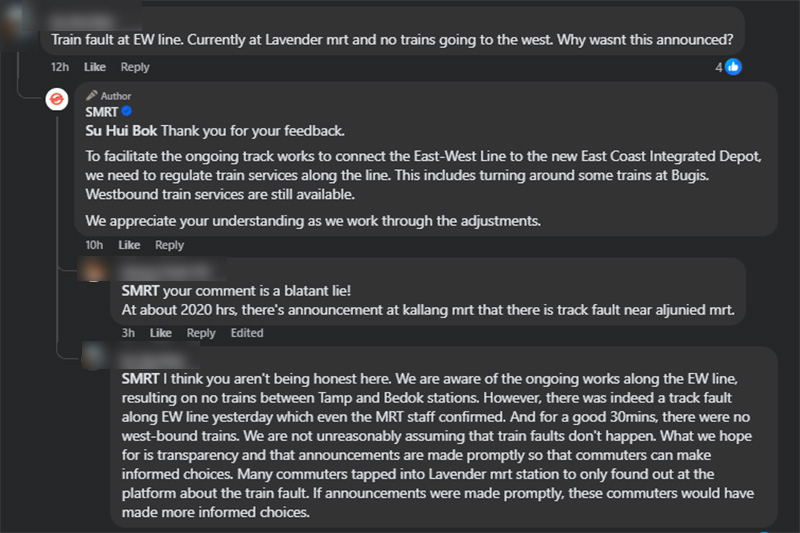
Communication standards and regulatory expectations
According to the Land Transport Authority (LTA), train operators are required to inform commuters of any MRT service delays exceeding 10 minutes through train and station announcements, as well as through mainstream and social media platforms. These standards were announced on 30 November 2017.
In September 2025, Chua Kheng Wee Louis, a Member of Parliament for Sengkang GRC from the Workers’ Party, asked the Acting Minister for Transport about compliance with this communication requirement. Specifically, he queried whether any operators had failed to comply and if penalties had been imposed.
In reply, Acting Minister Jeffery Siow stated:“The train operators have been informing commuters of service delays in excess of ten minutes, as required by LTA. In response to Mr Louis Chua’s question, LTA has not had to impose any penalties on this in the past five years. But this is still only a basic requirement, and I think we can do better.”
Rail reliability and recent history
Singapore’s rail system has faced multiple disruptions in recent months. Between July and September 2025 alone, at least 15 delays or interruptions were recorded across the MRT and LRT networks. In response, the LTA established a Rail Reliability Taskforce in October 2025, which includes a five-member Independent Advisory Panel chaired by LTA chief executive Ng Lang.
A similar incident occurred just two weeks earlier, on 18 November, when a fault on the Thomson–East Coast Line caused delays of up to 30 minutes between Caldecott and Gardens by the Bay stations. As with the latest fault, commuters took to social media to criticise the lack of timely updates from SMRT.
And earlier on 11 November, commuters reported delays of up to 25 minutes on the East–West Line between Tanah Merah and Pasir Ris due to a track point fault, with no corresponding updates from SMRT on its social media channels.
According to LTA’s latest rail reliability figures released on 14 November, the MRT network recorded a second consecutive month of declining reliability. From October 2024 to September 2025, trains averaged 1.67 million train-kilometres between delays of more than five minutes.
While long-term investments — such as the replacement of over 1,100 track circuits under the CBTC signalling system — aim to improve fault detection and response, the recent spate of incidents suggests continued communication issues during disruptions.
Update: SMRT confirms track point failure; questions remain on communication
Responding to queries from The Straits Times on 3 December, SMRT Trains president Lam Sheau Kai confirmed that a track point failure occurred near Aljunied MRT station at approximately 7.50pm on 2 December.
A track point failure involves a malfunctioning railway switch, which is a critical component that allows trains to change tracks.
According to Lam, a shuttle train service was deployed to operate between Lavender, Kallang, Aljunied, and Paya Lebar stations. This arrangement resulted in an additional 20 minutes of travel time along the affected stretch of the East-West Line (EWL).
Lam added that train services on the rest of the EWL operated normally, except for the pre-scheduled service suspension between Bedok and Tampines stations, and between Tanah Merah and Expo stations. These sections remain closed until 8 December for ongoing track works.
“Our staff and engineers responded promptly to rectify the fault, and normal train services progressively resumed from 9.15pm,” he said. “We thank commuters for their patience and understanding.”
Despite the clarification, The Straits Times reported that SMRT did not respond to questions on why no public announcement was made via its social media channels during the disruption. This omission has remained a central point of public concern.