China intensified cognitive warfare against Taiwan with AI and disinformation in 2025
Taiwan’s National Security Bureau reported a sharp rise in China-linked fake accounts and disinformation in 2025, warning of AI-driven influence operations targeting public opinion and national unity.

- Taiwan’s National Security Bureau recorded a 62% rise in fake online accounts used in cognitive warfare by China in 2025.
- China’s tactics used AI, big data, and disinformation to influence public opinion and undermine Taiwan’s democracy.\
- The operations aimed to weaken Taiwan’s resistance, divide society, and influence international allies.
Taiwan’s National Security Bureau (NSB) has reported a marked escalation in China’s cognitive warfare operations, citing over 45,590 fake online accounts in 2025—an increase of more than 60% from 2024’s 28,216.
The report, Analysis of China’s Cognitive Warfare Tactics Against Taiwan in 2025, was released by the NSB on 11 January 2026. It details a coordinated and increasingly sophisticated effort by the Chinese Communist Party (CCP) to manipulate public discourse and perception in Taiwan through a government-civilian partnership model.
According to the NSB, China’s strategy integrates the resources of its party, government, military, and private sector enterprises to conduct influence operations. These include leveraging artificial intelligence, automated bots, disinformation campaigns, and the hijacking of legitimate platforms.
In 2025, over 2.314 million pieces of disinformation were recorded, up from 2.159 million the previous year. More than 3,200 of these were reported to government agencies for real-time mitigation.
The report identifies four key strategic objectives of China’s operations:
-
Exacerbating internal divisions in Taiwan.
-
Weakening Taiwanese resistance to external threats.
-
Influencing the resolve of Taiwan’s international allies.
-
Promoting acceptance of Beijing’s stance on cross-strait relations.
To achieve these goals, China employed five major tactics:
1. Data-driven surveillance and targeting:
The Cyberspace Administration of China (CAC), Ministry of State Security, and the Central Military Commission’s Political Work Department directed Chinese tech firms—including Zhongke Tianji, Meiya Pico, and Womin Gaoxin—to use web crawler technologies to gather data on Taiwanese political figures and opinion leaders. This data, including social media engagement and polling trends, informed targeted propaganda efforts.
2. Multi-channel disinformation dissemination:
Fake news websites, content farms, and spoofed media outlets such as “Aisa Korea” and “Austria Weekly” were used to spread state-approved narratives. Public relations firms linked to China created Facebook content farms and entertainment-focused accounts on Threads and X to attract followers, later injecting political content into their feeds.
3. Infiltration of discourse via abnormal accounts:
China deployed over 180 social media platforms in more than 20 languages through its “Dragon Bridge” Internet water army. These included fake user personas on Taiwanese forums such as PTT and platforms like Facebook and Pixiv, used to sow division and escalate hostile exchanges between users.
4. Use of AI-generated audio-visual disinformation:
Chinese enterprises developed AI models to automate video generation and disseminate tailored propaganda. Some companies also posted job adverts to collect recordings of Taiwanese voices in Mandarin, Hokkien, and Hakka, potentially for synthesising fake voiceovers to increase the credibility of disinformation.
5. Cyber intrusions and account hijacking:
During China’s April 2025 military exercises, over a dozen PTT accounts were hijacked to spread false claims, including reports of Chinese warships in Taiwan’s 24-nautical-mile zone and alleged blockades of gas shipments. These operations utilised hacked Internet of Things devices and rented overseas servers as proxies.
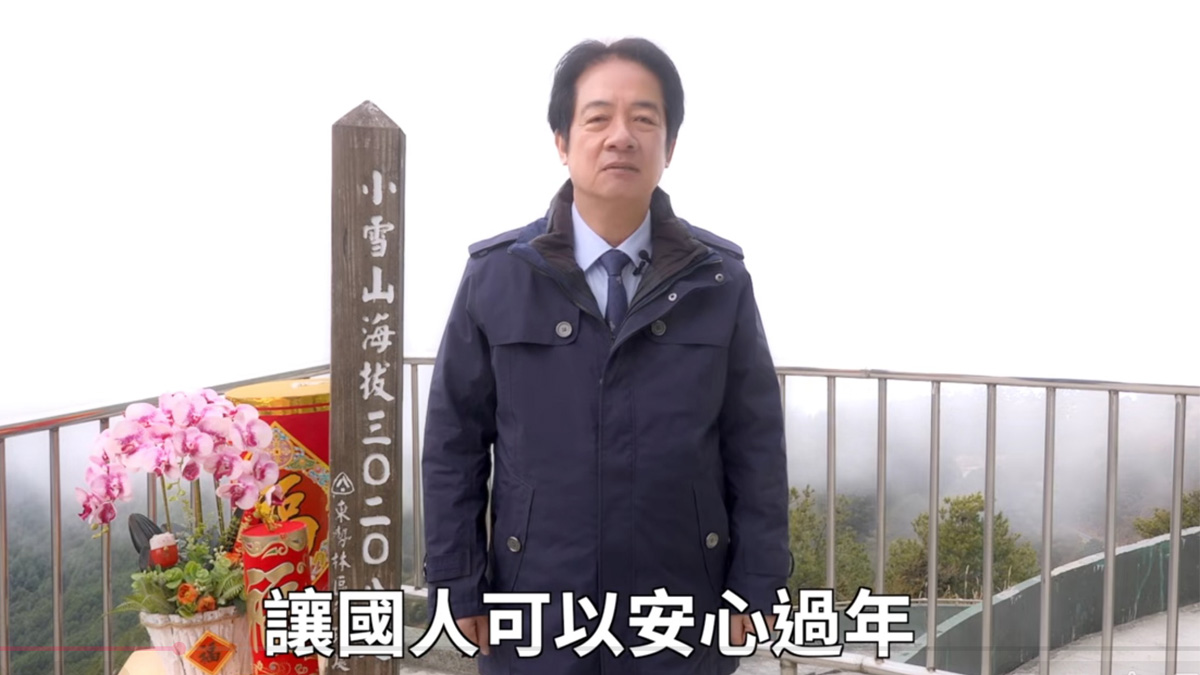
The NSB stated that such tactics demonstrate the CCP’s broader ambition to erode trust in Taiwan’s institutions and leaders, particularly targeting President William Lai, the Taiwanese military, and the United States.
Taiwan’s intelligence community reported that it intercepted over 4.5 million disinformation items and fake accounts in 2025, a sharp uptick that reflects the growing scale and sophistication of China’s operations.
China’s cognitive warfare efforts are no longer limited to Taiwan. The NSB noted that democratic governments and think tanks in the US, EU, Australia, and France have also issued warnings. These include reports from the Swedish Security Service, the EU External Action Service, and the US Office of the Director of National Intelligence, highlighting China’s increasing reliance on AI-powered influence campaigns and international disinformation tactics.
Taiwan, as the front line of this global cognitive conflict, conducted more than 80 security dialogues and intelligence exchanges with international allies in 2025, aiming to strengthen a collaborative response network.
Moving forward, the NSB pledged to enhance inter-agency reporting mechanisms, increase cooperation with third-party fact-checking bodies, and push social media platforms to remove disinformation promptly.
These efforts, it said, are crucial to defending Taiwan’s democratic discourse and ensuring a clean information environment, free from foreign manipulation.