Bangkok’s PM2.5 levels exceed safety limits in all districts, posing health risks
Bangkok’s PM2.5 levels surged above safe limits on 1 February, with health risks recorded city-wide. A winter temperature inversion likely caused the haze to settle, trapping pollution and intensifying air quality issues.
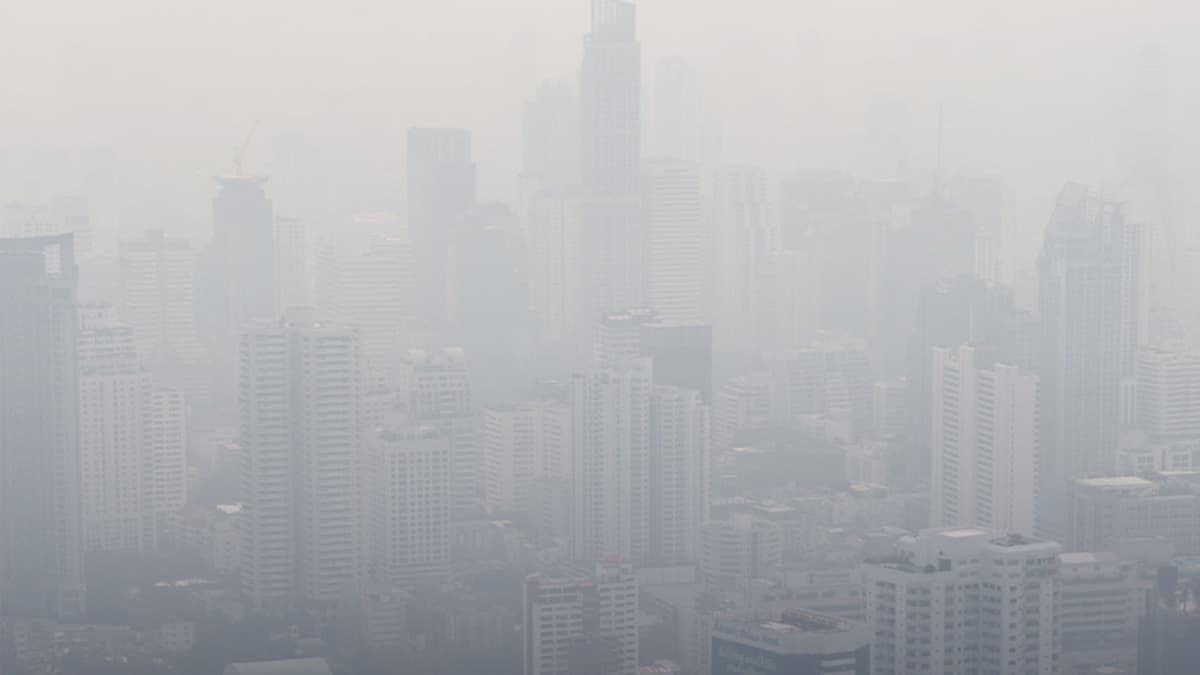
On 1 February, 2026, the Bangkok Air Quality Information Centre reported that PM2.5 levels had exceeded the safety standard of 37.5 micrograms per cubic metre (µg/m³) across all districts in Bangkok. The city-wide average reached 44.8 µg/m³.
Twelve districts recorded particularly high concentrations, with Chatuchak reaching 54.1 µg/m³, followed by Lat Krabang (53.4 µg/m³), Bang Kho Laem (53.1 µg/m³), and others. These figures place the capital firmly within the orange-level air quality category, which poses health risks for the general public and especially for vulnerable groups.
According to environmental and meteorological assessments, the likely cause of the severe haze was a temperature inversion. This occurs when a layer of cooler air becomes trapped near the ground beneath a layer of warmer air, preventing the normal upward movement of air and pollutants. As a result, PM2.5 particles from traffic, construction, and biomass burning become concentrated at breathing level.
This inversion was likely triggered by a seasonal surge of colder air from the northeast, a common winter pattern in the region. In addition, a sea breeze from the Gulf of Thailand may have counteracted the usual northeast monsoon airflow, pushing polluted air back into the city rather than dispersing it. These combined conditions created a stable atmospheric layer that effectively trapped airborne particles over Bangkok.
Ordinarily, such winter haze is a natural seasonal occurrence in Southeast Asia. However, the presence of PM2.5—fine particulate matter less than 2.5 micrometres in diameter—transforms this meteorological event into a serious health hazard. These particles can penetrate deep into the respiratory system, leading to increased risks of respiratory and cardiovascular disease.
Breakdown of PM2.5 by region:
-
Northern Bangkok: 45 – 54.1 µg/m³
-
Eastern Bangkok: 39.4 – 53.4 µg/m³
-
Central Bangkok: 35.9 – 50.2 µg/m³
-
Southern Bangkok: 35.5 – 53.1 µg/m³
-
Thonburi North: 37.8 – 50.7 µg/m³
-
Thonburi South: 33.8 – 45.1 µg/m³
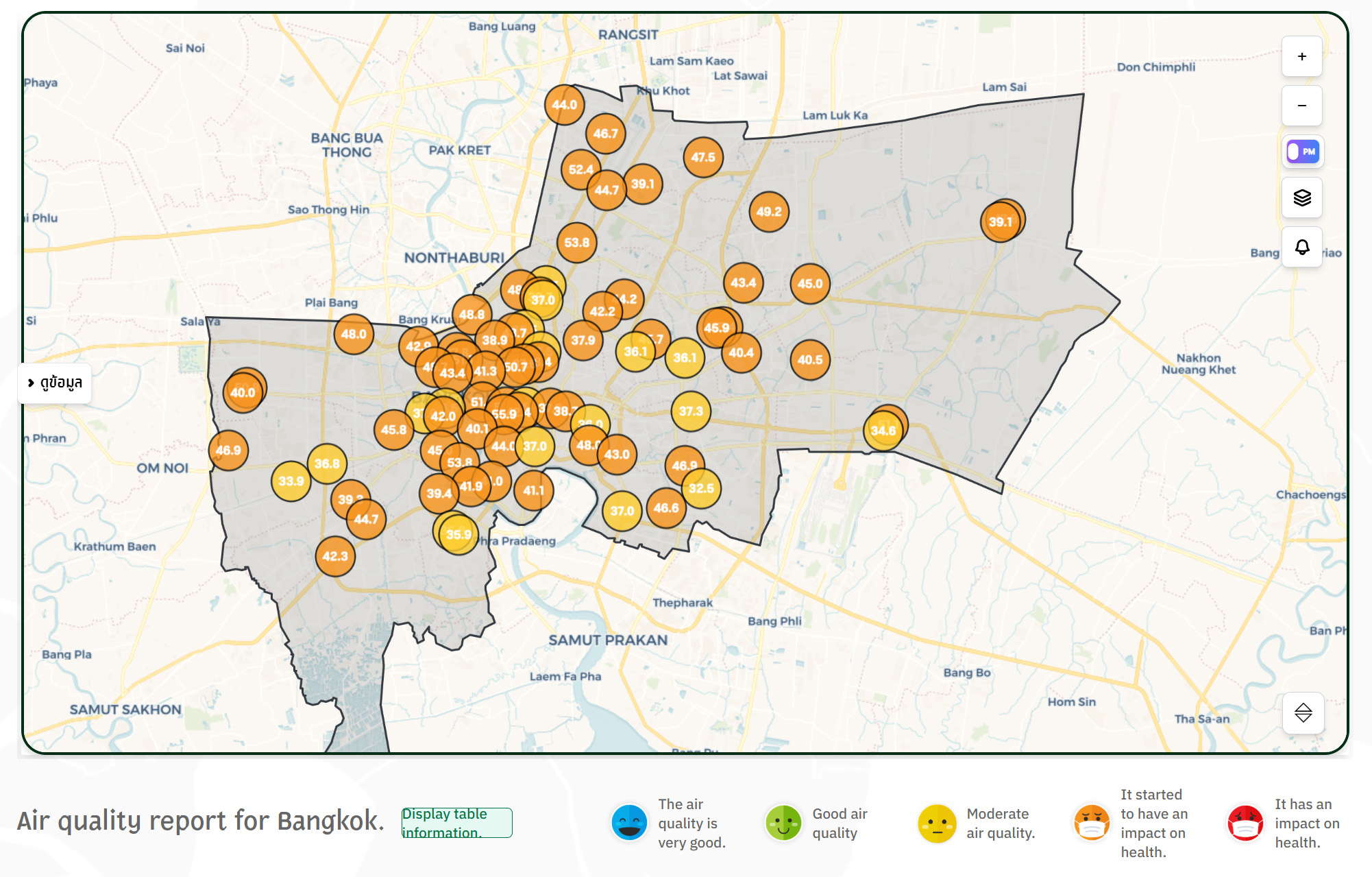
The Bangkok Metropolitan Administration also reported that 36 areas recorded levels above standard, placing Bangkok 12th among the world’s most polluted cities on that day.
Health authorities have issued public advisories recommending the use of PM2.5-rated protective masks, such as N95 respirators. People are also encouraged to limit strenuous outdoor activities and monitor symptoms such as coughing, breathing difficulties, and eye irritation. Individuals with chronic illnesses, children, and the elderly are especially advised to remain indoors.
Despite widespread awareness, a recent survey by the Health Service Support Department found that cost and discomfort hinder widespread mask adoption. Out of 6,787 respondents aged 15–59:
-
93.31% were aware of the health threats posed by PM2.5.
-
77.22% recognised N95 masks as effective.
-
71.22% reported discomfort or difficulty breathing while wearing them.
-
51.60% preferred commuting by private vehicle, despite public health guidance.
Arkhom Praditsuwan, Director-General of the department, emphasised the urgent need for education and behavioural change, noting that individual decisions continue to affect both personal health and city-wide pollution levels.
Bangkok's recurring winter smog highlights the pressing need for long-term mitigation, including regulation of emissions, discouragement of biomass burning, and promotion of clean transport.