Thailand's EC tackles vote-buying claims of up to 7,500 baht per voter ahead of 2026 poll
Thailand's Election Commission is intensifying prevention efforts after a private-sector survey suggested vote-buying offers could reach 7,500 baht per person. The EC maintains the figure is only an estimate and is deploying rapid-response teams to high-risk areas.
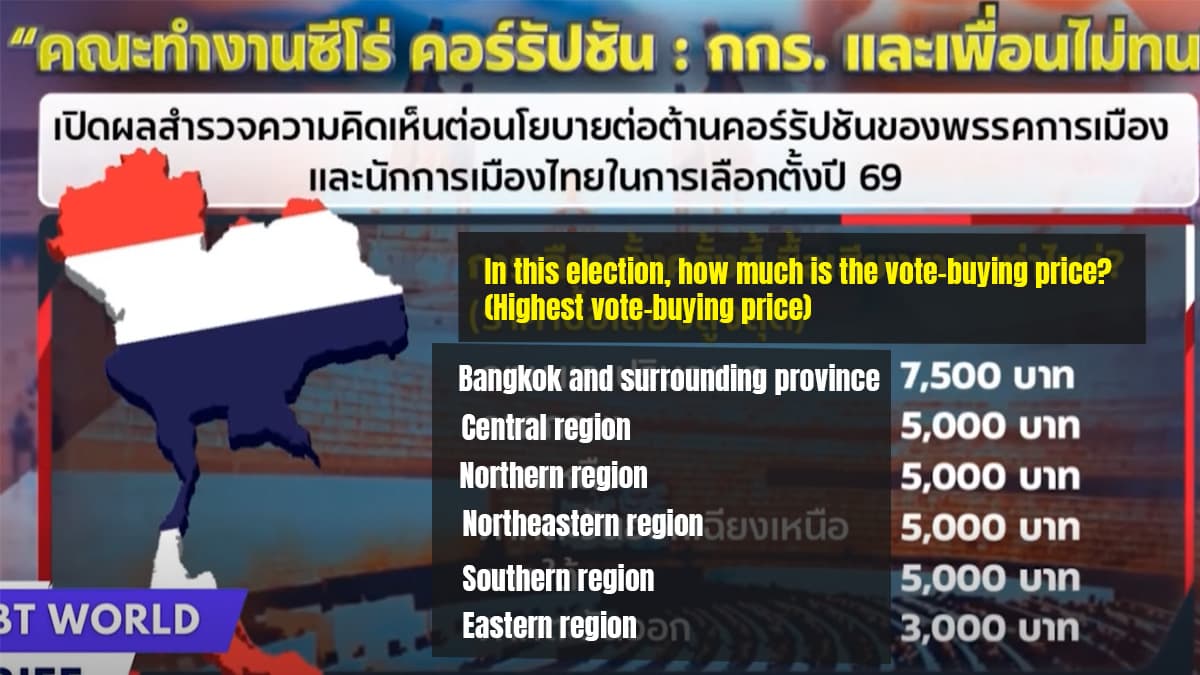
- A private-sector survey claims vote-buying offers in Thailand’s upcoming election may reach 7,500 baht per voter.
- The Election Commission (EC) insists the figure is an estimate and is deploying deterrence and intelligence measures.
- EC aims for a high voter turnout and a clean election outcome, urging votes based on policy, not cash.
The Election Commission (EC) of Thailand is ramping up measures to prevent vote-buying ahead of the general election scheduled for 8 February 2026, following the release of a private-sector survey suggesting that such offers may reach as high as 7,500 baht per person.
The claim originates from a nationwide survey conducted by the Joint Standing Committee on Commerce, Industry and Banking (JSCCIB), involving 4,814 participants, including members of the public and business sector. According to Assoc Prof Sauwanee Thairungroj of the University of the Thai Chamber of Commerce, the highest alleged rate of vote-buying was reported in Bangkok and surrounding provinces, where payments reportedly reached 7,500 baht per voter.
The EC has not verified these amounts. Sawaeng Boonmee, secretary-general of the EC, stated that the figures may be estimates or academically framed assumptions, and not precise indicators of actual transactions.
While acknowledging that vote-buying may take place, Sawaeng stressed that such practices must not become decisive in determining election outcomes. “It is our duty to ensure that these incidents do not become significant in determining election outcomes,” he said.
To manage electoral risks, the EC has deployed intelligence teams and rapid-response units across various provinces. Constituencies are categorised into red, yellow and white zones, with red zones indicating intense political competition and higher monitoring, though not necessarily confirmed wrongdoing.
Sawaeng said the EC’s operations are focused on prevention, rather than relying solely on reports. “Stories are one thing—sometimes they are about local politics or power games—but what we do is operational,” he said.
He added that the EC would not be inviting JSCCIB researchers to provide further details, as the Commission already possesses sufficient intelligence. Collaboration with civil authorities and area-based networks is ongoing to deter malpractice.
According to the JSCCIB survey, 42% of respondents believed that vote-buying would be widespread in the upcoming election. However, 69% said they would refuse cash offers. Additionally, 71.9% stated they would not vote for candidates offering money, citing corruption concerns and lack of competence.
Despite this, 28.1% admitted they might vote based on familiarity, influence, or financial need, suggesting ongoing vulnerabilities in the electoral environment.
In response to the findings, Sawaeng reportedly issued messages through internal communication channels, urging EC officials to actively campaign against vote-buying. He said the Commission is committed to holding an election that is widely accepted and conducted in a clean and transparent atmosphere.
The EC also aims for a high voter turnout, anticipating participation will exceed the 75% turnout recorded in the previous general election. Sawaeng reiterated that voters should choose parties and candidates based on policy platforms and leadership capability, not monetary incentives.
Public expectations toward political reform were also reflected in the JSCCIB survey. Respondents called for concrete anti-corruption measures, including transparent asset declarations, the removal of corrupt politicians, and severing ties with illicit or “grey” business networks.
However, most participants expressed doubt that political parties would meaningfully implement such reforms.
Sawaeng noted that electoral offences could be committed by candidates, citizens, or even election officials, and stressed the need for vigilance at every level. “We do not want that to happen because it will make the election result unacceptable,” he said.