Trump signals possible military option to acquire Greenland, escalating tensions with NATO
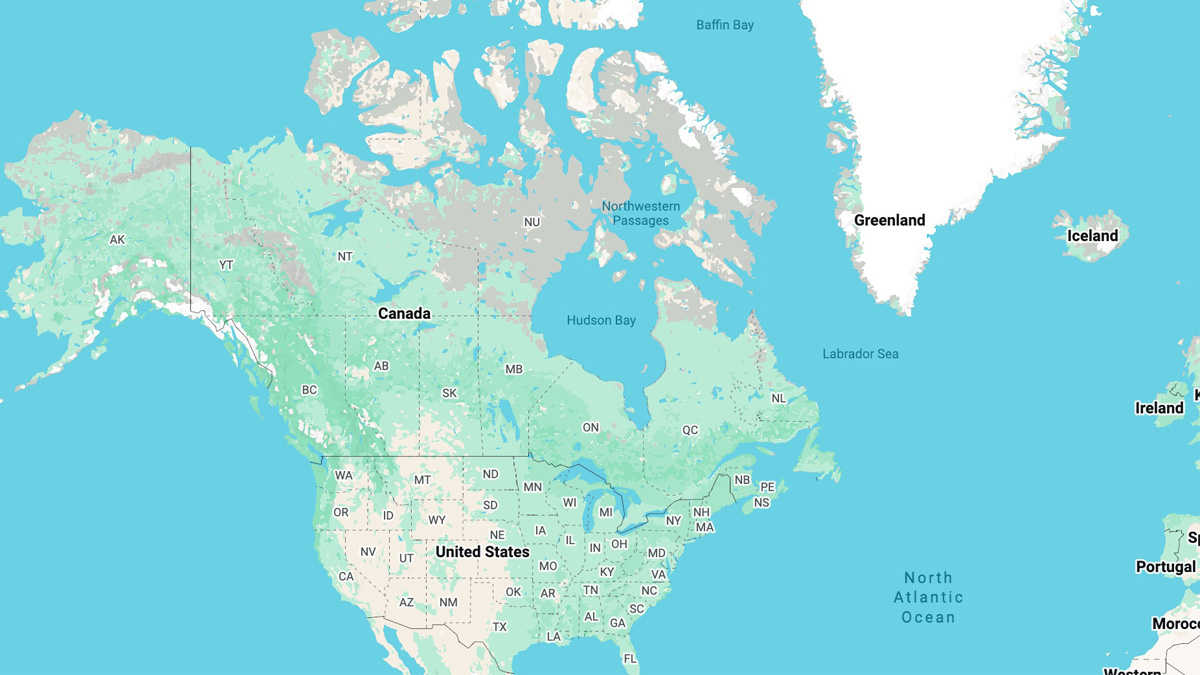
US President Donald Trump has reignited his ambition to acquire Greenland, citing US national security concerns. The White House has not ruled out using military force, prompting firm pushback from Denmark, Greenland, and European NATO allies.
- Donald Trump has revived efforts to acquire Greenland, calling it a US national security priority, and has not ruled out military action.
- Denmark and Greenland firmly rejected the idea, with European NATO leaders issuing a joint statement defending Greenland’s sovereignty.
- Tensions are heightened following the US military’s intervention in Venezuela and growing concerns over Trump’s Arctic ambitions.
As US President Donald Trump intensifies his focus on acquiring Greenland, tensions between the United States and key NATO allies are deepening.
The White House confirmed on 6 January, 2026, that the option of using military force remains "on the table," marking a significant escalation in rhetoric surrounding the autonomous Danish territory.
White House Press Secretary Karoline Leavitt told AFP and CNBC that “acquiring Greenland is a national security priority of the United States,” referencing the Arctic’s growing geopolitical importance, particularly against the backdrop of Russian and Chinese interests.
“The president and his team are discussing a range of options to pursue this important foreign policy goal,” Leavitt said. “Utilising the US military is always an option at the Commander in Chief’s disposal.”
These remarks follow the recent US military intervention in Venezuela, where American forces removed President Nicolás Maduro from power. Trump subsequently stated that control of Greenland may be decided “in about two months,” once Venezuela is stabilised.
Firm opposition from Denmark and Greenland
The governments of both Greenland and Denmark swiftly rejected the idea of ceding control to the United States. Greenland’s Foreign Minister Vivian Motzfeldt expressed frustration over the lack of dialogue, stating on social media that efforts to meet US Secretary of State Marco Rubio throughout 2025 had been unsuccessful.
Greenland’s Prime Minister Jens-Frederik Nielsen reiterated that “the island is not for sale,” adding that decisions regarding its future rest solely with the Greenlandic people.
Denmark’s Foreign Minister Lars Løkke Rasmussen called for a meeting to clear up “certain misunderstandings,” but confirmed that no engagement from Washington had materialised.
On 6 January, a joint statement was issued by the leaders of Britain, Denmark, France, Germany, Italy, Poland, and Spain. It reaffirmed support for “sovereignty, territorial integrity and the inviolability of borders,” emphasising that “Greenland belongs to its people.”
The statement underscored the strategic significance of the Arctic, describing its security as “critical for international and transatlantic stability.” It also reminded that Greenland, as part of Denmark, is covered by NATO’s collective defence commitments.
Rising unease within NATO
While European leaders voiced concern diplomatically, some sought to downplay the growing crisis.
French President Emmanuel Macron, attending Ukraine peace talks in Paris, said, “I cannot imagine a scenario in which the United States of America would be placed in a position to violate Danish sovereignty.”
UK Prime Minister Keir Starmer said his position was reflected in the joint statement, though he declined to comment further during a public appearance.
Security expert Marc Jacobsen, of the Royal Danish Defence College, described Trump’s repeated interest in Greenland as “like a broken record,” pointing out that the idea was floated during Trump’s first term as well.
Trump has criticised Denmark’s ability to secure Greenland, at one point claiming the country had only “bought one dog sled recently.” In reality, Copenhagen has significantly increased Arctic security investments, allocating approximately 90 billion Danish kroner in the previous year.
US domestic reactions and legal challenges
Domestically, reactions to Trump’s statements were deeply divided. Representative Jim McGovern of Massachusetts remarked that the president had “lost his damn mind,” while cautioning that Trump’s unpredictable nature made the threats plausible.
Senator Chris Murphy of Connecticut warned that NATO obligations under Article 5 would still apply, even if the aggressor were a fellow NATO member.
“This is not actually something to laugh about,” Murphy said. “I think he’s increasingly serious.”
Senator Ruben Gallego of Arizona announced plans to introduce a congressional resolution aimed at blocking any potential military action against Greenland.
“WAKE UP. Trump is telling us exactly what he wants to do,” Gallego said in a post on X. “We must stop him before he invades another country on a whim.”
Broader implications and Arctic geopolitics
Greenland, which has a population of approximately 57,000, holds vast untapped reserves of rare earth minerals. As climate change accelerates ice melt, the Arctic is becoming increasingly accessible for shipping and resource exploration—drawing the interest of global powers.
The United States already operates Thule Air Base in northern Greenland, underscoring the island’s longstanding strategic role in American defence infrastructure.
According to The Wall Street Journal, Secretary of State Marco Rubio privately told lawmakers that the administration’s objective is to purchase Greenland, not seize it.
Nonetheless, the open discussion of military options has cast a shadow over NATO cohesion and raised new questions about the boundaries of US foreign policy under Trump’s leadership.