Prabowo to sign Board of Peace charter in Washington as Indonesia seals US trade deal
President Prabowo will attend the inaugural Board of Peace summit in Washington and is expected to sign a reciprocal trade tariff deal with the US. The initiative has sparked domestic debate over governance, Gaza policy and geopolitical risks.
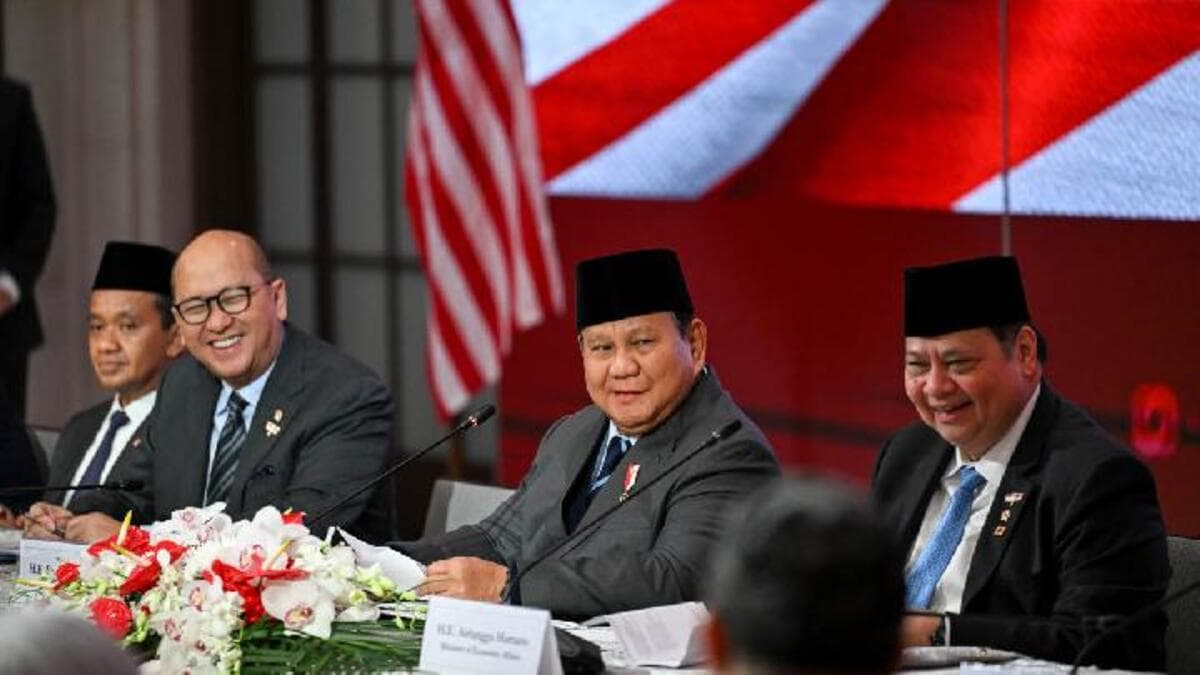
- President Prabowo Subianto has departed for Washington for the inaugural Board of Peace summit and to sign a major bilateral trade accord with the US.
- The Agreement on Reciprocal Trade would cut US tariffs on Indonesian goods from 32 per cent to 19 per cent, with Indonesia eliminating most US import duties.
- The visit carries diplomatic significance, amid domestic scrutiny over Indonesia’s participation in the Board of Peace.
Indonesian President Prabowo Subianto is in Washington, D.C., for the inaugural summit of the Board of Peace, where he is expected to formalise Indonesia’s participation in the newly established international forum initiated by United States President Donald Trump.
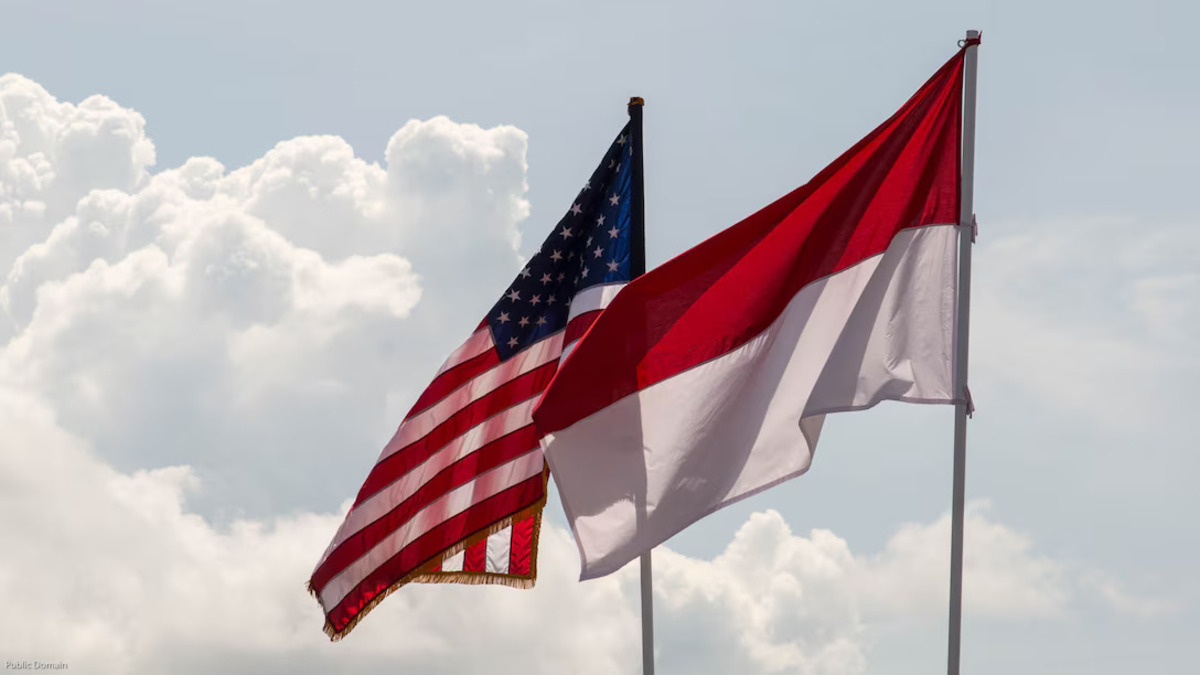
The visit is also set to culminate in the signing of a major bilateral trade accord between Jakarta and Washington, marking a significant step in economic relations between Southeast Asia’s largest economy and the United States.
State Secretary Prasetyo Hadi said the President’s primary agenda is to attend the Board of Peace summit on Thursday, 19 February 2026, followed by the signing of the Agreement on Reciprocal Trade (ART).
“The President's first agenda item is to attend the invitation regarding the Board of Peace meeting. Furthermore, based on coordination between the two countries, one additional agenda item is, God willing, there will be a signing of a trade tariff agreement with the United States government,” Prasetyo said at the House of Representatives complex in Jakarta on Wednesday.
He confirmed that the signing of the trade agreement is expected to take place after the Board of Peace proceedings.
Focus on Gaza Ceasefire
Speaking at a business forum hosted by the United States Chamber of Commerce in Washington, Prabowo said the inaugural Board of Peace meeting would focus on advancing peace efforts in Gaza.
“The first official meeting of the Board of Peace will discuss the implementation and continuation of the ceasefire in Gaza. We are constantly trying to pave the way for a real and sustainable solution to the Palestine issue,” Prabowo said on Wednesday, 18 February (local time), according to his media team.
He emphasised that Indonesia remains committed to its long-standing active and non-aligned foreign policy.
“We continue to pursue a non-aligned foreign policy while respecting all major powers. I am determined to implement a good neighbour policy,” he said.
Earlier this week, on 16 February, Foreign Minister Sugiono met Palestine’s Permanent Representative to the United Nations, Riyad Mansour, at the Palestinian Mission in New York. During the meeting, Sugiono reaffirmed Indonesia’s support for Palestine and underscored Jakarta’s commitment to a just and sustainable peace based on a two-state solution.
Sugiono also conveyed Prabowo’s plan to attend the Board of Peace meeting alongside leaders from what officials described as the “Group of 8”: Indonesia, Saudi Arabia, Turkey, Egypt, Jordan, Qatar, the United Arab Emirates and Pakistan.
“The participation of the President of Indonesia aims to ensure that every decision made is in line with the UN Charter and existing multilateral efforts, in order to pave the way for a fair and lasting peace,” Sugiono said.
Indonesia Formalises Role in New Peace Forum
Indonesia formally joined the Board of Peace in January after Prabowo signed its charter at the World Economic Forum in Davos. His participation in the Washington summit signals Jakarta’s intention to take an active role in shaping the forum’s direction.
The Board of Peace has been presented by the US administration as a diplomatic platform aimed at addressing global conflicts, including ongoing tensions in Gaza, and coordinating stabilisation and post-conflict reconstruction efforts.
Indonesian officials have framed participation as part of Jakarta’s broader diplomatic engagement, positioning the country as an active player in global peace initiatives while maintaining its longstanding support for Palestinian self-determination and a two-state solution.
However, the move has drawn domestic criticism. Former Deputy Foreign Minister Dino Patti Djalal identified what he described as four “yellow lights”, including concerns over unequal power dynamics within the forum, the absence of Palestinian representation, and the tone of statements made at its launch.
Human rights groups have also questioned whether participation in a US-initiated body operating outside the United Nations framework could complicate Indonesia’s commitment to multilateralism and international law.
Landmark Reciprocal Trade Agreement
Alongside the peace summit, Prabowo is expected to sign the Agreement on Reciprocal Trade with President Trump, described by Indonesian officials as a breakthrough in efforts to rebalance trade conditions and expand market access.
Government spokesperson Haryo Limanseto said substantive negotiation points have been finalised and legal drafting is in its final stage.
Under the agreement, Indonesia has committed to eliminating import duties on most products originating from the United States. In return, Washington will reduce tariffs imposed on Indonesian goods from 32 per cent to 19 per cent.
The US has also agreed to grant tariff exemptions for several Indonesian export commodities, including crude palm oil, coffee and cocoa—particularly for goods not produced domestically in the United States.
The substance of the deal was reached following meetings in December 2025 between Indonesia’s Coordinating Minister for Economic Affairs, Airlangga Hartarto, and US Trade Representative Jamieson Greer in Washington. Negotiations, which began in April last year, involved months of technical discussions covering tariff structures, sectoral protections and market access.
After signing, the agreement must be submitted to the respective legislatures in Jakarta and Washington for approval.
Personal Diplomacy and Economic Stakes
Prasetyo has emphasised that Prabowo maintains a “good relationship” with President Trump and expressed hope that this rapport could positively influence final tariff arrangements.
“Perhaps during the communication process, it’s possible that due to the good relationship between these two leaders, there could be policy changes; we don’t know,” he said.
The government hopes the visit will translate into tangible economic gains, particularly for labour-intensive export sectors vulnerable to higher trade barriers.
Shinta Kamdani, chairwoman of the Indonesian Employers Association (Apindo), said business leaders are optimistic that the negotiations will yield practical benefits.
“We hope the outcomes will be positive, especially regarding tariffs. Labour-intensive sectors need more favourable treatment to remain competitive,” she said.
Ahead of his departure, Prabowo convened a strategic meeting at his residence in Hambalang, West Java, with senior economic ministers to consolidate Indonesia’s negotiating stance. He stressed that all economic diplomacy must deliver measurable benefits, including job creation and stronger domestic industrial productivity.