Alleged leaked letter from purged Chinese General exposes rift with Xi & fears of a personal army
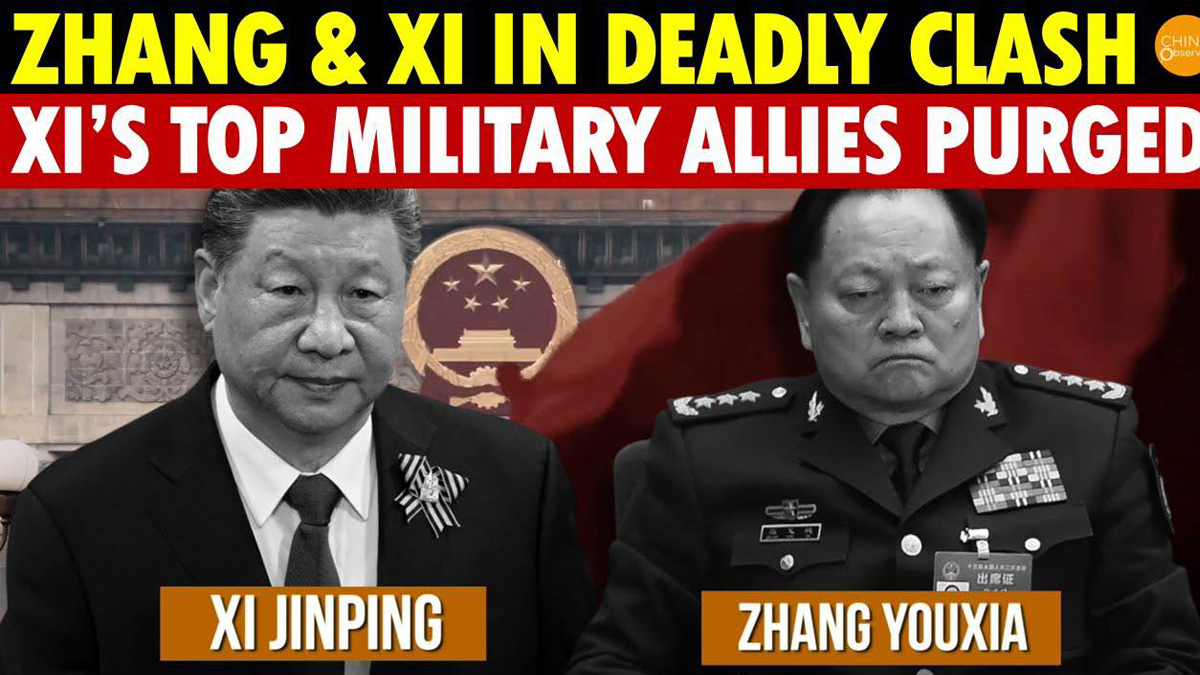
An alleged leaked letter attributed to General Zhang Youxia accuses Xi Jinping of turning the PLA into a personal army, deepening scrutiny of China’s military purges.
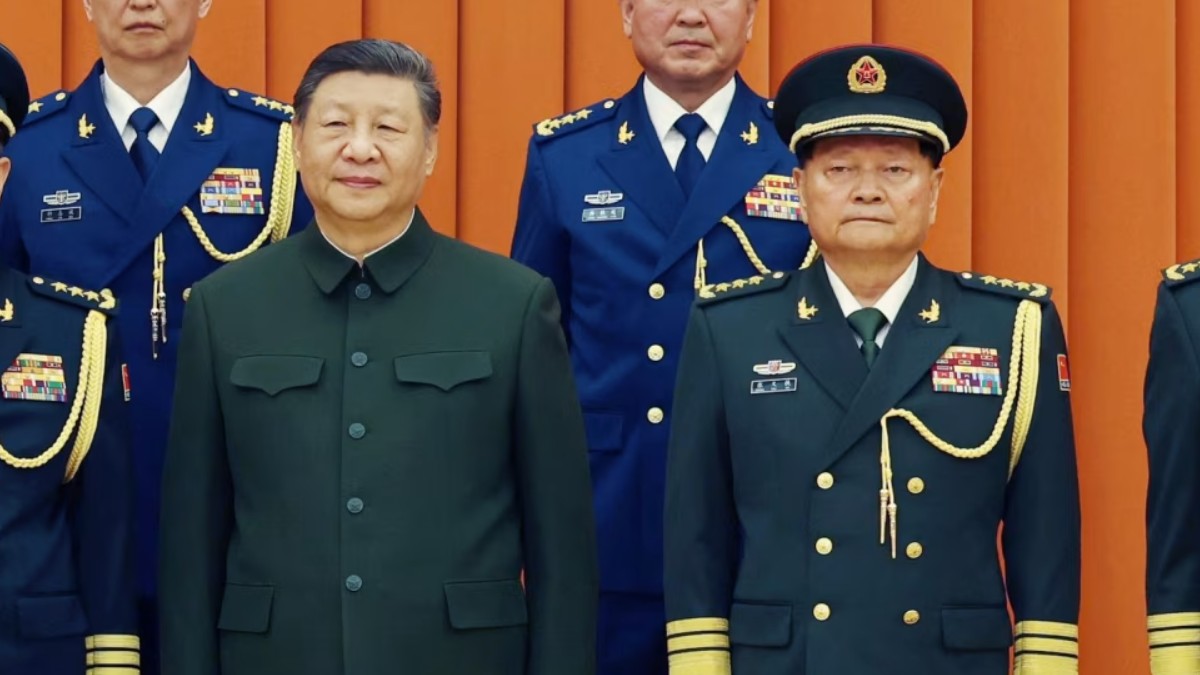
- Chinese authorities announced investigations into General Zhang Youxia and General Liu Zhenli on 24 January 2026.
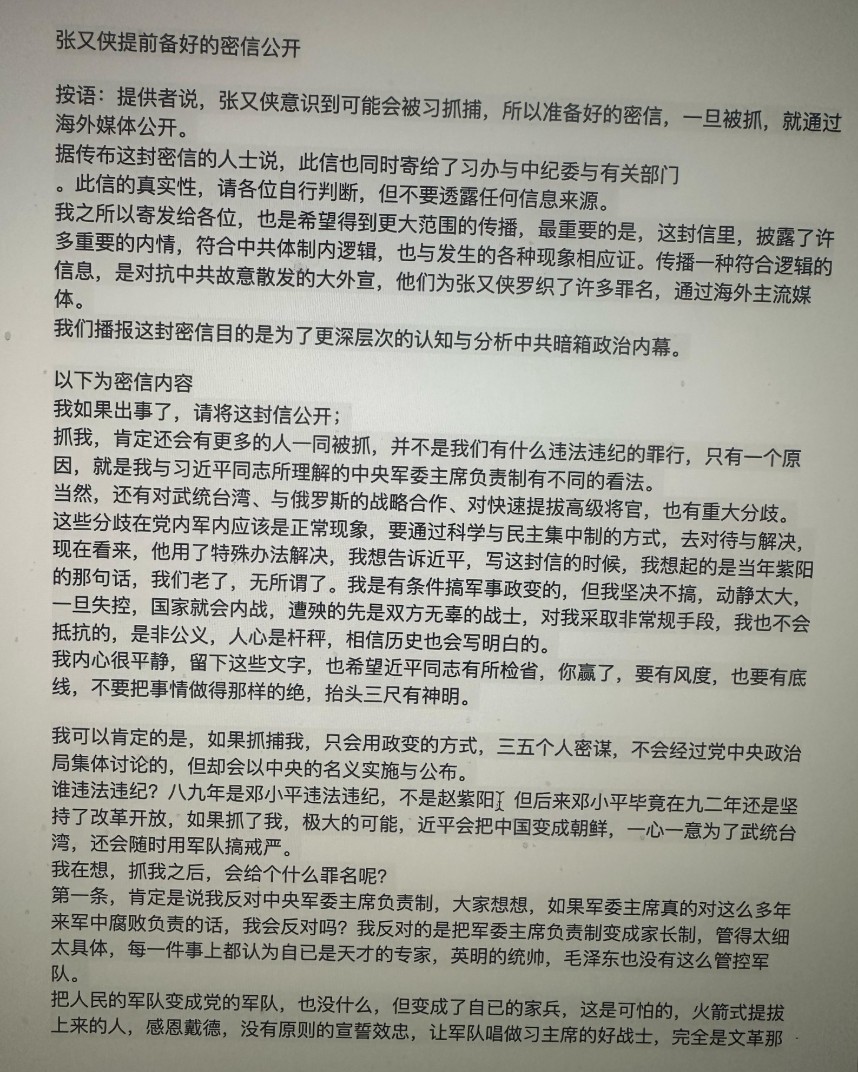
- A US-based outlet claims Zhang wrote a confidential letter criticising Xi Jinping’s control of the military.
- The letter alleges deep disagreements over military governance, Taiwan, and war strategy.
China’s military leadership faced renewed scrutiny in late January after authorities announced investigations into two senior officers, followed by claims that a confidential letter from one of them had been leaked overseas.
On 24 January 2026, China’s Ministry of Defence announced that General Zhang Youxia (张又侠), vice chairman of the Central Military Commission (CMC), was under investigation for suspected serious violations of discipline and the law.
The announcement also confirmed that General Liu Zhenli (刘振立), chief of staff of the CMC’s Joint Staff Department and a CMC member, was under investigation on similar grounds.
According to the ministry, the cases form part of an ongoing anti-corruption campaign within the People’s Liberation Army, which has intensified under President Xi Jinping’s leadership.
Alleged leaked letter surfaces overseas
Five days later, on 29 January, The Epoch Times, a US-based Chinese-language outlet known for its opposition to the Communist Party of China, claimed it had obtained a confidential letter written by Zhang shortly before his detention.
According to the publication, the letter was provided by a whistleblower and had allegedly been written in December 2025, with instructions that it be made public if Zhang were detained.
The authenticity of the letter could not be independently verified, and Chinese authorities did not comment on its existence or contents.
Claims of political and ideological conflict
According to The Epoch Times, the letter stated that Zhang had anticipated his arrest and sought to document his disagreements with Xi in advance.
Zhang reportedly argued that any action against him would not have been related to corruption, but rather to political and ideological differences with the top leadership.
Central to the alleged dispute was Zhang’s opposition to Xi’s interpretation of the “CMC chairman responsibility system”.
He was quoted as saying that the system, as implemented, had shifted from collective leadership toward unchecked personal authority.
Warning against a “personal army”
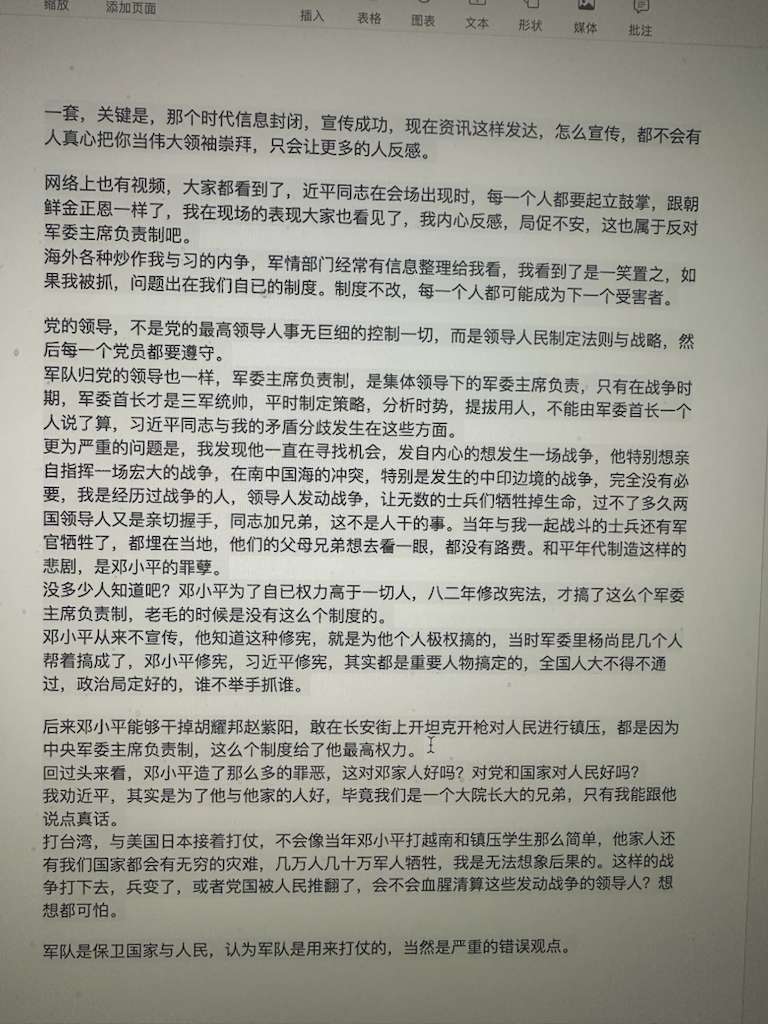
In the letter, Zhang allegedly warned that the PLA risked becoming a “personal army”, rather than a national institution under collective party leadership.
“Turning the people’s army into the party’s army is one thing, but turning it into a personal household army is terrifying,” the letter read.
He criticised the rapid, “rocket-style” promotions of officers who, he claimed, expressed gratitude and unconditional loyalty without principles, encouraging the military to portray itself as “Chairman Xi’s good soldiers”.
Zhang reportedly compared the atmosphere to the Cultural Revolution, arguing that modern information flows made personality cults unsustainable and likely to provoke public resentment rather than admiration.
Policy disagreements and internal conflict
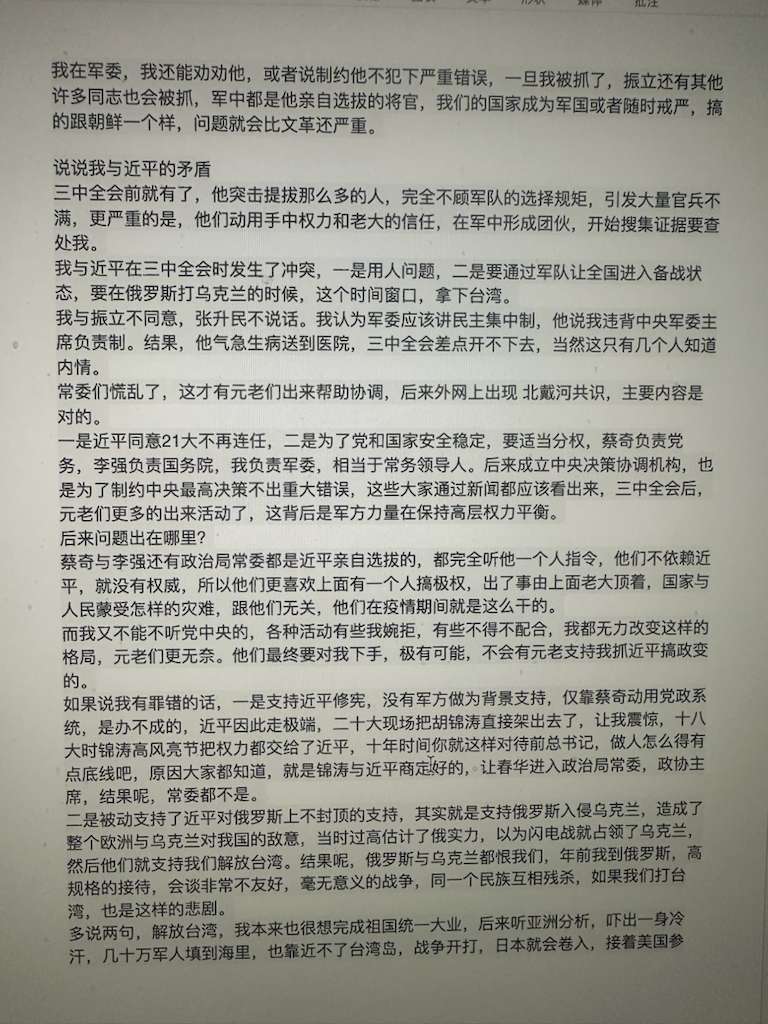
The letter also reportedly described disagreements over major policy issues, including the use of force against Taiwan, strategic cooperation with Russia, and the rapid promotion of senior officers.
Zhang claimed these disagreements had existed before the Third Plenum, accusing Xi of bypassing established military appointment norms, which he said had caused widespread dissatisfaction among officers.
He alleged that certain promoted figures had used their authority and Xi’s trust to form factions within the military and gather evidence against him.
Zhang reportedly stated that he had clashed directly with Xi during the Third Plenum over personnel issues and proposals to place the country on a wartime footing, particularly during the Russia–Ukraine war, which he said Xi viewed as a strategic window to take Taiwan.
Rejection of violent resistance
According to the document, Zhang asserted that he had possessed the capability to organise a military coup but had chosen not to do so.
He reportedly cited the risks of civil war and large-scale bloodshed, stating that he would not resist arrest and believed history would ultimately judge the legitimacy of his actions and views.
Criticism of political symbolism and concentration of power
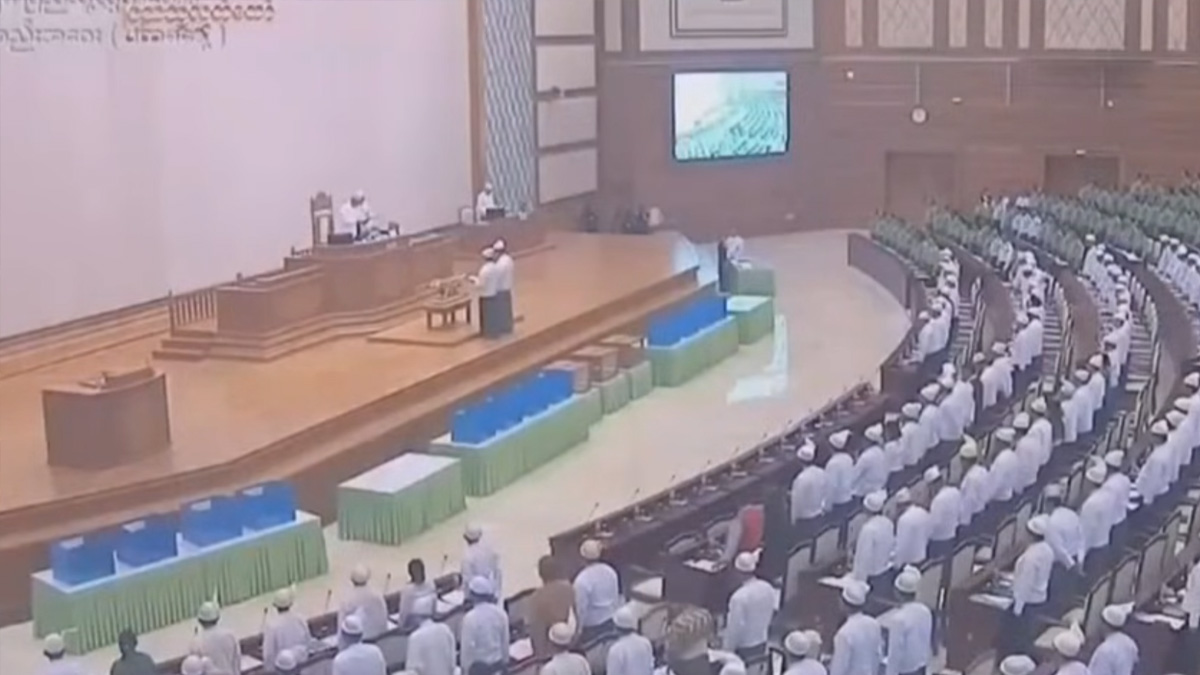
The letter also criticised public displays of loyalty to Xi at official meetings.
Zhang was quoted as expressing discomfort with what he described as excessive personal adulation, comparing scenes of compulsory standing ovations to those seen in North Korea.
He reportedly linked the concentration of power within the CMC to past political crises, arguing that unchecked authority posed long-term risks to both the party and the country.
Final appeals and demands
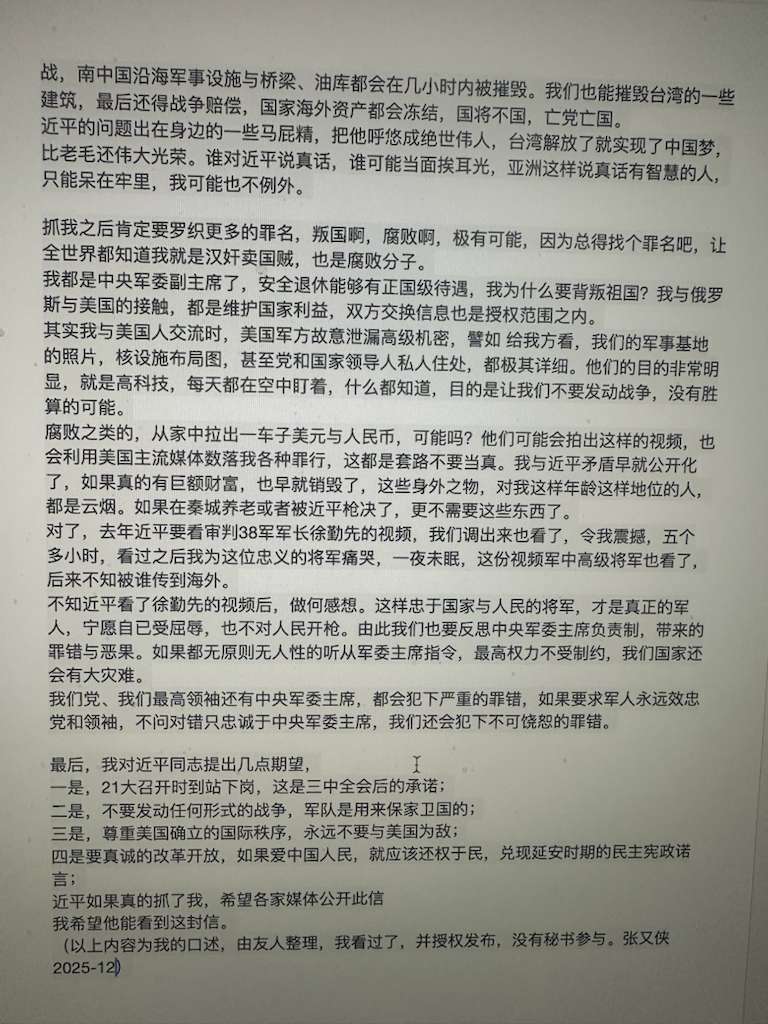
Zhang reportedly predicted that, if arrested, he would face fabricated accusations such as treason or corruption, supported by staged evidence and propaganda.
He was said to have urged Xi to step down at the 21st Party Congress in late 2027, to refrain from initiating war, and to avoid confrontation with the US-led international order.
The letter also called on Xi to pursue genuine reform and opening-up, arguing that returning power to the people and honouring earlier promises of democratic governance would better serve China’s future.
The Epoch Times claimed the letter had also been sent to party disciplinary bodies and Xi’s office, although no confirmation was provided.
Broader military purge context
The investigations into Zhang and Liu occurred amid broader turbulence within China’s military leadership, including repeated purges and leadership reshuffles.
In October 2025, nine generals were expelled from the Communist Party on corruption charges, including former CMC vice chairman He Weidong.
Others removed included Miao Hua, He Hongjun, Wang Xiubin, Lin Xiangyang, Qin Shutong, Yuan Huazhi and Wang Chunning, representing the uppermost tier of the PLA’s leadership.
Beijing has consistently framed these actions as necessary to strengthen discipline and combat corruption, while critics have argued that the campaign may also serve to consolidate Xi’s political control over the military.