What did Japan’s Prime Minister say about Taiwan — and why China’s anger may miss the mark
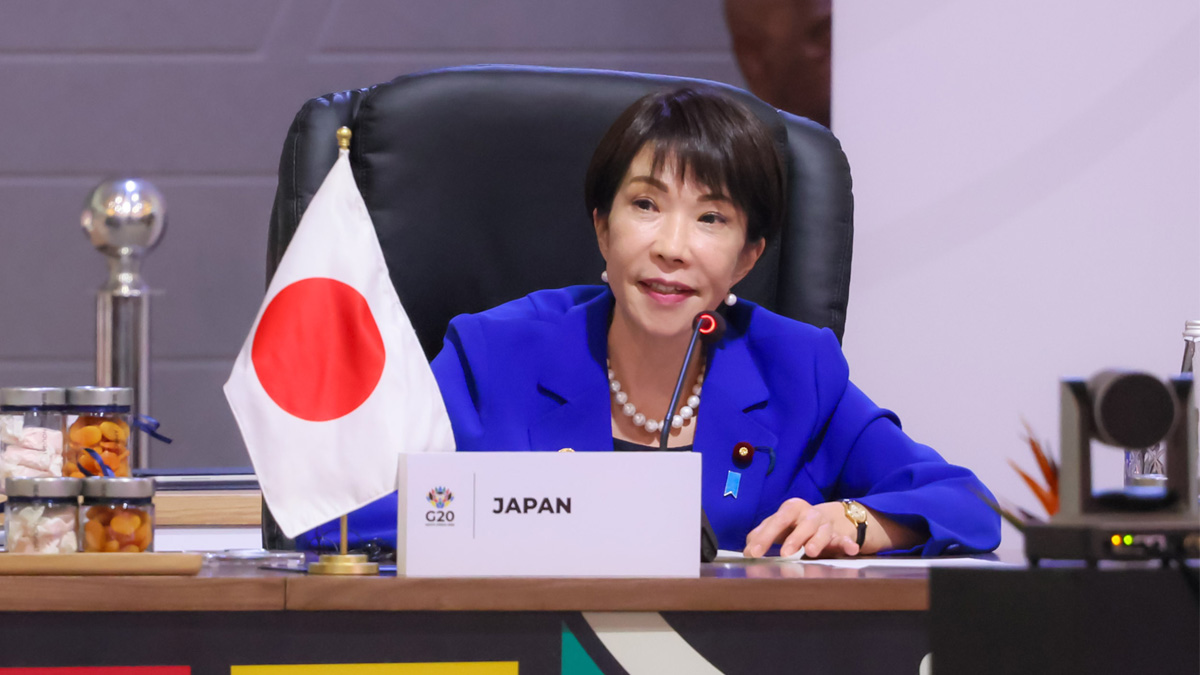
Japan’s Prime Minister Sanae Takaichi faced backlash from China over comments suggesting a Taiwan conflict could trigger a “survival-threatening situation.” But the remarks, made in Parliament, were in response to opposition questions and stressed that any military decision would depend on case-specific legal assessment under Japan’s constitutional limits.

- China sharply condemned Prime Minister Takaichi’s 7 November remarks, framing them as evidence of Japan edging toward military involvement in a Taiwan conflict.
- The full parliamentary transcript shows Takaichi’s comments were conditional, legally framed, and made in response to hypothetical questioning—not a declaration of policy shift.
- The exchange highlights the gap between Japan’s cautious legal interpretation of collective self-defence and China’s broader strategic anxieties over any perceived hardening of Japan’s Taiwan posture.
Amid growing diplomatic tension, a closer look at Prime Minister Takaichi’s 7 November comments reveals legal caution, not strategic escalation.
On 7 November 2025, Japanese Prime Minister Sanae Takaichi made remarks in Parliament concerning a potential conflict in the Taiwan Strait. Days later, Beijing launched a coordinated diplomatic, media, and economic response, accusing Tokyo of breaching post-war commitments and edging toward military entanglement in the Taiwan issue.
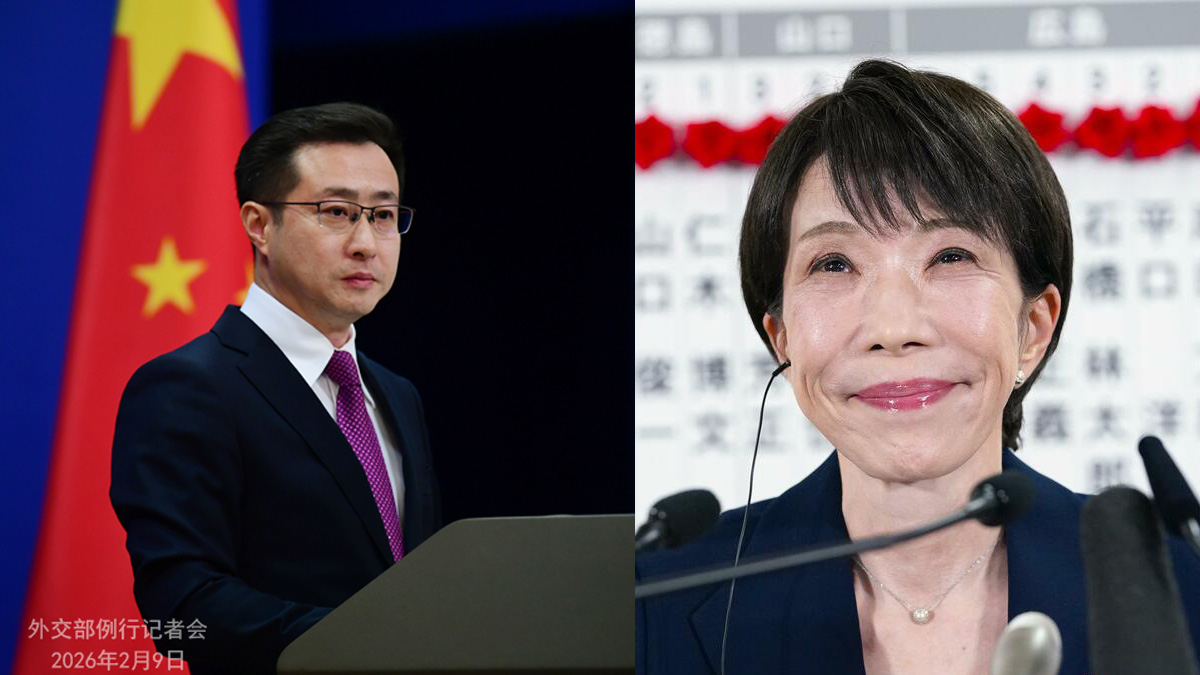
China’s Foreign Ministry issued a formal protest, calling Takaichi’s remarks “unacceptable,” and warned that Japan was “reviving the logic of militarism under the guise of collective self-defence.”
State broadcaster CCTV and other outlets highlighted that Takaichi is the first Japanese Prime Minister to publicly suggest that a Taiwan-related contingency could qualify as a “survival-threatening situation” — a legal designation in Japan that opens the door to limited military action in support of allies.
In the days that followed:
-
Beijing summoned Japanese diplomats and condemned Tokyo’s “irresponsible rhetoric.”
-
A consular official in Osaka shared an aggressive social media post, later deleted under Japanese protest.
-
China suspended or delayed cultural exchanges and reimposes Japanese seafood ban on Japanese seafood imports.
-
At the United Nations, China referred to Japan’s remarks as evidence of “military revivalism.”
The situation has been widely covered across Chinese and international media. However, scrutiny of the full parliamentary transcript suggests the Prime Minister’s remarks were conditional, constrained by existing law, and far more cautious than characterised.
The parliamentary exchange: A legal response to a hypothetical Taiwan scenario
The remarks that sparked diplomatic backlash were delivered on 7 November 2025, during a session of the House of Representatives Budget Committee.
The exchange occurred between opposition lawmaker Katsuya Okada of the Constitutional Democratic Party and Prime Minister Sanae Takaichi, focusing on Japan’s collective self-defence policy and its potential application in a Taiwan contingency.
The debate centred on the interpretation of “survival-threatening situation” — a legal threshold introduced in Japan’s 2015 security legislation that permits limited collective self-defence under narrowly defined circumstances.
Okada’s challenge: Are the legal boundaries too vague?
Okada began by recalling the rationale behind the 2015 legal framework, stating that many constitutional scholars and former legislative officials had questioned its constitutionality due to the abstract nature of the “survival-threatening” designation.
He then turned to Takaichi’s own words during her 2023 LDP leadership campaign, in which she remarked that a Chinese maritime blockade of Taiwan “might” constitute a survival-threatening situation. Okada described such a remark as speculative and dangerous, arguing that it risked lowering the threshold for military engagement.
He asked the Prime Minister to clarify: “Under what specific circumstances do you believe a Taiwan-related event, such as a maritime blockade, would meet the legal criteria for a survival-threatening situation? Wouldn’t invoking such a designation without careful limitations give the Cabinet excessive authority to initiate the use of force?”
Takaichi’s response: Circumstantial and case-specific evaluation
In reply, Prime Minister Takaichi reaffirmed Japan’s traditional position on cross-strait issues: “On the Taiwan issue, our consistent stance has always been that it should be resolved peacefully through dialogue.”
She then addressed the legal nature of the question, emphasising that no generalisation could be made in advance: “Whether a particular situation qualifies as a ‘survival-threatening situation’ must be assessed based on the specific circumstances at the time. We must consider all available information comprehensively before making such a determination.”
Hypothetical scenario: Would a blockade trigger the clause?
Okada followed up by posing a concrete scenario: if China were to block the Bashi Channel — a strategic waterway between Taiwan and the Philippines — Japan might need to reroute commercial and energy supplies. He argued that this inconvenience alone would not justify declaring a national survival threat.
“Even if a route like the Bashi Channel is blocked, it does not necessarily cut off energy or food supplies to Japan. Would that alone meet the legal standard for invoking collective self-defence?”
Takaichi responded by differentiating between non-violent obstructions and military acts: “If civilian vessels are simply arranged to make the passage more difficult, that alone would not constitute a survival-threatening situation.”
However, she added that the use of force would significantly change the equation:
“If the blockade is enforced using warships and accompanied by other military measures, that would involve the use of force. For example, if the US military were to intervene to lift the blockade, and that action was met with countermeasures or armed resistance, that would make the situation more serious. Additionally, if the scenario involved other hostile measures — such as drones, cyberattacks, or more complex military coercion — it would warrant a different assessment.”
Okada’s concern: Too much executive discretion?
Okada expressed unease that the criteria were too open to interpretation, cautioning that over-reliance on vague standards could lead to military action without sufficient oversight.
He noted: “What you’re describing allows a very wide degree of government discretion. That’s why I’m concerned: once the government determines something is a survival-threatening situation, it opens the door to the use of force, with all its consequences. This should not be decided lightly.”
He further warned that such actions could compromise Japan’s constitutional principles, and urged more explicit limits and parliamentary checks.
Takaichi reiterates legal discipline and case-by-case analysis
Takaichi responded by reaffirming that the government’s position was grounded in law and unchanged since the 2015 security reform. She cited the “three conditions” required to invoke collective self-defence and stressed that the process is not arbitrary:
“The assessment must be based on concrete factors: the aggressor’s intent and capability, the scale and nature of the incident, and the likelihood of the conflict affecting Japanese territory or the population. We must consider the gravity of potential damage to the Japanese people’s lives and freedoms. These are serious considerations, and cannot be taken lightly.”
She also clarified that no pre-emptive judgment had been made about Taiwan, and that any decision would be determined only after a thorough evaluation of facts at the time of the incident.
Legal background: What is a ‘survival-threatening situation’?
The term 存立危機事態 (sonritsu kiki jitai) — translated as “survival-threatening situation” — was introduced through the 2015 security legislation under the Abe administration. It allows Japan to exercise limited collective self-defence if:
-
An armed attack is made against a foreign country with close ties to Japan,
-
The attack threatens Japan’s own survival,
-
The rights of Japanese citizens — life, liberty, pursuit of happiness — face clear danger.
The law does not permit open-ended military intervention. Action must be proportionate, unavoidable, and limited to the minimum necessary. Moreover, the Cabinet must notify and seek approval from Parliament, and such scenarios remain subject to judicial and public scrutiny.
Takaichi, in the 7 November session, explicitly stated that Japan’s interpretation of these legal provisions has not changed, and that any decision would be made on a case-by-case basis, bound by constitutional and legislative constraints.
China’s interpretation and the strategic overreaction
China’s reaction has focused less on what was said and more on what it might symbolise: a high-level Japanese official publicly linking Taiwan to the legal conditions that could trigger military activity. From Beijing’s perspective, this breaches unspoken diplomatic boundaries and potentially signals a shift toward proactive involvement in cross-strait issues.
But the transcript does not support the claim that Japan has shifted its doctrine. Takaichi did not suggest an automatic or inevitable Japanese response to a Taiwan conflict. Instead, she described a spectrum of possible scenarios, each requiring evidentiary assessment and legal justification.
Her repeated references to legal conditions, proportionality, and individual case assessment contrast sharply with how her remarks have been presented in some outlets — as if she had issued a strategic declaration.
It is also noteworthy that previous Japanese leaders, including Shinzo Abe and Taro Aso, made similarly provocative comments (e.g., “Taiwan contingency is a Japanese contingency”). Yet it is Takaichi’s legally anchored, procedural remarks that have triggered the strongest backlash — suggesting that Beijing may now be more sensitive to any perceived hardening of Japan’s posture.
Legal caution meets strategic anxiety
Takaichi’s 7 November comments were not a policy shift, but a restatement of Japan’s existing legal position, framed in response to a hypothetical. The Prime Minister did not declare that a Taiwan conflict would be a survival-threatening situation. She merely acknowledged that such a possibility could arise, depending on the facts.
The discrepancy between what was said and how it was received highlights the broader strategic anxieties surrounding Taiwan, Japan’s defence policy, and Sino–Japanese relations. With tensions already high in the region, even measured legal language can be weaponised for geopolitical signalling.
For observers, the episode serves as a reminder: in matters of war and peace, context is everything.