U.S. military operation, oil markets and global power struggle: The fallout from Venezuela’s Maduro capture
The U.S. capture of Nicolás Maduro has sent shockwaves through oil markets and global diplomacy, exposing deep tensions over energy, sovereignty and the future balance of power between Washington, Beijing and Moscow.
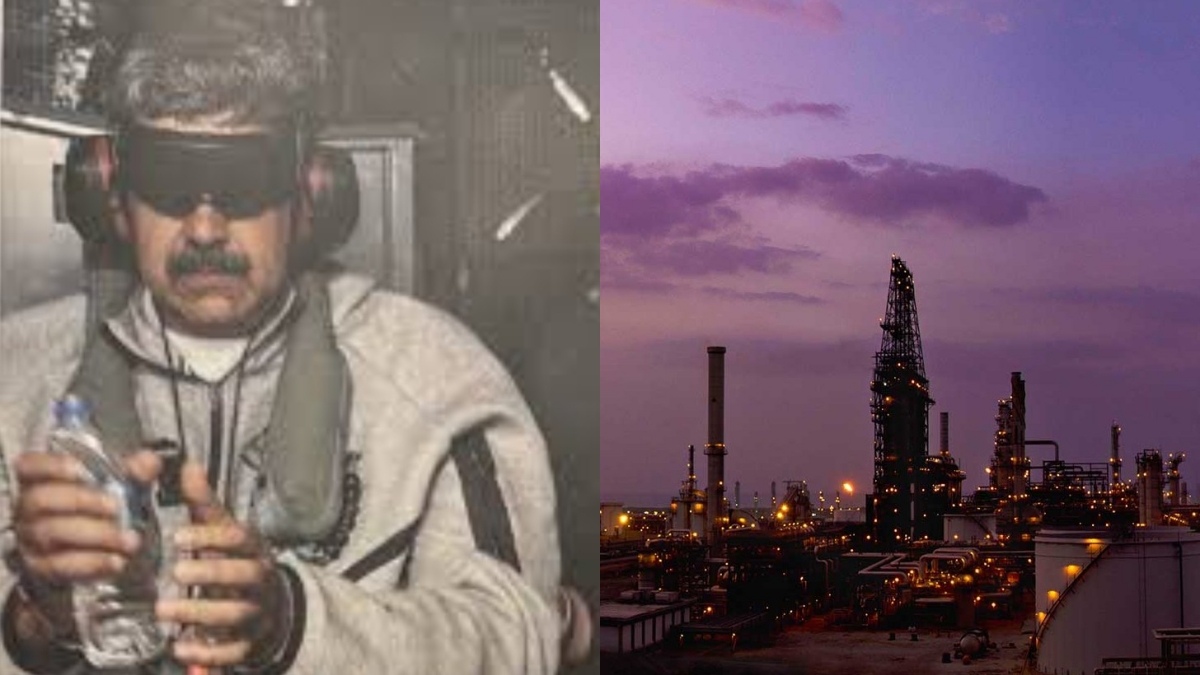
- A U.S. special forces operation captured Venezuelan President Nicolás Maduro in Caracas on 3 January 2026, triggering global diplomatic backlash.
- Oil markets reacted with short-term volatility amid speculation over future U.S. involvement in Venezuela’s energy sector.
- The incident has intensified tensions involving China, Russia and the BRICS bloc, highlighting broader struggles over global power and finance.
A dramatic U.S. military operation that culminated in the capture of Venezuelan President Nicolás Maduro has sent shockwaves through energy markets, diplomatic corridors and geopolitical alliances.
The raid, carried out late in the night of 3 January 2026, saw U.S. special forces strike targets in Caracas and remove Maduro and his wife, Cilia Flores, from power.
They were swiftly transported to the United States to face federal charges, including narcoterrorism and corruption.
Oil markets wobble amid uncertainty
On 5 January, global oil markets reacted to the unfolding crisis, with prices initially dipping.
Reports from Asian trading floors showed Brent crude falling and U.S. West Texas Intermediate declining as traders weighed the implications of U.S. intervention.
Analysts pointed to Venezuela’s still-untapped crude reserves — among the largest in the world — as a factor in pricing psychology.
Despite Venezuela’s colossal reserves, its production has languished due to decades of mismanagement and sanctions, with current daily output far below historical highs.
U.S. officials, including President Donald Trump, signalled an intention to allow American companies to invest in upgrading Venezuela’s decrepit oil infrastructure. Trump claimed that U.S. firms would help restore production capacity and profit from future oil flows.
Though immediate supply changes are unlikely — and global oil markets are well supplied otherwise — the involvement of U.S. energy companies in Venezuelan crude extraction could reshape long-term flows of oil.
In markets that remain sensitive to geopolitical news, that prospect has added a layer of volatility.
Strategic context: oil, finance and global power
Observers argue that control over Venezuela’s oil isn’t only about energy, but about the petrodollar system — the practice by which oil is traded predominantly in U.S. dollars. Venezuela’s oil, historically aligned with Russian and Chinese economic interests, played into broader challenges to this system.
For years, Maduro pursued closer ties with China and Russia, seeking strategic partnerships outside the U.S.-led global financial order.
A central axis of his foreign policy was Venezuela’s formal application to join BRICS — the bloc comprising Brazil, Russia, India, China and South Africa — which advocates a multipolar global order and has discussed alternative payment mechanisms outside the dollar.
Venezuela’s bid was publicly acknowledged in 2023, and the country had anticipated support from larger members, especially China, for membership.
If a Venezuelan BRICS membership had succeeded, it could have potentially facilitated oil trade outside dollar settlements, posing a symbolic challenge to U.S. economic primacy.
Critics of the U.S. action argue that undermining a government openly courting BRICS was intended to protect the petrodollar’s centrality.
While BRICS membership was not immediate and had faced opposition from some members previously, the geopolitical signal of Venezuela aligning with China raised alarms in Washington.
This concern echoes past U.S. interventions in Iraq and Libya, where oil and currency strategic interests were widely debated.
Though U.S. authorities deny oil dominance as a motive, the overlapping timing of economic and military objectives fuels debate.
China, a long-time ally of Caracas, reacted strongly.
Officials condemned the U.S. seizure as a breach of international law and a threat to state sovereignty, urging adherence to the UN Charter and the return of Maduro.
A Chinese envoy had met with Maduro just hours before his capture to discuss expanding strategic ties and a shared vision of a multipolar world, highlighting the last-minute coalition-building efforts by the Venezuelan president.
Interim leadership and diplomacy
With Maduro detained, Venezuela’s Supreme Court and military leadership quickly installed Delcy Rodríguez — Maduro’s long-time vice president — as interim president. Rodríguez, a veteran of Venezuela’s socialist movement, now faces an extraordinary diplomatic and political challenge.
Initially, her statements appeared combative, referring to the U.S. administration as “extremists” and providing no indication of cooperation with Washington.
However, in subsequent remarks she called for a “balanced and respectful” relationship with the United States, emphasising adherence to international law and mutual respect.
Rodríguez’s shift signals a pragmatic approach aimed at preventing further destabilisation while defending Venezuelan sovereignty.
Still, Rodríguez’s position is fraught.
Her legitimacy is contested internationally and domestically, and she must navigate a political landscape upended by foreign intervention, economic crisis and fractured alliances.
Her dual stance — rejecting unilateral U.S. dominance while seeking dialogue — reflects a delicate balancing act between national pride and the urgent need for stability.
Regional and global fallout
The international response has been deeply polarised.
Countries across Latin America and beyond have condemned the operation, stressing respect for sovereignty and international norms.
Russia and Cuba, longstanding supporters of Maduro, have denounced the U.S. action as imperialistic.
Others have called for calm and a peaceful resolution to the leadership crisis.
In Washington, the operation has sparked fierce debate.
While some officials laud the removal of a leader accused of corruption and drug trafficking, critics decry the violation of international law and the dangerous precedent set by extraterritorial rendition of a sovereign head of state.