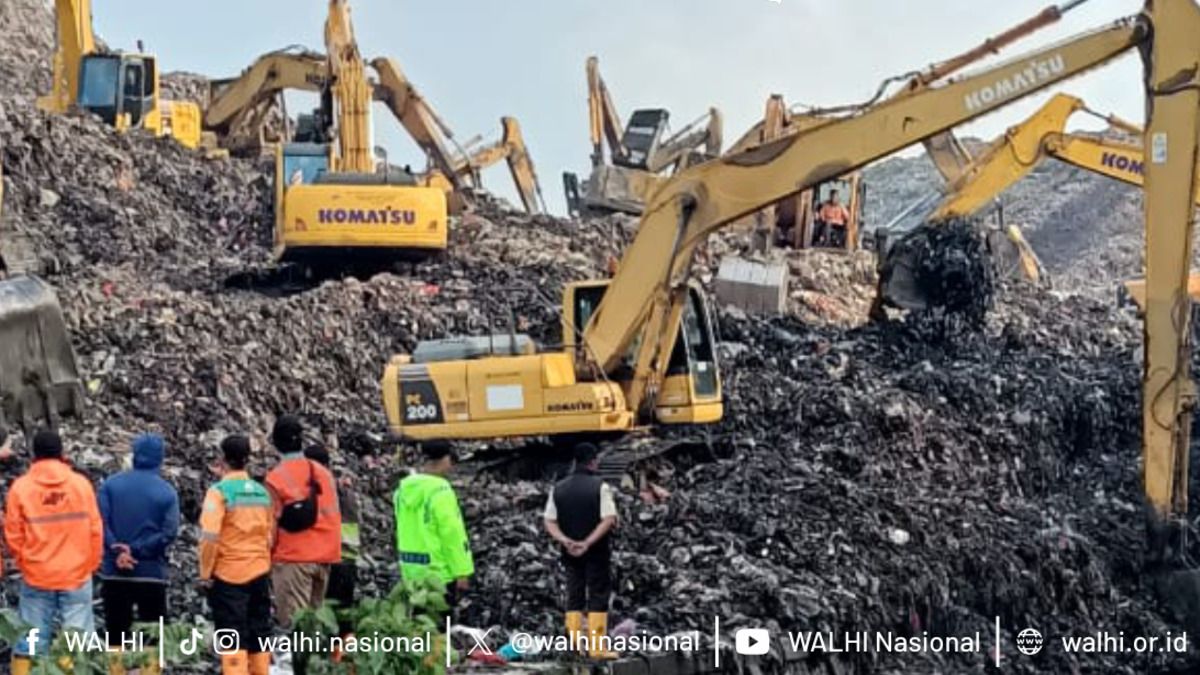
Indonesia’s environment group warns of weak corporate accountability after deadly Sumatra floods
Indonesia’s largest environmental group says weak law enforcement against companies linked to deforestation worsened deadly Sumatra floods, warning that failure to act risks turning ecological crises into permanent humanitarian disasters.
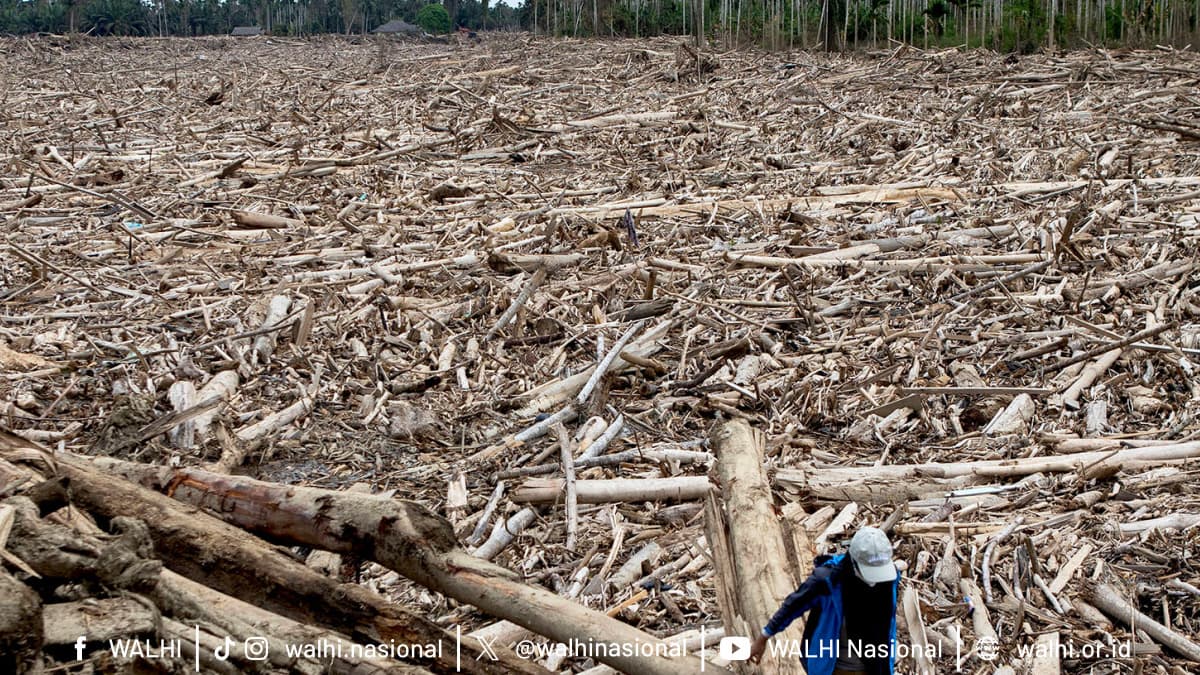
- WALHI says the government has failed to hold companies accountable for deforestation linked to deadly floods and landslides in Sumatra.
- At least 23 companies are under investigation, but no firms have been charged or ordered to pay compensation.
- The organisation warns that without decisive enforcement, ecological disasters will become a permanent humanitarian crisis.
Indonesia’s largest environmental organisation has warned that the government is failing to hold companies accountable for what it describes as one of the country’s gravest ecological disasters in decades, after deadly floods and landslides swept through large parts of Sumatra at the end of 2025.
In a statement issued on 9 January 2026, the Indonesian Forum for the Environment (WALHI) said law enforcement against companies suspected of driving deforestation and ecosystem destruction in Aceh, North Sumatra and West Sumatra had been “hesitant, opaque and ineffective”, despite preliminary findings by state investigators linking corporate activities to the scale of the disaster.
“The delay in accountability only prolongs the suffering of communities who have lost their homes, livelihoods, living space, a sense of security and even their children’s right to education,” said Uli Arta Siagian, head of WALHI’s national campaigns division.
Companies under investigation, but no charges
According to WALHI, the Attorney General’s Office and the government’s Forest Area Enforcement Task Force (Satgas PKH) have investigated at least 23 companies operating in upstream watershed areas. The Junior Attorney General for Special Crimes has acknowledged that there is early evidence of a strong correlation between their activities and the extensive deforestation that accelerated surface water run-off during extreme rainfall in late November.
Yet no company has so far been formally named, charged, or required to pay compensation.
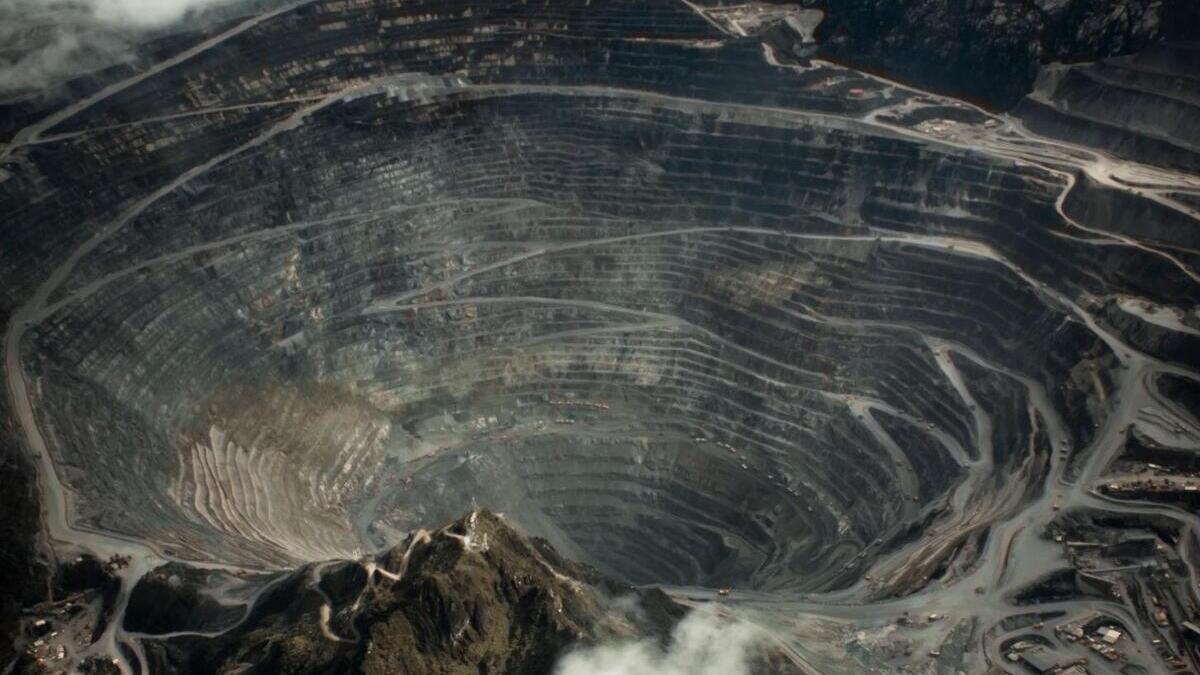
The Ministry of Environment and the Environmental Control Agency (KLH/BPLH) have sealed and temporarily halted the operations of several firms in North Sumatra and West Sumatra, but WALHI says this falls far short of meaningful accountability. Field monitoring by WALHI North Sumatra suggests that companies such as state-owned plantation group PTPN and PT Agincourt Resources, which runs the Martabe gold mine, are still operating despite being among those subjected to temporary sanctions.
“Administrative actions like temporary suspensions and seals are not enough to address structural environmental crimes,” Uli said. “Licences must be revoked and criminal prosecutions pursued without exception.”
A disaster rooted in deforestation
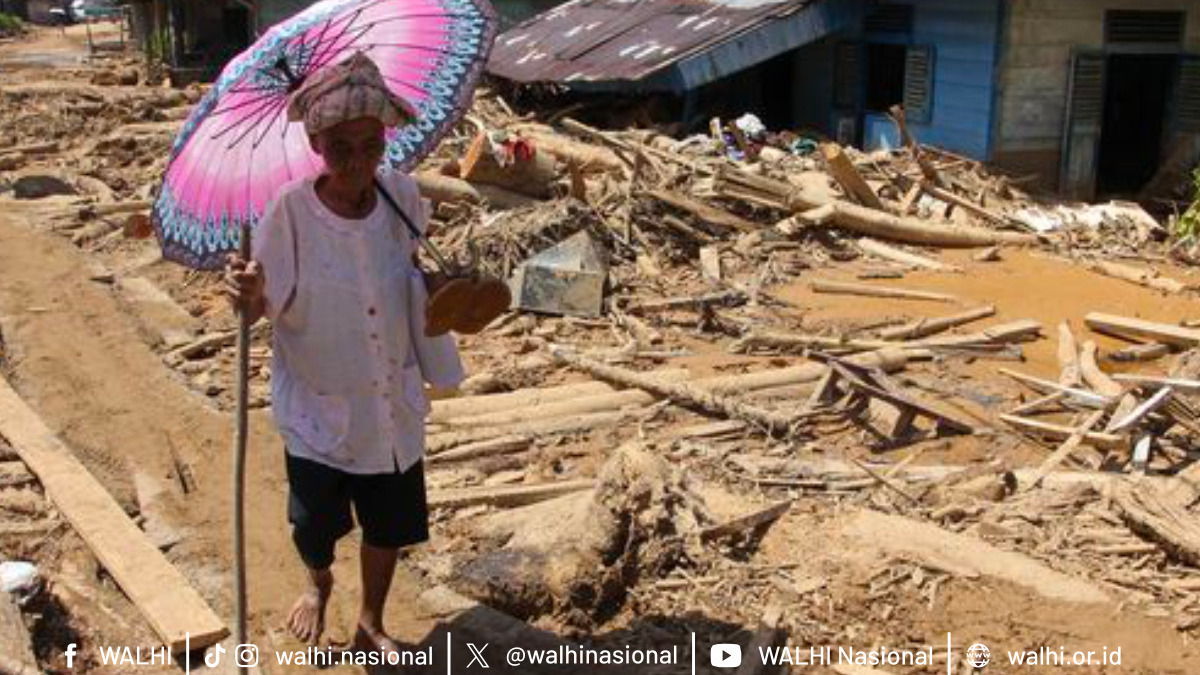
The floods and landslides that struck Aceh, North Sumatra and West Sumatra between 25 and 27 November 2025 killed at least 442 people, left more than 400 missing and forced nearly 157,000 to flee their homes. Later figures from the National Disaster Management Agency (BNPB) put the national death toll above 1,000, with more than 600,000 people displaced across 52 districts.
WALHI argues these were not “natural disasters” but the predictable outcome of long-term ecological degradation driven by logging, mining, oil-palm expansion and weak enforcement.
Between 2016 and 2025, an estimated 1.4 million hectares of forest were lost in the three provinces due to the operations of 631 licensed companies, including mining firms, plantation groups, timber concession holders and hydropower developers.
Much of the destruction has occurred in the Bukit Barisan mountain range, where river headwaters feed densely populated lowland areas. In North Sumatra’s Batang Toru ecosystem alone — home to critically endangered orangutans and tigers — nearly 73,000 hectares of forest disappeared between 2016 and 2024 as 18 companies expanded operations.
In Aceh, more than 60 per cent of the province’s 954 river basins lie within forest areas, many of which are now classified as critical. WALHI data show that major catchments such as Singkil, Peusangan and Krueng Tripa have lost between 40 and 75 per cent of their forest cover over the past decade, severely reducing their capacity to absorb rainfall.
In West Sumatra, even small but strategic watersheds have been degraded. The Aia Dingin basin, which supplies parts of Padang, has lost hundreds of hectares of tree cover in its upper reaches — the very areas that should act as a buffer against flash floods.
Warnings ignored
WALHI also pointed to failures in disaster preparedness. Indonesia’s meteorology agency BMKG issued warnings as early as 17 November 2025 about a developing low-pressure system, which by 21 November had intensified into a tropical cyclone seed. Local governments were urged to prepare for hydrometeorological hazards.
“Those warnings were clear,” said Gandar Mahojwala, head of WALHI Yogyakarta. “But the state did not respond seriously. What turned heavy rain into catastrophe was the vulnerability created by environmental destruction.”
A humanitarian crisis
The human cost has been immense. In parts of Aceh Tamiang, residents raised white flags along the Trans-Sumatra highway to signal desperation as floods lingered for weeks, cutting off electricity, clean water and food supplies.
“People die slowly because of isolation,” said one resident, quoted in national media, comparing the current crisis unfavourably to the 2004 tsunami.
Disaster experts have warned that the prolonged inundation of inland areas has fractured supply chains across northern Sumatra, threatening food, medicine and livelihoods.
Calls for tougher action
WALHI is now demanding that the Ministry of Forestry use its powers under the Forestry Law to revoke licences, prosecute illegal mining and plantations, and force companies to pay compensation and restore damaged forests. It also wants a new, independent and participatory task force to review all forest-area licences, replacing what it says has been a permissive and opaque enforcement regime.
“The state must not shift the cost of this disaster onto taxpayers,” said Uli Arta Siagian. “Corporations that have profited from destroying nature must be forced to bear the external costs and restore what they have damaged.”
WALHI has also urged the government to declare the Sumatra crisis a national disaster, which would unlock stronger coordination and resources for relief and recovery.
Without decisive action, the group warned, similar catastrophes will spread to other regions — as floods have already begun to hit parts of Kalimantan, Papua and North Maluku — turning Indonesia’s ecological crisis into a permanent humanitarian emergency.