Civil inquiry says Indonesia’s 2025 protests saw worst youth crackdown since 1998 Reformasi
A civil society commission has documented 13 deaths and more than 6,700 arrests during Indonesia’s August 2025 protests, calling it the worst suppression of youth since Reformasi and urging independent investigations.
- An independent commission found 13 deaths and 6,719 arrests during August 2025 protests, calling it the largest suppression of youth since Reformasi.
- The report alleges systematic criminalisation of dissent and documents cases of torture, forced confessions and temporary disappearances.
- It urges independent investigations, accountability for security forces and structural reforms to safeguard civic space.
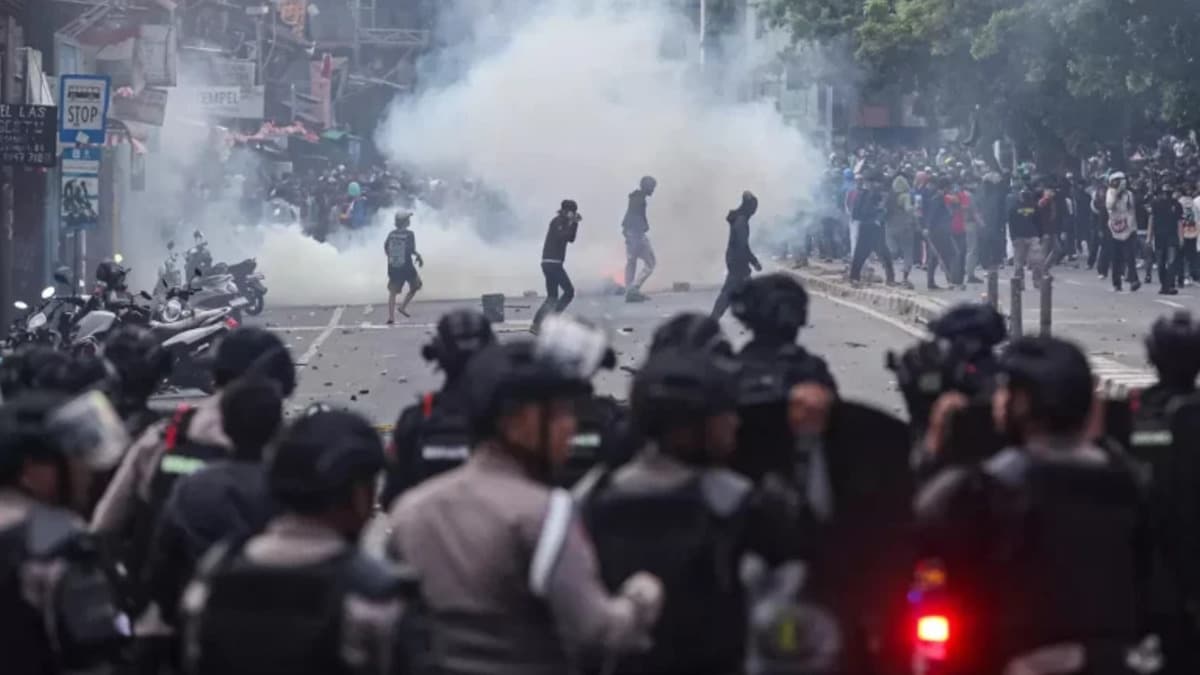
An independent civil society investigation into Indonesia’s August 2025 demonstrations has concluded that the state response constituted the “largest suppression of youth since Reformasi”, documenting 13 deaths, thousands of arrests and what it describes as systematic criminalisation of dissent.
The findings were released on 18 February 2026 by the Fact-Finding Commission (Komisi Pencari Fakta, KPF), a coalition-mandated body comprising rights organisations including KontraS, the Indonesian Legal Aid Foundation (YLBHI) and LBH Jakarta.
The report is based on an examination of 115 police investigation files, thousands of open-source data points, interviews with 63 informants and event tracing across eight provinces, 18 cities and three overseas locations between September 2025 and February 2026.
In its executive summary, KPF states that the names of the 13 people who died during the demonstrations “are not merely a list of names to be forgotten in the name of moving on”, but represent “the heavy price paid for the state’s failure to uphold its social contract with the people”.
“No justification can legitimise the deaths of 13 individuals during a series of demonstrations guaranteed by the Constitution,” the report says.
Escalation After Police Killing
According to KPF researcher Ravio Patra, the protests—initially sparked by controversy over an increase in parliamentary allowances—were largely peaceful during their first days from 25 to 27 August 2025. The situation changed dramatically following the death of Affan Kurniawan, a motorcycle taxi driver, on 28 August.
Affan was killed after being run over by a police mobile brigade (Brimob) tactical vehicle in Jakarta’s Bendungan Hilir district. Eyewitnesses told the commission that the vehicle briefly stopped before accelerating into the crowd, striking Affan. He was declared dead later that evening.
“This chronology led us to conclude that Affan’s death was a murder,” Ravio said at the launch of the report in Jakarta.
The following day, demonstrations doubled in scale, spreading to 49 cities and then to 76 by 30 August. Some turned violent. In Makassar, four people died and five were injured after becoming trapped in a burning regional parliament building.
“Our data show that the riots were triggered by Affan’s murder,” Ravio said. “It was not because of posts on social media or complaint posts. It was the brutal actions of police officers that led to the death of a citizen.”
KPF concluded that the unrest was preventable and that a decisive and transparent response to the killing could have mitigated further escalation.
Mass Arrests and Allegations of Abuse
The commission recorded 6,719 arrests during and after the demonstrations, describing the crackdown as the most extensive since the fall of former president Soeharto in 1998.
Dimas Bagus Arya, coordinator of KontraS, called it “the largest manhunt against activists since the 1998 Reformasi”, adding that most of those detained were young people. According to official figures cited in the report, 2,573 of those arrested were minors.
As of February 2026, 703 individuals remain under legal proceedings, 506 have been convicted and 348 have been charged under Article 170 of the Criminal Code concerning collective assault in public. Thirteen activists have been accused of acting as provocateurs.
KPF documented allegations of torture, forced confessions and short-term enforced disappearances. At least 44 cases of temporary disappearance were recorded. Thousands of minors were detained, many without clearly substantiated charges.
The report argues that law enforcement relied on a narrative of “masterminds” and “provocateurs”, frequently citing social media posts as evidence of criminal intent. In many cases, it says, no clear causal link was established between online expression and the offences charged.
Conversely, KPF found limited investigative progress into coordinated looting or the organised movement of groups between cities.
Indications of Military Involvement
The commission also identified indications of Indonesian National Armed Forces (TNI) involvement at several stages of the unrest.
Muhammad Isnur, chair of YLBHI, said the commission observed four levels of concern: alleged incitement by individual TNI personnel, possible negligence in failing to prevent escalation, omissions in areas prone to violence and potential breaks in command accountability.
On 29 August 2025, TNI personnel were documented at protest sites in Makassar, Central Java, Solo, Jakarta, Medan and Bandung.
In Jakarta’s Kwitang district, uniformed personnel were reportedly seen distributing drinking water and Rp 50,000 banknotes to demonstrators.
However, Isnur stressed that the commission had found no conclusive evidence of institutional TNI orchestration of the riots.
“We have no strong, direct, and irrefutable evidence demonstrating causality between TNI institutional involvement and the unrest,” he said, adding that further pro justicia investigation would be required to clarify responsibility.
Tempo reported that it had sought comment from the TNI spokesperson but had not received a response at the time of publication.
Structural Causes and Democratic Backsliding
KPF concluded that the August protests did not stem from a single policy dispute.
While the proposed increase in parliamentary allowances acted as a trigger, deeper causes lay in accumulated economic grievances, distrust of institutions and perceptions of elite indifference to rising living costs, particularly among young people.
In this context, the commission described the mobilisation as a rational political expression rather than a premeditated attempt to destabilise the state.
“Civic space does not shrink in a single day, nor does democracy become fragile because of a social media post,” the report states. It warns that criminalising criticism, normalising violence and using the law to target vulnerable groups risks creating a “time bomb” of unresolved grievances.
KPF’s recommendations are directed to the President, Parliament, the National Police, TNI, the Attorney General’s Office, the National Human Rights Commission (Komnas HAM), the Child Protection Commission (KPAI), civil society and the United Nations.
Among its proposals, the commission urges the President to refrain from using inflammatory narratives—such as allegations of “foreign stooges”—without legal proof, and to establish an independent joint fact-finding team and pro justicia investigations into alleged serious human rights violations.