Floods disrupt rail services across Indonesia’s Java, forcing cancellations in Jakarta and Central Java
Severe flooding across parts of Java has forced PT Kereta Api Indonesia to cancel dozens of train services and adjust commuter operations, highlighting the vulnerability of rail infrastructure to extreme weather.
- Heavy rainfall caused widespread flooding in Jakarta and Central Java, severely disrupting rail operations.
- PT Kereta Api Indonesia cancelled dozens of passenger and freight services and adjusted Jakarta commuter schedules.
- While floodwaters in Jakarta have largely receded, authorities warn further rainfall could trigger renewed disruption.
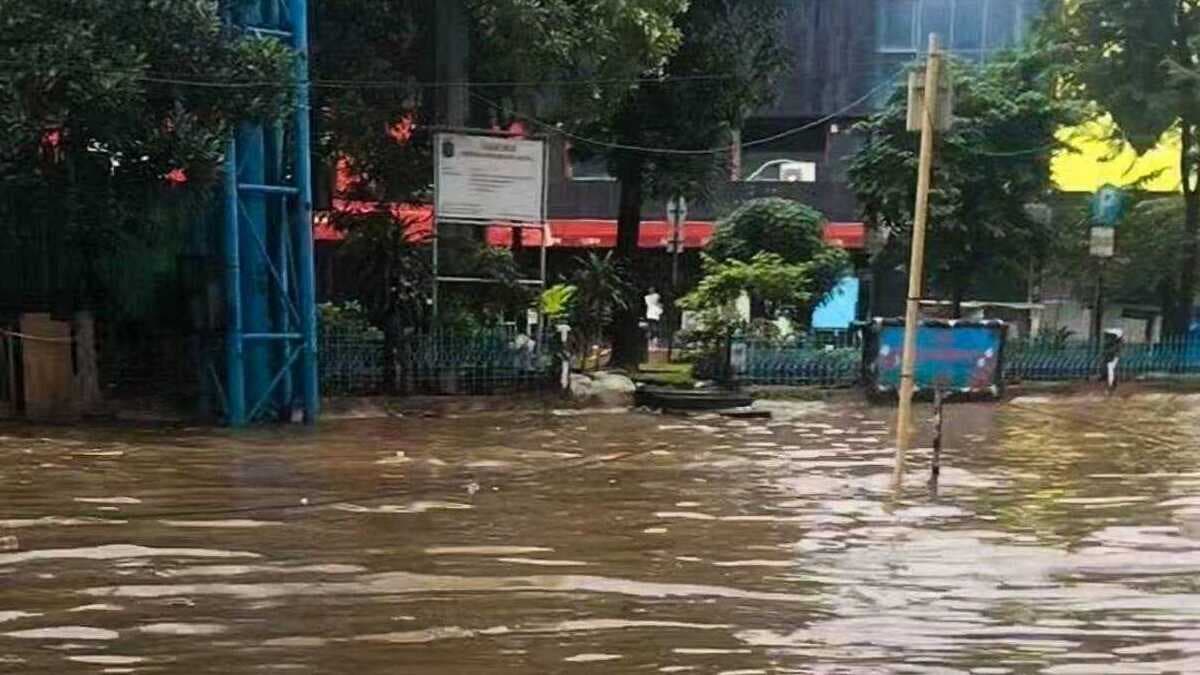
Indonesia: Heavy rainfall over the weekend triggered widespread flooding across parts of Java, severely disrupting railway services and urban mobility in Jakarta and Central Java.
Indonesia’s state-owned rail operator PT Kereta Api Indonesia (KAI) cancelled dozens of passenger and freight trains, adjusted commuter schedules, and implemented emergency diversions as floodwaters inundated tracks and stations.
In the capital, KAI adjusted operations on the Jakarta commuter line (Kereta Rel Listrik or KRL) after floodwaters submerged several stations within Operational Region 1.
President Director Bobby Rasyidin said train movements were hampered at Kampung Bandan, Pasoso, Tanjung Priok, and Jakarta Kota stations.
“The tracks are submerged in floodwater,” Bobby told a press conference in Jakarta on Sunday, 18 January 2026, as quoted by Antara.
The conditions forced KAI to modify operating patterns for several KRL services, particularly on the Jakarta Kota loop line and routes serving Tanjung Priok Station.
Bobby noted that other corridors remained unaffected.
“There are no problems on the Bogor–Bekasi line,” he said, adding that the Bogor–Jakarta Kota route had returned to normal operations.
Flooding also led to the cancellation of eight intercity trains departing from Jakarta.
Bobby said overnight recovery efforts were under way in the hope of restoring services swiftly, stressing that all operational decisions were taken with safety as the top priority due to the risk of electrical short circuits on inundated tracks.
Large-scale cancellations in Central Java
The impact was even more severe in Operational Region 4 Semarang, particularly in the Pekalongan area of Central Java.
KAI cancelled 82 passenger train services and 16 freight trains, while around 76 other services experienced delays.
Bobby said extreme weather over the previous two to three days had triggered flooding, which was exacerbated by embankment breaches and high tide conditions.
Initial disruption occurred between Kaliwungu Station and Kalibodri Station, where KAI carried out emergency repairs on 17 January by lifting rails and laying around 105 cubic metres of ballast.
Later the same day, conditions worsened when two rivers adjacent to the railway line overflowed between Pekalongan Station and Sragi Station, flooding the track between kilometre points 88+900 and 89+100.
“This combination of embankment breaches and high tides caused upstream water to remain trapped and inundate the railway line. This has never happened before in the area,” Bobby said.
Although the affected tracks are now passable, speed restrictions remain in place for safety reasons.
KAI said it is coordinating with relevant ministries and agencies to repair the breached embankments and has begun planning permanent mitigation measures.
Follow-up works were scheduled to begin on Monday, 19 January.
KAI has also introduced three mitigation steps: accelerating track repairs, providing recovery services to affected passengers, and offering ticket refunds.
Jakarta floods gradually recede
The rail disruptions unfolded alongside widespread flooding in Jakarta.
According to Jakarta Regional Disaster Management Agency (BPBD DKI Jakarta), heavy rainfall since Saturday night inundated 45 neighbourhood units (rukun tetangga) and 21 road sections across the capital.
As of Sunday afternoon, water levels ranged from 10 centimetres to as much as one metre.
By Monday morning, conditions had improved significantly. Floodwaters had receded in several previously inundated areas, including Bidara Cina, Kampung Melayu, and Cawang. Transport access on major routes such as West Kelapa Gading Boulevard Road and Muara Baru Road had returned to normal.
BPBD recorded only one remaining flooded road section — Kampung Sepatan Road in Rorotan, Cilincing — with water levels of around 20 centimetres.
Nevertheless, dozens of residents in West Jakarta were still staying at evacuation posts, including at RPTRA Alur Anggrek in Tegal Alur and Al Falah Mosque in Kamal.
Ongoing vigilance urged
The Jakarta Provincial Government continues to deploy joint personnel from the Water Resources Agency, Bina Marga, and the Fire and Rescue Agency to pump out residual floodwater.
BPBD said the remaining inundation was expected to subside in the near term.
Despite the gradual improvement, authorities urged the public to remain cautious. Indonesia’s Meteorology, Climatology and Geophysics Agency has forecast the possibility of further heavy rainfall in parts of Jakarta.