Indonesia opens corruption trial of ex-education minister over US$125 million digital programme losses
The corruption trial of former education minister Nadiem Makarim has begun in Jakarta, with prosecutors alleging a flawed education digitalisation programme caused Rp 2.1 trillion in state losses through overpricing and unnecessary procurement.
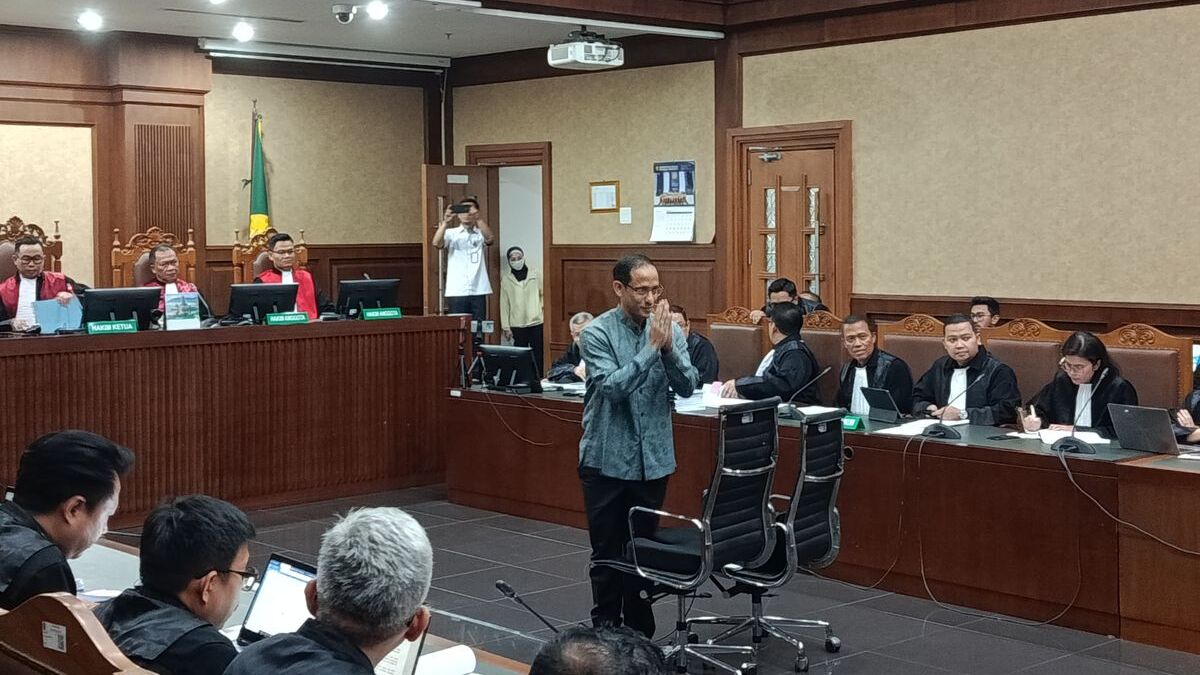
- Prosecutors have opened the corruption trial of former education minister Nadiem Makarim at the Central Jakarta District Court.
- The case centres on an education digitalisation programme allegedly causing Rp 2.1 trillion in state losses.
- Prosecutors allege overpricing, unnecessary procurement and enrichment of officials and private companies.
Indonesian public prosecutors on Monday, 5 January 2026, opened the corruption trial of former education minister Nadiem Anwar Makarim, accusing him of orchestrating a flawed education digitalisation programme that allegedly caused Rp 2.1 trillion (about US$125 million) in state losses.
Reading the indictment at the Central Jakarta District Court, prosecutors said Nadiem and his co-defendants manipulated the procurement of Chromebook laptops and Chrome Device Management (CDM) systems at the Ministry of Education, Culture, Research and Technology (Kemdikbudristek) between 2019 and 2022.
The scheme allegedly involved inflated prices, unnecessary procurement and the enrichment of officials and private companies.
“The defendant Nadiem Anwar Makarim received Rp 809,590,125,000,” a prosecutor told the court, adding that a total of 25 parties—12 ministry officials and 13 private-sector actors—were alleged to have benefited from the programme.
Alleged overpricing and unnecessary procurement
According to prosecutors, state losses consist of Rp 1.56 trillion stemming from inflated Chromebook prices and a further Rp 621 billion from the procurement of CDM services deemed unnecessary and of no benefit.
The losses were calculated by Indonesia’s Financial and Development Supervisory Agency (BPKP) based on an audit completed in November 2025.
Prosecutors argued that the procurement process violated basic principles of planning and budgeting.
They alleged that reviews and technical studies of information and communication technology (ICT) needs were deliberately directed toward Chromebooks and CDM without identifying the actual needs of schools across Indonesia.
The indictment said the resulting equipment was poorly suited—particularly in frontier, outermost and disadvantaged regions (3T areas)—where limited internet access rendered the devices largely unusable.
Unit prices and budget allocations for 2020 were allegedly prepared without credible survey data and later reused as the basis for procurement in 2021 and 2022.
Prosecutors also alleged that procurement through the government e-Catalogue and the School Procurement Information System (SIPLah) was conducted without price evaluations or reliable price references, enabling systematic overpricing.
Co-defendants and charges
Nadiem is charged alongside three other defendants: Mulyatsyah, former Director of Junior High Schools and Budget User Authority; Sri Wahyuningsih, former Director of Primary Schools; and Ibrahim Arief, a former technology consultant at the ministry.
Prosecutors also named Jurist Tan, Nadiem’s former special staff member, as a key figure in the case; Tan is currently a fugitive.
All defendants are charged under Articles 2 and 3 of Indonesia’s Anti-Corruption Law, in conjunction with Article 55 of the Criminal Code—provisions that carry heavy prison sentences and asset forfeiture penalties.
New Criminal Procedure Code applied
The panel of judges confirmed that the trial is being conducted under Indonesia’s new Criminal Procedure Code (KUHAP), which came into force on 2 January 2026.
Although the case was transferred to the court in December 2025, the reading of the indictment took place after the new law became effective.
Both prosecutors and the defence agreed to the application of the new procedural law, citing the lex mitior principle, under which the law more favourable to the defendant should be applied.
The substance of the charges, however, continues to rely on the Anti-Corruption Law because the alleged acts occurred before the new code took effect.
Brief profile
Nadiem Makarim is a former technology entrepreneur and the founder of Gojek, who became Indonesia’s youngest education minister at the age of 35.
Educated in the United States, he entered government with a reputation as a reformist figure promoting digital transformation.
That reputation is now under intense scrutiny as the court examines whether the education digitalisation programme under his leadership was used to benefit officials and companies at the expense of public funds.