Indonesia urged to reform waste system after Bantargebang landfill landslide kills seven in Bekasi
Environmental groups are urging urgent reform of Indonesia’s waste governance after a landfill landslide at Bantargebang in Bekasi killed seven people and exposed structural weaknesses in the country’s waste management system.
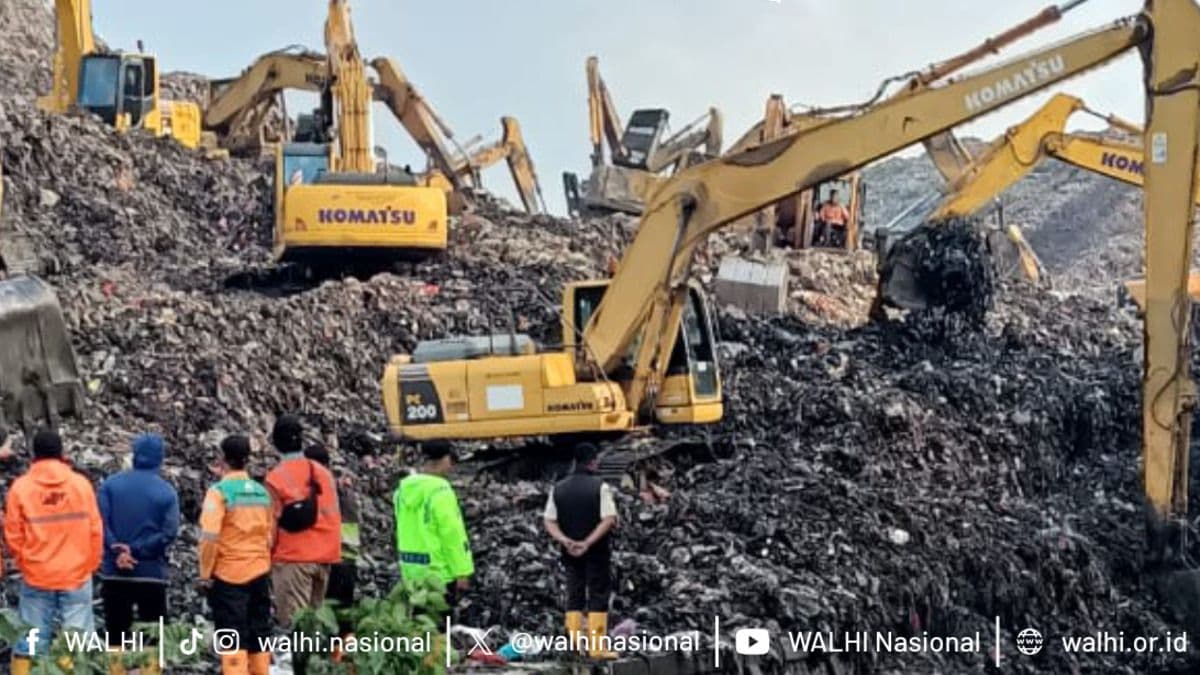
- Seven people were killed in a waste landslide at the Bantargebang landfill in Bekasi on 8 March 2026.
- Environmental groups say the disaster exposes structural weaknesses in Indonesia’s landfill-based waste system.
- NGOs are calling for urgent reforms focused on waste reduction, recycling and community-based management.
Environmental organisations have called for urgent reform of Indonesia’s waste governance following a deadly landslide at the Bantargebang landfill in Bekasi, West Java, which serves as the main disposal site for waste from Jakarta.
The incident occurred on Sunday, 8 March 2026, when a massive mound of rubbish collapsed at the Bantargebang Integrated Waste Management Facility, burying vehicles, roadside structures and workers in the area. Authorities later confirmed that seven people were killed and six others survived.
Environmental groups say the disaster highlights structural weaknesses in Indonesia’s waste management system and reflects long-standing reliance on landfill disposal.
WALHI: landfill reliance has created a “waste mountain emergency”
The Indonesian Forum for the Environment (WALHI) said the collapse of a waste mound at Bantargebang demonstrates that the country’s waste management model has reached a critical point.
The organisation said the system, which still largely follows a “collect, transport and dump” approach, has resulted in massive piles of waste at landfill sites that pose environmental and safety risks for workers, waste pickers and nearby communities.
“This incident reopens old wounds that should have been an important lesson for the state,” said Wahyu Eka Styawan, WALHI’s Urban Justice Campaigner.
He referred to the Leuwigajah landfill disaster in West Java in 2005, when a massive waste landslide killed hundreds of people. More than two decades later, he said, waste management practices across the country still depend on piling waste at final disposal sites.
Wahyu also noted that other landfill incidents have occurred in recent years, including a collapse at the Cipayung landfill.
“During this rainy season alone there have been three to five landslide incidents within just six months,” he said.
According to WALHI, the conditions at Bantargebang reflect a broader crisis affecting urban waste systems in Indonesia. Many landfill sites have exceeded their capacity while waste generation continues to increase.
The organisation noted that around 343 out of approximately 550 landfill sites nationwide have been closed because they operated as open dumping facilities.
Wahyu said the situation indicates what he described as a “waste mountain emergency”, warning that continued reliance on landfills will increase the risk of ecological and humanitarian disasters.
Waste crisis shifting between regions
WALHI also argued that the disaster illustrates how waste problems are often transferred from one region to another.
“The crisis at Bantargebang is also a clear example of how the waste crisis is merely shifted from one region to another,” Wahyu said.
He said Jakarta’s waste management failures have effectively been transferred to Bekasi, where the Bantargebang facility is located. Meanwhile, the closure of the Cipeucang landfill in South Tangerang has pushed local authorities to search for new disposal sites in other areas such as Serang and Bogor.
According to WALHI, such arrangements demonstrate the absence of effective upstream waste reduction strategies.
Greenpeace calls for shift to source-based solutions
Greenpeace Indonesia also described the Bantargebang landslide as a warning that landfill-based waste management is no longer safe or sustainable.
Ibar Akbar, a Zero Waste Campaigner with Greenpeace Indonesia, said the current system must shift towards reducing plastic production, expanding reuse systems and improving waste sorting at the source.
“The government, particularly the Jakarta Provincial Government, must improve waste governance, starting from reducing household organic waste to providing sorting infrastructure at the neighbourhood level,” he said.
He noted that Jakarta already has Governor Regulation No. 77 of 2020, which requires waste management at the neighbourhood unit level. However, he said the policy requires stronger implementation and support.
Greenpeace said Bantargebang should no longer be viewed solely as a dumping site, as workers and residents live in close proximity to the facility.
Concerns over the treatment of waste workers
Greenpeace Indonesia Climate Justice Campaigner Jeanny Sirait also criticised remarks made by Jakarta Governor Pramono Anung on social media questioning why people were working at the site during heavy rainfall.
According to Jeanny, such comments overlook the realities faced by waste workers who depend on the landfill for their livelihoods.
“We must remember that waste pickers are the most crucial actors in the waste economy chain. Their contribution is extremely significant in reducing daily waste volumes,” she said.
Despite their role in recycling and waste reduction, she said waste pickers continue to face multiple vulnerabilities, including health risks, unstable incomes and unsafe working conditions.
Jeanny added that climate change is increasing these risks, including workplace hazards such as landslides at landfill sites.
Calls for community-based waste solutions
Environmental groups say the disaster should prompt the government to prioritise community-based waste management approaches.
Jeanny said climate resilience and social benefits can be achieved through a combination of local initiatives and supportive government policies.
She pointed to existing policy frameworks in Jakarta, including Governor Regulation No. 90 of 2021 on the Low Carbon Development Plan and Regional Regulation No. 4 of 2019 on Community Involvement in Waste Management, which promote community participation.
However, Greenpeace said these policies have not been implemented fully.
The organisation has documented several community-based climate initiatives in areas such as Pari Island, Marunda and Bantargebang through research conducted jointly with the SMERU Research Institute.
NGOs call for systemic reform
Both WALHI and Greenpeace have urged the Indonesian government to accelerate reforms that prioritise waste reduction at the source rather than focusing mainly on landfill disposal.
WALHI said the Bantargebang disaster should serve as a warning that Indonesia must transform its waste governance system in line with Law No. 18 of 2008 on Waste Management, which emphasises waste reduction and responsible management.
Without fundamental changes to waste governance, the organisation warned, Indonesian cities will continue to face similar disasters in the future, with increasing consequences for both communities and the environment.