Indonesian comedian faces police probe after Netflix satire sparks debate on free speech and religion
Pandji Pragiwaksono’s stand-up special Mens Rea has ignited a national debate on satire and free expression, after police confirmed they are following up on complaints under Indonesia’s new Criminal Code.
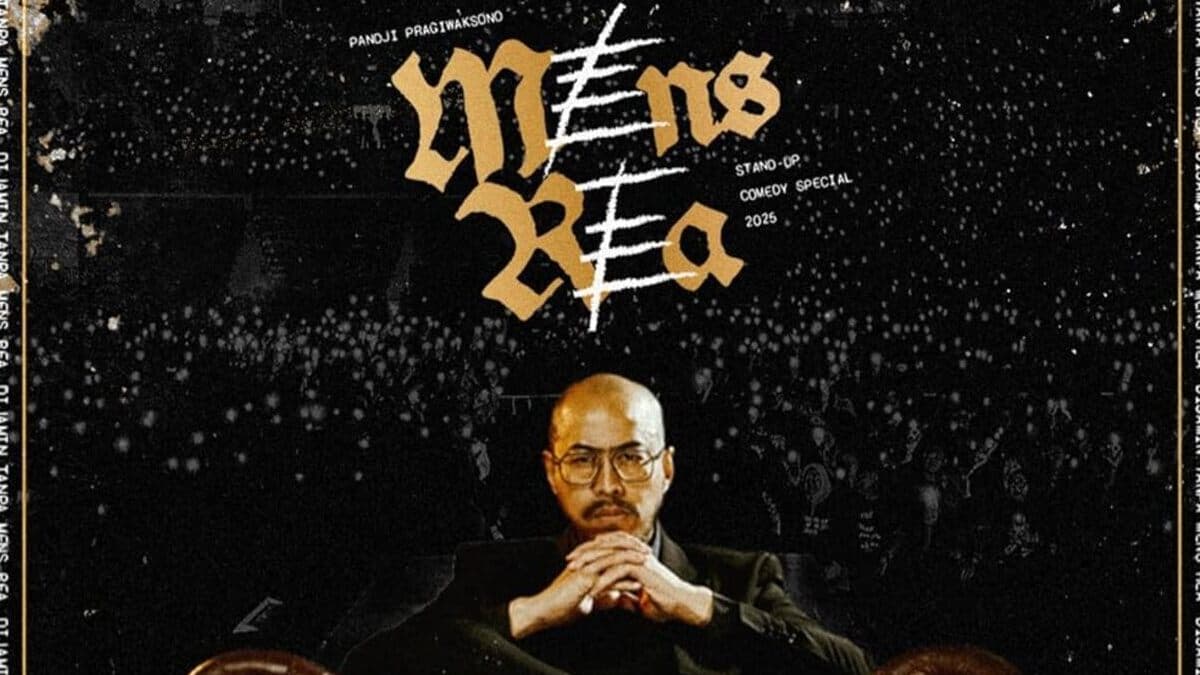
- Comedian Pandji Pragiwaksono faces police scrutiny after his stand-up special Mens Rea aired on Netflix without edits.
- The controversy centres on political satire, religious sensitivity, and the application of Indonesia’s new Criminal Code.
- Major Islamic organisations have distanced themselves from the police report, urging dialogue over criminalisation.
Indonesian comedian Pandji Pragiwaksono has become the focus of a national debate over satire, freedom of expression, and criminal liability after his stand-up special Mens Rea was released globally on Netflix on 27 December 2025 without edits or censorship.
The show quickly ranked among the most watched titles on Netflix Indonesia and triggered intense discussion across social media, religious groups, and legal circles.
While supporters describe the special as a blunt reflection of Indonesia’s political reality, critics argue that parts of the material cross ethical and legal boundaries, particularly in relation to religion and public order.
The controversy escalated in early January when police confirmed they were examining a formal complaint accusing Pandji of public incitement and religious defamation.
What does mens rea mean?
The title of the special is drawn from criminal law. Mens rea — Latin for “guilty mind” — refers to the mental element or intention behind an unlawful act.
Together with actus reus, the physical act, it forms the basis of criminal liability in many legal systems.
By using Mens Rea as the title of his performance, Pandji explicitly frames his comedy around intention: who truly intends harm, who benefits from power, and whether anger, satire, or criticism can — or should — be equated with criminal intent.
The irony is not lost on observers, given that his own intention as a comedian is now being scrutinised through a criminal law lens.
What Pandji actually says on stage
In Mens Rea, Pandji delivers more than 90 minutes of tightly structured political satire, blending personal anecdotes, exaggerated analogies, and explicit social commentary.
Much of the material is rooted in the aftermath of Indonesia’s 2024 general election and the political realignments that followed.
One of the earliest segments targets what Pandji describes as the “chaos” of national politics, where power is exercised without accountability and consequences rarely follow wrongdoing. He mocks political elites for speaking about morality and nationalism while engaging in transactional politics behind closed doors.
A widely discussed routine focuses on a former police general allegedly implicated in a narcotics case. Pandji frames the joke as being “on the edge of a cliff”, deliberately pushing the limits of discomfort. He contrasts the severity of punishment faced by ordinary citizens with the apparent impunity enjoyed by powerful figures, using irony rather than direct accusation.
Another major theme is the rise of entertainers and public figures in electoral politics. Pandji argues that democracy in Indonesia still relies heavily on popularity rather than competence. He explicitly names several figures in West Java — Dede Yusuf, Dicky Chandra, Deddy Mizwar, Sahrul Gunawan, and Jeje Govinda — as examples of celebrities who have successfully transitioned into political office.
Pandji stresses that his criticism is not aimed at the individuals themselves, but at voters and political parties who, in his view, prioritise familiarity, religious symbolism, and emotional appeal over policy expertise and governance experience.
Power-sharing, religion, and political barter
One of the most contentious sections of Mens Rea addresses post-election power-sharing.
Pandji criticises parties that initially positioned themselves as opposition but later joined the governing coalition in exchange for cabinet posts and political influence.
He argues that this has resulted in a weak opposition and diminished checks and balances in parliament.
It is in this context that Pandji introduces an analogy involving mining concession permits and mass religious organisations.
Referring to reports that concessions were granted to Nahdlatul Ulama and Muhammadiyah, which are among the largest religious mass organisations in Indonesia, Pandji frames the issue as an illustration of political quid pro quo.
On stage, he does not accuse the organisations directly of wrongdoing, but questions the broader system in which religious legitimacy, political support, and economic rewards intersect.
This segment later became the basis for allegations that Pandji had demeaned or politicised Islam, despite the fact that the leadership of both organisations distanced themselves from the police report.
“No viral, no justice”
Another recurring motif in Mens Rea is what Pandji calls Indonesia’s “no viral, no justice” reality.
He argues that many legal cases only receive serious attention after going viral on social media, effectively turning public outrage into a prerequisite for law enforcement action.
Pandji links this phenomenon to declining public trust in institutions, suggesting that citizens no longer believe justice will be delivered through formal channels alone. The joke lands through repetition and exaggeration, but it reflects a widely shared public frustration.
Criticism of political privilege
Pandji also directs satire at political dynasties and privilege.
He refers to Kaesang Pangarep, who rapidly became a party chairman, as an example of how political access can be accelerated through family connections.
His jokes about Gibran Rakabuming Raka drew particular attention online, as Pandji questioned merit, preparedness, and the normalisation of political inheritance.
He also mocks campaign theatrics associated with Prabowo Subianto, portraying them as spectacle rather than substance.
These segments sparked reactions from public figures, including musician and doctor Tompi, and fuelled online debate over whether satire targeting elected leaders should have limits.
Development, evictions, and “wo yao chi chao fan”
The latter part of Mens Rea turns to development and displacement, particularly the Rempang Eco-City project.
Pandji criticises forced evictions, state–foreign investment relations, and national strategic projects that, he argues, prioritise capital over citizens.
Using an intentionally absurd recurring phrase — “wo yao chi chao fan” — Pandji symbolises what he describes as the erasure of local lives and culture in the name of progress.
The joke functions as dark humour, masking anxiety over dispossession and loss of living space.
Who is Pandji Pragiwaksono?
Pandji Pragiwaksono Wongsoyudo was born in Singapore on 18 June 1979 and raised in Jakarta. He is a graduate of the Institut Teknologi Bandung, where he studied industrial product design.
He began his career as a radio broadcaster before becoming a television presenter, rapper, writer, filmmaker, and one of the pioneers of Indonesia’s modern stand-up comedy movement. In 2011, he co-founded the Stand Up Comedy Indonesia (Standupindo) community, which helped establish stand-up comedy as a mainstream cultural form in the country.
Known for his outspoken political views, Pandji has long used comedy as a vehicle for social critique. Since 2021, he and his family have been based in New York as he seeks to expand his international career.
Police report and legal basis
The controversy moved from public debate to legal scrutiny after a police report was filed with the Jakarta Metropolitan Police on 8 January 2026.
The report was submitted by groups calling themselves the Muhammadiyah Youth Alliance and the Nahdlatul Ulama Youth Wing.
Police said the case is being handled under Indonesia’s new Criminal Code, Law No. 1 of 2023.
Pandji has been reported under several provisions, including Articles 300 and 301, which regulate acts of hostility or hatred towards religions and their dissemination via public or digital platforms.
Pandji has said he will comply with the legal process and is open to dialogue with those who feel offended by his material.
Meanwhile, leaders of Indonesia’s two largest Islamic organisations have distanced themselves from the police report, stressing that the groups who filed it do not represent official institutional positions.