Indonesian students dump truckloads of rubbish outside mayor’s office over South Tangerang waste crisis
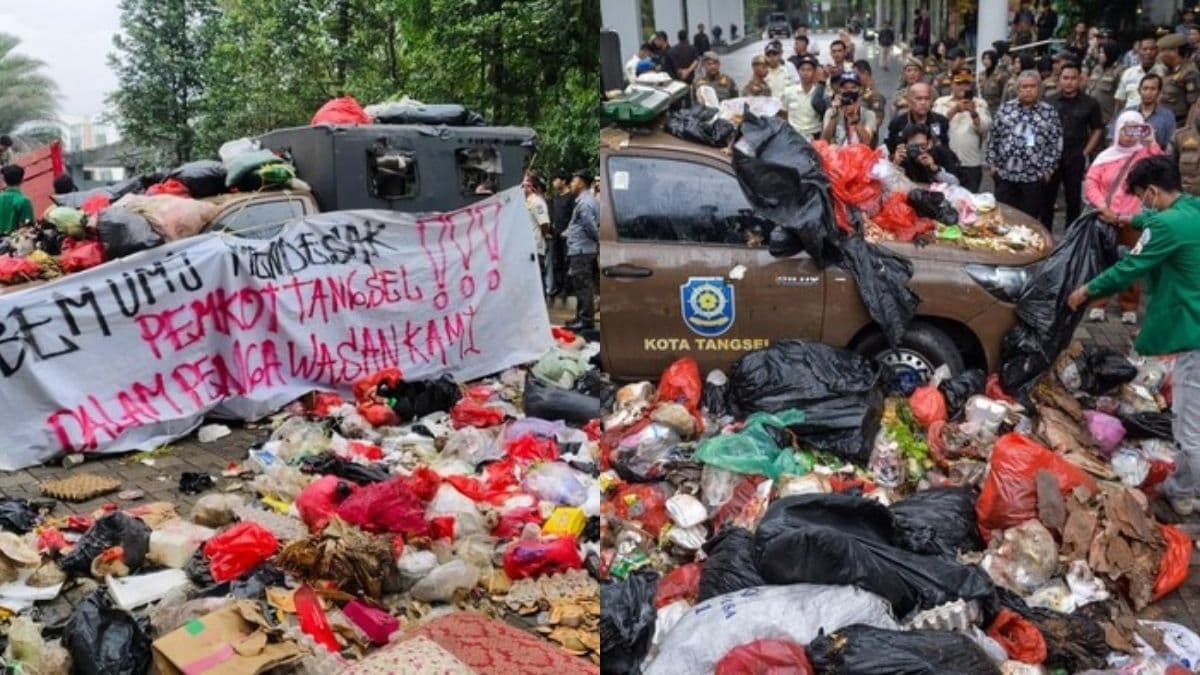
University students in South Tangerang, Indonesia, dumped two truckloads of rubbish outside the mayor’s office to protest what they described as the city administration’s failure to resolve a prolonged waste crisis linked to landfill disruptions.
- University students protested outside the South Tangerang mayor’s office by dumping two truckloads of rubbish, criticising prolonged waste mismanagement.
- The action highlighted mounting public frustration amid a waste emergency linked to the partial closure of the Cipeucang landfill.
- City authorities acknowledged the protest and said gradual waste collection and longer-term solutions were under way.
INDONESIA: Dozens of university students staged a protest outside the South Tangerang mayor’s office on Thursday, dumping two truckloads of rubbish to highlight what they described as the city government’s failure to resolve a prolonged waste management crisis.
The protest was organised by members of the Student Executive Board (BEM) of Universitas Muhammadiyah Jakarta (UMJ).
Local police said the demonstration took place on 8 January 2026 and was carried out in an orderly manner despite brief tensions.
Ciputat Timur police chief Bambang Askar Sodiq said approximately 30 protesters participated in the action, which began at around 4:00 p.m. local time and concluded at 5:06 p.m.
“The protesters unloaded rubbish from two trucks and delivered speeches beside the South Tangerang mayor’s office,” Bambang said, as quoted by local media. He added that the situation was under control after the protest ended.
Officers from the city’s Environmental Agency later removed the rubbish dumped outside the compound. Bambang said the waste was transported away using vehicles belonging to the agency’s sanitation division.
Demands presented to the city administration
During the protest, the students submitted seven demands to the South Tangerang city administration, focusing on immediate and structural improvements to waste management across the city.
Among their demands was a call for the Environmental Agency to conduct comprehensive and routine waste collection, particularly at locations prone to frequent rubbish accumulation.
They also urged the mayor to take concrete responsibility for resolving the waste crisis, including adding more collection fleets and carrying out a thorough evaluation of the city’s waste management system.
Other demands included firm accountability for illegal dumping incidents and the implementation of residual waste processing using Refuse-Derived Fuel or waste-to-energy technology, often referred to locally as PSEL.
The students further called for greater transparency and public accountability in the Environmental Agency’s performance, including clearer communication with residents affected by the waste buildup.
Tensions during the demonstration
The protest was briefly marked by tension between students and public order officers from Satpol PP, who attempted to block the trucks from entering the mayor’s office compound.
A verbal confrontation reportedly followed before the students proceeded to unload the rubbish near the office.
UMJ BEM chairman Muhammad Iqbal Ramdhani said the action was intended as peaceful criticism of what he described as the city government’s lack of tangible action.
“We came peacefully and wanted to show the real conditions of the rubbish piling up,” Iqbal said at the site. “The government should be responsive, not block our protest.”
Repeat action and warning to authorities
Thursday’s protest marked the second similar action by UMJ students in recent weeks. A previous demonstration took place on 26 December 2025, when students also brought rubbish to a government office.
Iqbal said the students would continue to monitor developments closely if no visible improvements were made in the near term.
“We will wait no longer than 7×24 hours. Outside office hours do not count,” he said. “Public office is a political mandate that does not recognise holidays.”
City government response
The South Tangerang city administration said it acknowledged the concerns raised by the students and regarded them as a serious matter.
“We understand the concerns and aspirations expressed by the students regarding waste management issues in South Tangerang,” said TB Asep Nurdin, head of the city’s communications office, speaking on behalf of the administration.
Asep said waste collection was being carried out gradually across the city, with additional fleets deployed to accelerate the process and address accumulated rubbish.
He explained that ongoing restructuring work at the Cipeucang landfill had affected waste transportation patterns.
“Due to restructuring at the Cipeucang landfill, waste management and transportation are being conducted in a measured and gradual manner,” Asep said. “Collection continues daily and is being evaluated to become faster and more effective.”
He added that the administration was focusing on both short-term mitigation and longer-term improvements, including strengthening infrastructure and equipment across the waste management chain.
According to local media, the city is also exploring cooperation with neighbouring regions and private partners, while developing waste-to-energy projects as a longer-term solution.
Broader context of the waste crisis
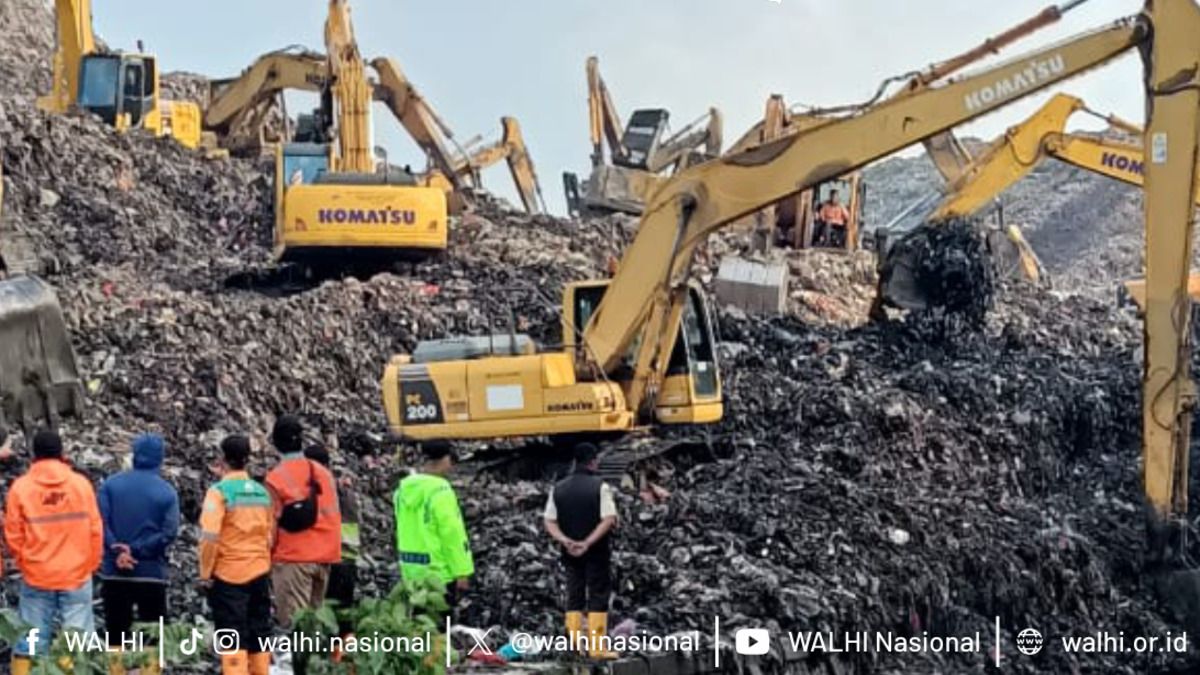
South Tangerang has faced a waste emergency since mid-December 2025, following the temporary closure of the Cipeucang landfill after it became overloaded and suffered a landslide that blocked water channels leading to the Cisadane River.
According to CNA, repair works involving multiple excavators disrupted normal waste disposal, leaving rubbish to pile up across roads, pavements, markets and residential areas.
The accumulation produced strong odours and disrupted daily activities for residents in several districts.
Local officials said some rubbish piles were the result of illegal dumping from multiple areas, as disposal options became limited. Several affected sites were later covered with tarpaulins and sprayed to reduce odour and prevent further dumping.
Public health and accountability concerns
Environmental activists and residents have raised concerns about potential health risks arising from prolonged waste accumulation, particularly in areas surrounding the Cipeucang landfill.
Willy, chairman of the JARI ’98 Presidium, said the issue extended beyond environmental damage and raised questions about transparency in waste management budgeting.
“If there are indications of corruption related to waste management budgets, the Corruption Eradication Commission, the Attorney General’s Office and the police should conduct serious investigations,” he said.
The issue has gained national attention after Environment Minister Hanif Faisol Nurofiq previously described South Tangerang as among Indonesia’s dirtiest cities.
He warned that failures in waste management fall under the responsibility of the mayor, as stipulated in Law No. 18/2008 on waste management.