Nadiem Makarim denies early Google meetings in Chromebook corruption trial
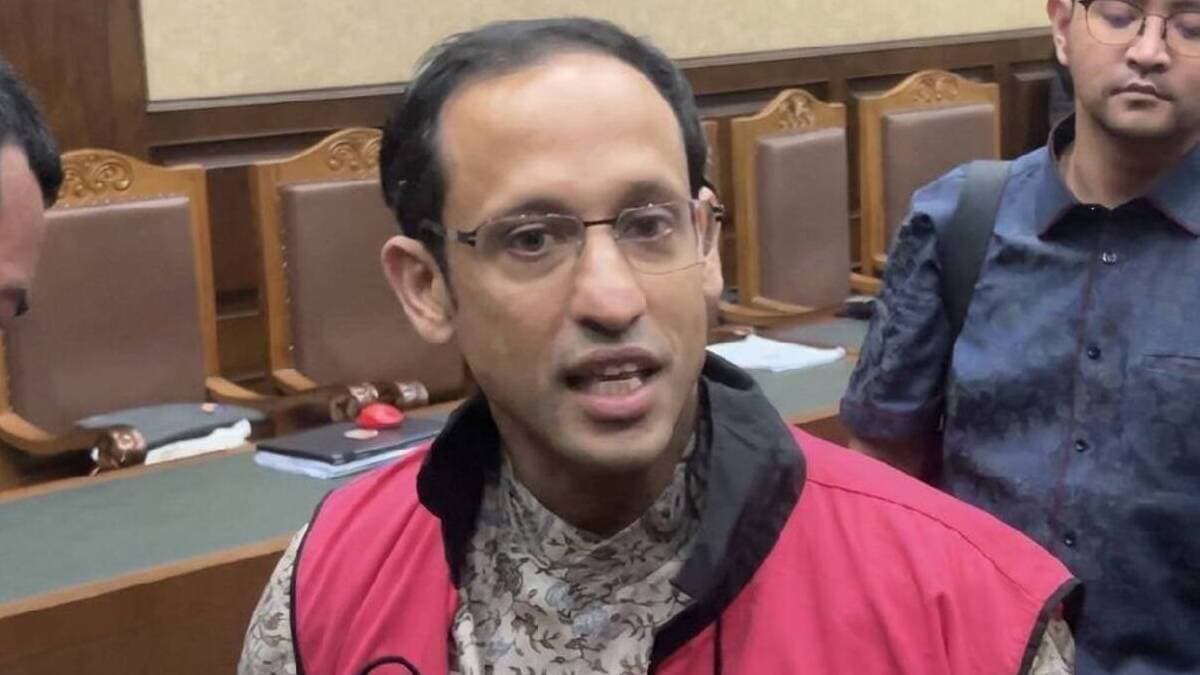
Former education minister Nadiem Makarim has denied allegations of early meetings and collusion with Google in Indonesia’s Chromebook procurement case, calling key witness testimony “untrue and misleading” during a Jakarta Corruption Court hearing.
- Former education minister Nadiem Makarim rejected witness claims of early meetings and collusion with Google executives.
- He told the Jakarta Corruption Court that cooperation with Google in 2020 was limited to emergency distance learning tools, not Chromebooks.
- Prosecutors allege the Chromebook procurement caused state losses of Rp2.18 trillion between 2019 and 2022.
Former Indonesian education minister Nadiem Makarim has formally rejected key elements of witness testimony in the high-profile corruption trial over the procurement of Chromebook-based laptops, insisting that claims of early meetings and collusion with Google executives are “untrue and misleading”.
Speaking during a hearing at the Jakarta Corruption Court on Monday, 26 January 2026, Nadiem denied statements made by prosecution witness Ganis Samoedra Murharyono, Google Strategic Partner Manager for Chrome OS at Google Indonesia.
The witness had alleged that meetings and communications between Nadiem and Google officials occurred before the government launched its controversial Chromebook procurement programme.
Disputed timeline of meetings
Nadiem told the court that Ganis’s testimony, as recorded in the official police investigation report (Berita Acara Pemeriksaan, or BAP), did not match the facts. He denied meeting any Google representatives in November 2019, as claimed by the witness, and said his first interaction with Google took place only in February 2020, followed by a subsequent meeting in April that year in an open forum.
“My first meeting with Google was in February, not November,” Nadiem said in court, adding that the witness had since corrected his own statement regarding the date of the alleged meeting.
Nadiem also rejected claims that he had been informed in March 2020 that the Ministry of Education, Culture, Research and Technology would adopt Google for Education solutions, including Chromebooks.
According to Nadiem, cooperation with Google in the early phase of the COVID-19 pandemic was limited to the use of Google Classroom as part of emergency distance learning measures.
“That had nothing to do with Chromebooks,” he said, stressing that Google was only one of seven digital platform providers engaged at the time.
Confrontation over alleged approval
Tensions rose during the hearing when Nadiem repeatedly asked Ganis to confirm his statements, particularly the claim that Colin Marson, a Google executive identified as Head of Google for Education in Southeast Asia, had conveyed Nadiem’s approval for the use of Chromebooks in March 2020. Ganis stood by his testimony, saying it was consistent with the police report, although he acknowledged uncertainty over the exact date of an earlier meeting.
The panel of judges intervened several times, reminding the defendant that his denials had been formally recorded and cautioning him against turning statements into arguments rather than questions.
At the close of questioning, Nadiem explicitly refuted three points in the witness’s account: the alleged November 2019 meeting, the purported March communication with Colin Marson, and the claim that he had been asked directly to incorporate Chrome Device Management (CDM) so that Google could profit.
“I would like to formally refute the statement, Your Honour—that is a false statement,” Nadiem said.
Scale of alleged losses
The case centres on the education digitalisation programme implemented between 2019 and 2022, which involved the large-scale procurement of Chromebooks and CDM software by the Ministry of Education, Culture, Research and Technology. Prosecutors allege that the scheme caused state losses of Rp2.18 trillion, equivalent to approximately US$139 million.
According to the indictment, the losses include inflated Chromebook prices amounting to Rp1.56 trillion (around US$99 million) and an additional US$44.05 million spent on CDM licences deemed unnecessary and ineffective for Indonesian schools.
Nadiem is accused of committing corruption alongside three other defendants: Ibrahim Arief, also known as Ibam; Mulyatsyah; and Sri Wahyuningsih. Another suspect, Jurist Tan, remains at large.
Prosecutors further allege that Nadiem benefited indirectly from the scheme through funds linked to PT Aplikasi Karya Anak Bangsa (Gojek’s parent company), which received a US$786.99 million investment from Google. The indictment claims this translated into Rp809.59 billion—approximately US$52 million—in benefits connected to Nadiem.
Open meetings, not collusion
Outside the courtroom, Nadiem dismissed suggestions that his interactions with Google executives amounted to secret dealings. He insisted that all meetings were conducted openly, formally recorded, and attended by multiple parties.
“It is quite absurd that an open meeting with Google is portrayed as if it were some kind of secret or malicious arrangement,” he said, adding that in 2020 he met Google executives three times, while holding four meetings with Microsoft and two with Apple during the same period.
“So this has become a narrative as if my meetings were something improper, when in fact I met Microsoft more often than Google,” Nadiem said, accusing prosecutors of constructing a misleading storyline.
Nadiem has been charged under Indonesia’s Anti-Corruption Law, facing potential liability under Article 2 or Article 3 in conjunction with Article 18, as well as provisions of the Criminal Code on joint criminal responsibility. The trial is ongoing, with the court expected to hear further witness testimony in the coming weeks.