Myanmar military airstrike on hospital kills over 30 in Mrauk-U, Rakhine
More than 30 people have been killed and around 70 wounded after a military airstrike struck a hospital in Mrauk-U, Rakhine State, amid intensified conflict ahead of elections scheduled for 28 December.
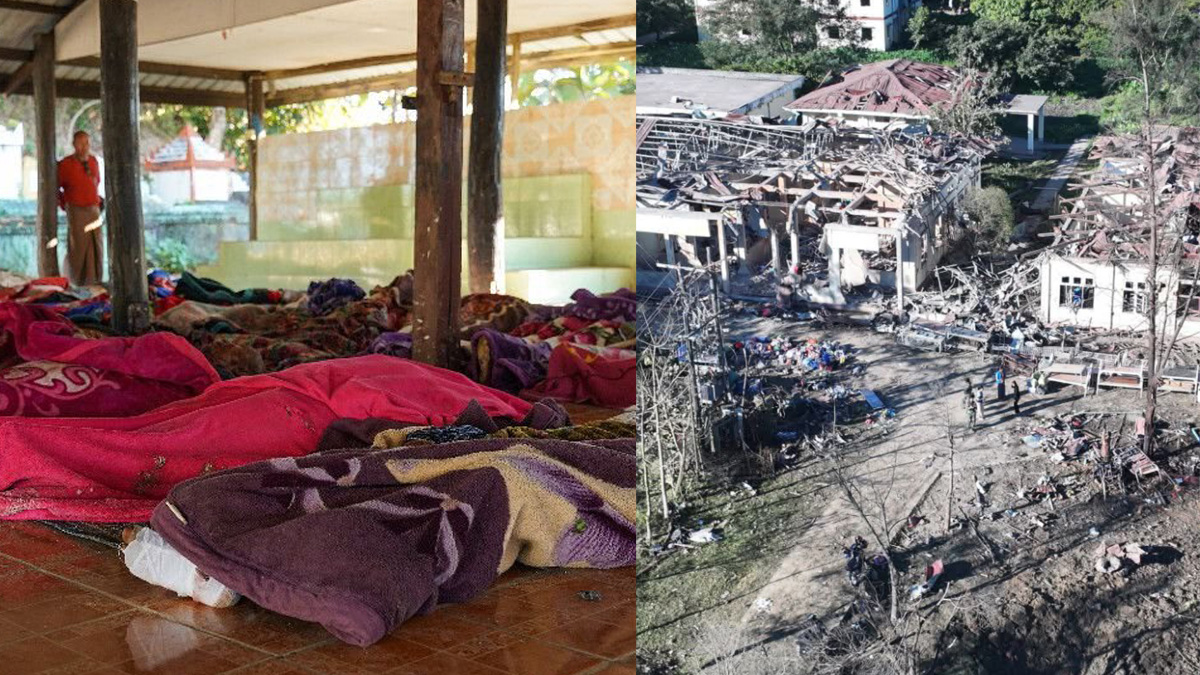
- A military airstrike struck Mrauk-U General Hospital in western Myanmar, killing over 30 people and injuring at least 68.
- The attack comes amid intensifying conflict ahead of national elections scheduled to begin on 28 December.
- UN and WHO have condemned the bombing, warning it may constitute a war crime.
A military airstrike on the evening of 11 December, 2025, hit the general hospital in Mrauk-U, a township in Myanmar's Rakhine State, killing more than 30 people and injuring around 70 others, according to aid workers, witnesses, and the Arakan Army.
The hospital, the largest in the area, was reportedly operating at full capacity when the bombing occurred. The facility was “completely destroyed,” according to Arakan Army spokesperson Khine Thu Kha, who said the attack led to a high number of casualties due to a direct hit on the building.
The Arakan Army’s health department confirmed that at least 10 patients were killed immediately in the strike.
Images shared by aid worker Wai Hun Aung showed the aftermath, with collapsed beams, cratered ground, and victims’ bodies laid out in the ruins. He stated that as of Thursday morning, 31 deaths were confirmed, and more fatalities were expected. "The situation is very terrible," he told AFP.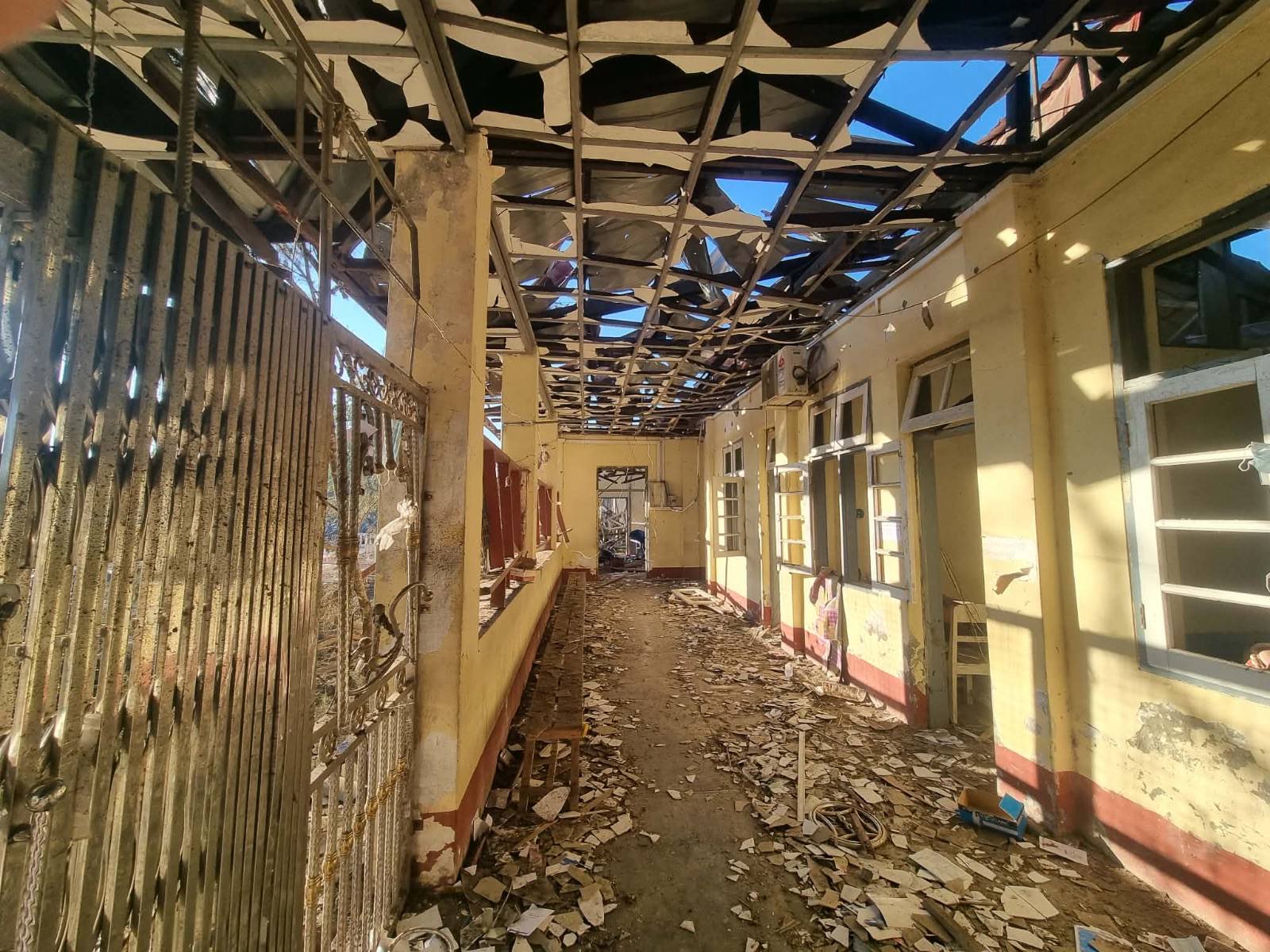
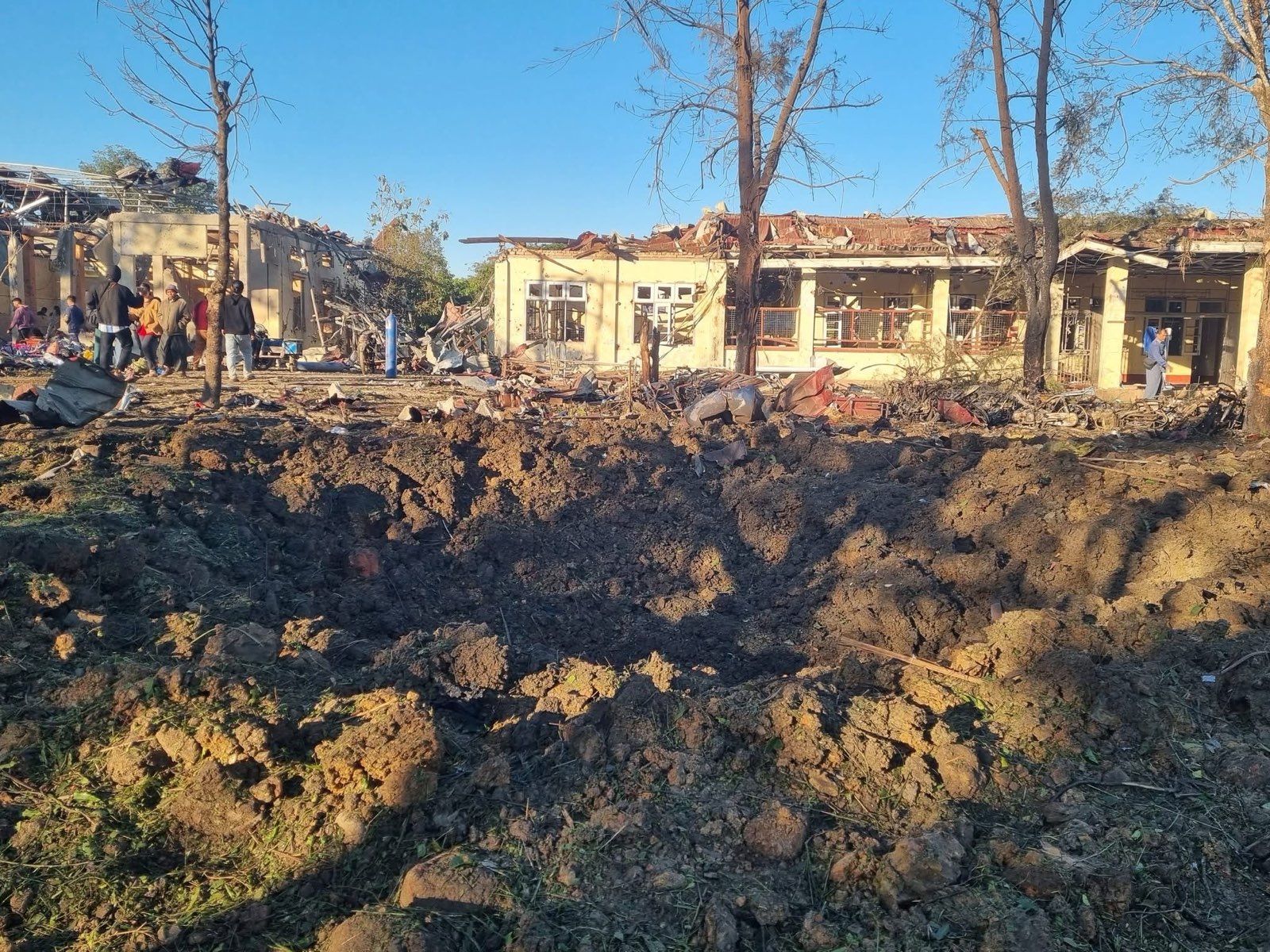
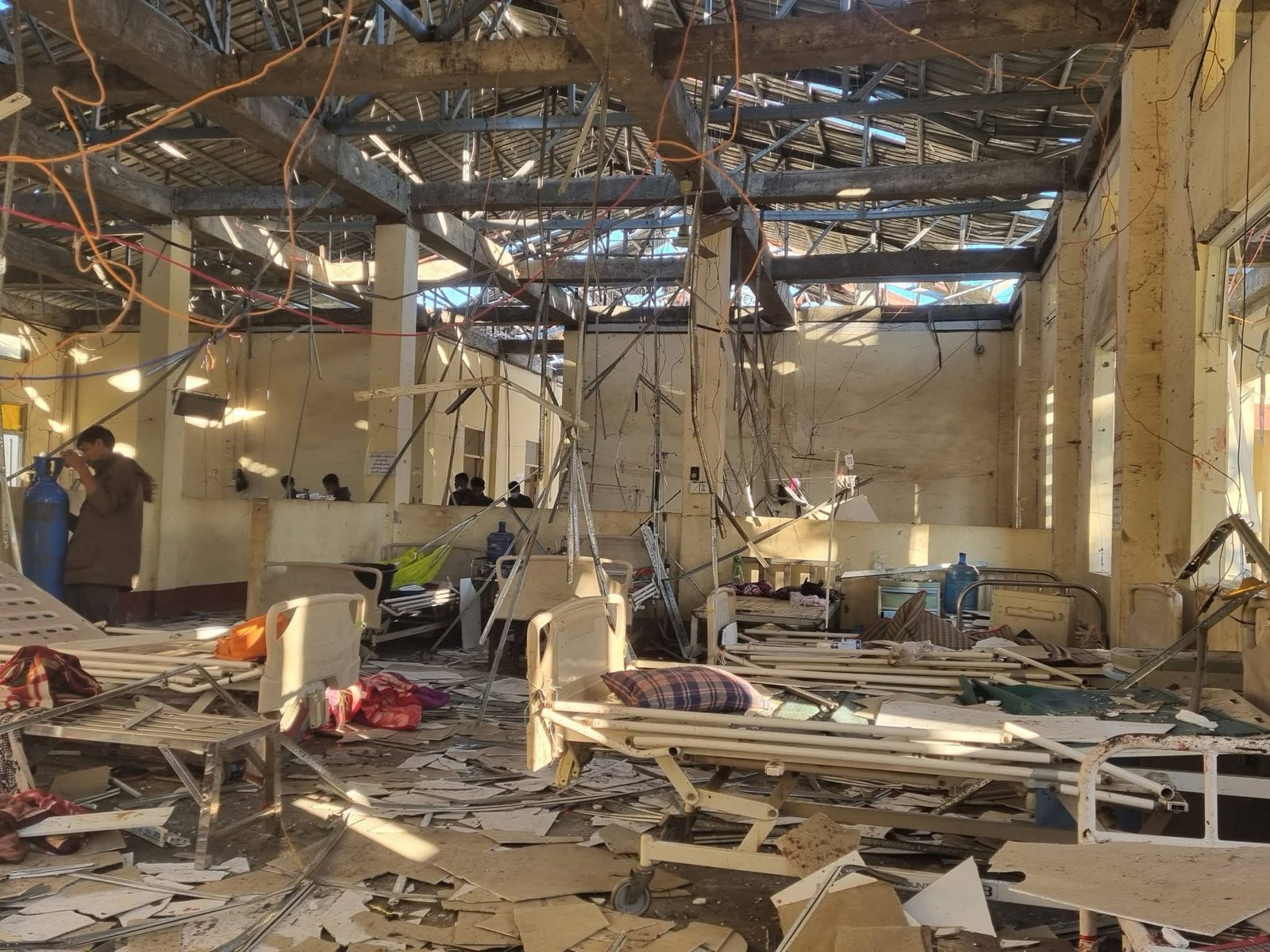
Another eyewitness, a 23-year-old Mrauk-U resident, described seeing the hospital in flames after hearing explosions. He said many bodies were scattered on the ground, and numerous people were injured.
The United Nations High Commissioner for Human Rights, Volker Türk, condemned the attack “in the strongest possible terms,” asserting that it may constitute a war crime. He called for investigations and accountability for those responsible. A spokesperson for his office said international legal avenues may be pursued if national inquiries prove ineffective, given the prevailing impunity in Myanmar.
World Health Organization Director-General Tedros Adhanom Ghebreyesus also denounced the bombing. On social media, he described the hospital as a critical facility offering emergency care, surgical services, and obstetric support in the region. He confirmed that health workers, patients, and their families were among the 33 killed, and that critical infrastructure, including operating rooms and inpatient wards, was “completely destroyed.”
Tedros said this was the 67th verified attack on health facilities or personnel in Myanmar this year alone.
The junta, which seized power in a February 2021 coup, has intensified aerial assaults across rebel-held areas. According to the Armed Conflict Location & Event Data Project, Myanmar's military conducted 2,165 airstrikes from January to late November 2025, up from 1,716 in 2024.
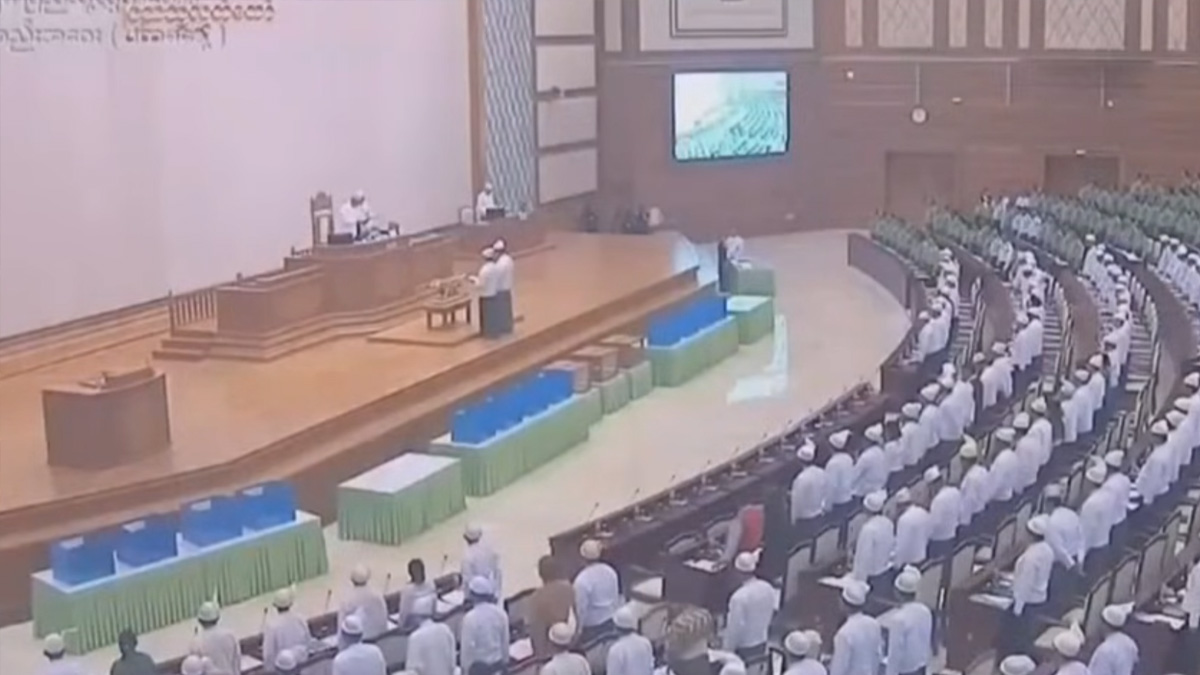
The attack comes just weeks before national elections, which the military government has scheduled to begin on 28 December. Officials have framed the vote as a pathway to peace, but various resistance and ethnic armed groups, including the Arakan Army, have rejected the process and pledged to block it in areas under their control.
Aid worker Wai Hun Aung criticised the juxtaposition of the military promoting democratic elections while carrying out deadly strikes on civilian facilities. “Even at this time, they are brutally killing the people,” he said.
Rakhine State is largely under the control of the Arakan Army, an ethnic Rakhine armed group that has long fought for autonomy. Following the breakdown of a ceasefire in 2023, the group reportedly pushed the military out of 14 of the state’s 17 townships, according to a study by the ISEAS–Yusof Ishak Institute. The rebel-held territory is now said to be larger than Belgium.
Despite the ongoing fighting across the country, Khine Thu Kha said there had been no recent combat in Mrauk-U itself, raising questions about the targeting of a civilian medical facility.
Journalists and humanitarian organisations have limited access to the region, making independent verification of casualty figures and damage difficult. However, the consistency of reports from multiple sources, including aid workers, rebel groups, and witnesses, has prompted international concern.
Al Jazeera’s Tony Cheng, reporting from central Myanmar, said such strikes are becoming increasingly common. “Almost every household now has a bomb shelter,” he said, noting that residents take cover immediately upon hearing aircraft.
Myanmar has been in a state of protracted civil war since the 2021 coup ended a decade of semi-democratic rule. The conflict has evolved into a nationwide rebellion, with opposition forces combining with longstanding ethnic armed organisations to challenge the military on multiple fronts.
The international community has repeatedly called for an end to the violence and a return to democratic governance, but with continued airstrikes and escalating offensives, the path to peace remains unclear.