The Tehran Killing: No Mandate, No Plan, No Accountability
The assassination of Ayatollah Khamenei is more than a regional spark—it is the ultimate proof of a presidency that operates above the law. By using "statute-surfing" to bypass the Constitution and the Supreme Court, the administration has replaced diplomacy with impunity. Whether it is a "Wag the Dog" move to bury the Epstein files or a reckless gamble on a nuclear "decapitation," the result is the same: a world on fire and a leader who answers to no one.
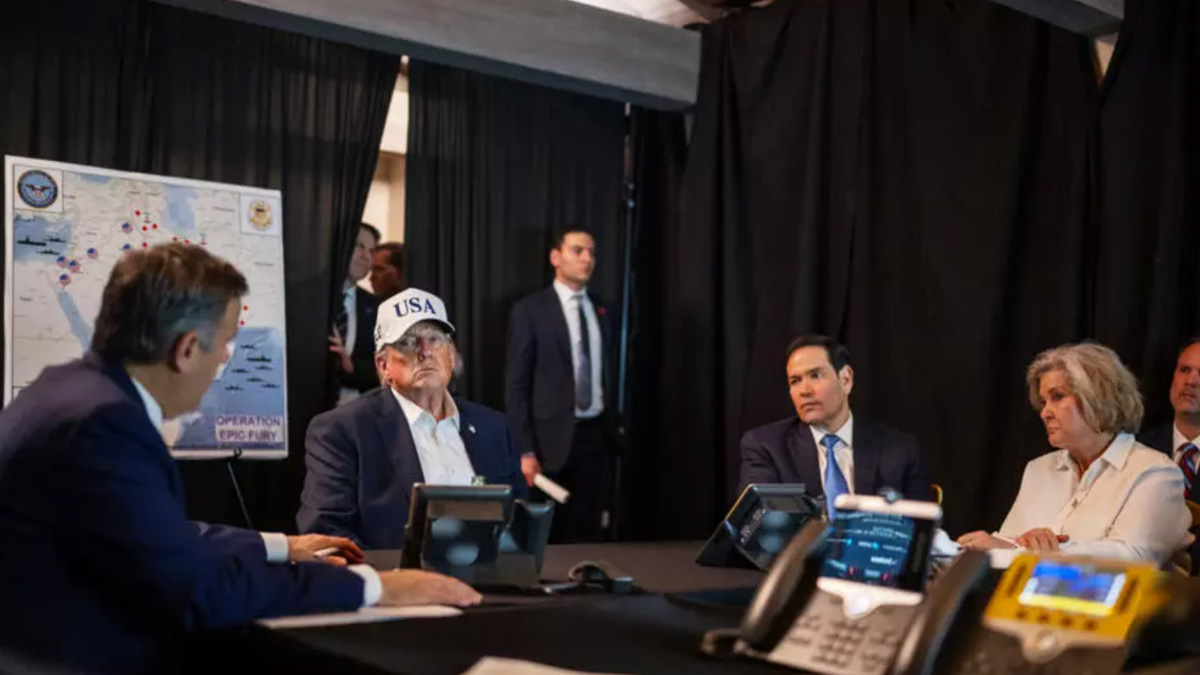
The Middle East has seen assassinations before. It has seen wars, coups, collapsed governments, and proxy conflicts that dragged on for decades. But what happened on Saturday morning in Tehran is different in kind, not just degree.
The United States and Israel didn't take out a general. They didn't strike a missile depot. They killed a Supreme Leader — the singular axis around which an entire theocratic state has rotated for 37 years.
And they did it with no congressional authorisation, no UN mandate, and apparently no intention of answering to anyone about it.
What happens next is already unfolding — and it is not pretty.
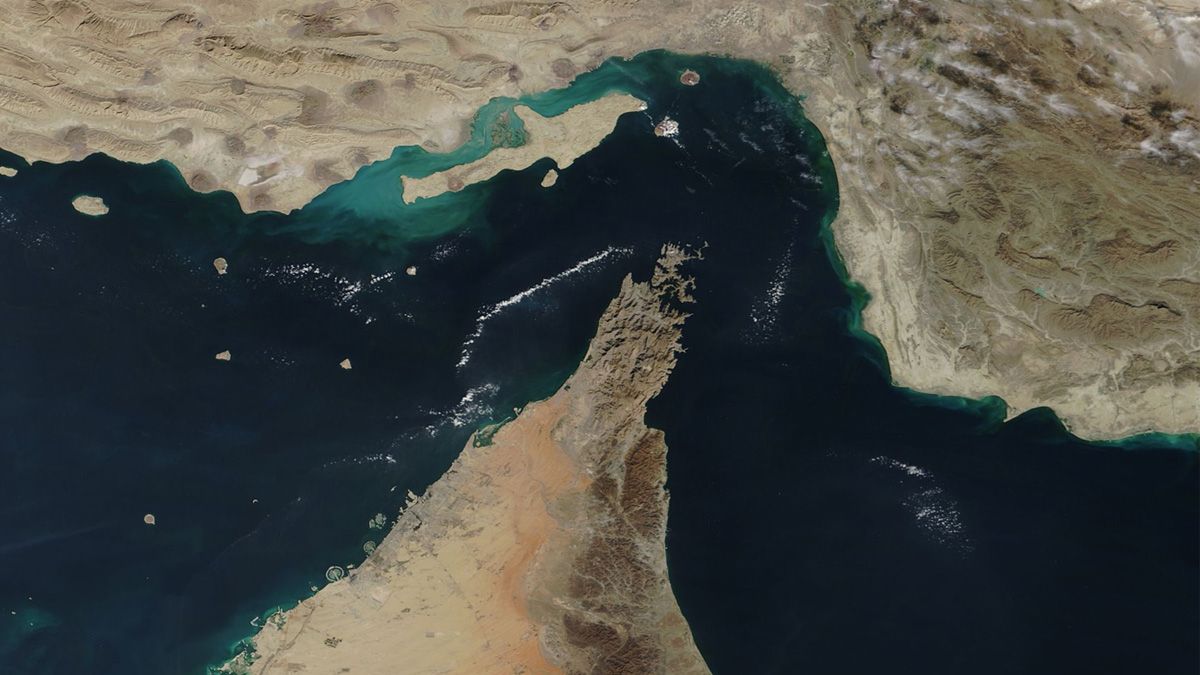
Iran has struck targets in Dubai, Doha, Bahrain, and Kuwait. US military bases across the region are on maximum alert. The IRGC, which has already lost its commander Mohammad Pakpour in the strikes, has promised a "most devastating" retaliation — and given the scale of the humiliation visited upon them, that is not bluster. That is a promise. Hezbollah in Lebanon, Iranian-backed militias in Iraq and Syria, the Houthis in Yemen — every proxy in Tehran's network is now on a war footing, waiting for the signal.
The signal is coming. The only question is where it lands first.
Decapitation Without a Plan Is Just Murder With Consequences
The fundamental problem with what Washington and Tel Aviv have done is this: they have decapitated a system without destroying it. The IRGC is not a personal army loyal to one man — it is an institutional behemoth with deep roots in Iranian society, its own economic interests, and a hardened ideological core that does not soften under fire. It radicalises. Soleimani's assassination in 2020 didn't shrink Iranian influence in Iraq. It metastasised it. This is that same error, multiplied by a factor the architects of Saturday's strikes have catastrophically underestimated.
But the most consequential damage may not be military at all. It may be nuclear.
For decades, the West leaned — however sceptically — on Ayatollah Khamenei's 2003 fatwa declaring nuclear weapons haram, forbidden under Islamic law. It was a fragile constraint, endlessly disputed, but it existed. It carried the personal and religious authority of the Supreme Leader himself. By killing the man who issued that decree, the United States has effectively shredded it.
The IRGC hardliners who remain don't need a blessing anymore. They now view a nuclear deterrent as a sacred obligation to their fallen leader. You don't restrain a regime by turning its figurehead into a martyr — you simply remove the one man with the religious standing to say no, and hand the decision to the men who never had any intention of saying it.
With 60% enriched uranium already sitting in hardened bunkers, the gap between a civilian programme and a functional weapon is no longer measured in months. It is measured in weeks. The man who said no is gone. The men who remain have been waiting for precisely this moment.
The succession vacuum compounds the danger. The Assembly of Leadership Experts — 88 clerics tasked with naming a new Supreme Leader — cannot even convene while Tehran is under active bombardment.
A transitional council of three men is nominally in charge. In practice, power in Iran is currently diffuse, contested, and dangerously without a centre. That is not a stable condition — it is the precise environment in which rogue commanders make unilateral decisions that no central authority can walk back. A miscalculated missile launch. A nuclear breakout order issued by someone with no mandate and nothing to lose.
That is how regional wars spiral beyond anyone's control — not with grand declarations, but with a strike nobody formally authorised, hitting the wrong target, setting off a chain of events nobody can stop.
We are already living inside that scenario. Dubai's airport has taken a hit. Bahrain, home to the US Fifth Fleet, is directly in the line of fire. Britain has announced participation in regional defensive operations. The circle is widening before anyone has drawn a ceasefire line.
What Trump Did Is Illegal. Full Stop.
Let's name what this actually is under international law: a political assassination of a sitting head of state, conducted without a declaration of war, without congressional approval, and without any pretence of legal justification.
The United Nations Charter is unambiguous. Article 2(4) prohibits the use of force against the territorial integrity or political independence of any sovereign state. The targeted killing of a head of government — not on a battlefield, but at his office — is not a grey area. It is a violation of the foundational norms of the international order that the United States itself helped construct after 1945.
And domestically? Executive Order 12333, signed by Gerald Ford and maintained by every subsequent administration, explicitly prohibits US government employees from engaging in political assassination. Trump either gutted that constraint quietly, or simply ignored it. Either way, he has not meaningfully been asked to explain himself — not yet.
The hawks in Washington will argue Khamenei was a terrorist by another name — a sponsor of proxies, a destabilising force, an enemy of American interests. Perhaps.
But the moment you accept that a sitting US president can unilaterally assassinate foreign heads of state based on his own threat assessment, with no congressional check and no legal process, you have not made the world safer. You have simply established that American presidents are now above the rules they once insisted everyone else follow.
This is not a sudden lapse in judgment. It is the culmination of a deliberate statute-surfing strategy that treats the US legal code as a menu of loopholes rather than a framework of restraint.
We have seen this playbook before. When the Supreme Court struck down the administration's global tariffs as an unlawful overreach of the International Emergency Economic Powers Act, the White House didn't retreat — it simply pivoted to the obscure Section 122 of the 1974 Trade Act to keep the same taxes in place under a different name.
The court said no. The administration said: fine, we'll find another door. It is the same bait-and-switch logic, now applied to the power of life and death.
By unilaterally reclassifying a sovereign head of state as a designated terrorist combatant, the President has effectively weaponised the 2001 Authorization for Use of Military Force to override the standing ban on political assassination — different statute, same outcome, zero accountability.
This is a presidency that no longer abides by the spirit of the law. It hunts for its oldest, most dormant corners — the 1798 Alien Enemies Act to deport Venezuelans, the 1974 Trade Act to reinstate struck-down tariffs, the post-9/11 AUMF to justify killing a head of state — and wields them as if their obscurity confers legitimacy. It does not. It simply means the loophole hadn't been closed yet.
We saw the Venezuela pattern play out in full. Trump invoked the Alien Enemies Act to bypass due process entirely, shipping migrants to a Salvadoran mega-prison with no judicial review. Lawmakers raised their voices. Hearings were threatened. Then the moment passed, absorbed into the next crisis, and the deportations continued.
That is not a series of isolated overreaches. It is a governing strategy — move fast, generate noise, outrun oversight, and let congressional inertia do the rest. Venezuela established that Trump would test the limits of executive power and face no meaningful consequence. The killing of Khamenei is that same playbook, applied at a scale that dwarfs everything that came before it.
When a president decides that laws are mere suggestions to be bypassed with the right legal jargon, the question shifts from is this legal? to is this useful? And in Washington, usefulness is increasingly measured by what a crisis can hide.
If Congress couldn't hold the line on due process for Venezuelan migrants, what gives anyone confidence it will hold the line on an undeclared war against Iran?
The Chaos Is the Point
Which brings me to the question the mainstream press seems least eager to press: why now?
For months, congressional pressure around the Epstein files has been building with a momentum that shows no signs of slowing. Senators and representatives from both sides of the aisle have been ramping up calls for deeper investigations, broader document releases, and — critically — arrests. The public appetite for accountability is not diminishing. It is intensifying.
And then there is Attorney General Pam Bondi's performance before Congress. Rather than assure the public that the administration intends to pursue those responsible with the full weight of the law, her testimony did the opposite. It was evasive, inadequate, and for many observers, confirmation of what they had long suspected: that the administration has no genuine intention of holding anyone accountable.
Bondi's appearance before Congress didn't quiet the Epstein story. It poured fuel on it — and the calls for answers grew louder in the days that followed.
Within 48 hours of that pressure reaching a fresh peak, the world is watching Tehran burn.
I am not saying the strikes were launched solely to bury a scandal. I am saying that when a White House facing mounting, bipartisan, and increasingly uncomfortable scrutiny over one of the most explosive political files in American history suddenly plunges the world into a war that consumes every news cycle, every congressional hearing, and every column inch on the planet — the timing demands examination. Not conspiracy. Examination.
In Washington, useful things rarely happen by accident.
Each unanswered transgression from this administration has raised the ceiling for the next. Venezuela set the precedent. The tariff pivot reinforced it. The killing of Khamenei is simply the latest — and most consequential — iteration of a presidency that has concluded, with some justification, that no one will make it answer for anything.
There is no diplomatic back-channel being reported. There is no serious de-escalation framework being discussed. There is no figure with the authority — or apparently the will — to stop what has been set in motion.
There is only the next strike. And the accountability that never seems to arrive.
The chaos isn't coming. It's here. And the man who lit the fuse is betting, with reasonable historical justification, that no one will make him answer for it.
(Saturday Night Live actually made a short point about this in their latest skit)