MSF engaging families as adoption cases reviewed amid Indonesia baby trafficking investigation
Singapore families caught up in an Indonesian baby trafficking probe face delays and uncertainty despite approved adoptions. In Parliament, WP MP Sylvia Lim pressed MSF on timelines, safeguards, and interim support, as the ministry stressed cooperation with Indonesian authorities and child welfare.
- An investigation into an alleged Indonesian baby trafficking ring has led to reviews of some Singapore adoption cases, delaying citizenship applications.
- Workers’ Party MP Sylvia Lim raised concerns in Parliament about prolonged uncertainty and financial strain on affected families.
- The Ministry of Social and Family Development (MSF) says it is engaging families and cooperating with Indonesian authorities but cannot provide timelines.
SINGAPORE: An investigation into an alleged Indonesian trafficking ring accused of sending babies to Singapore for adoption has thrown some adoptive families into turmoil, prompting scrutiny in Parliament over delays, uncertainty, and support for those affected.
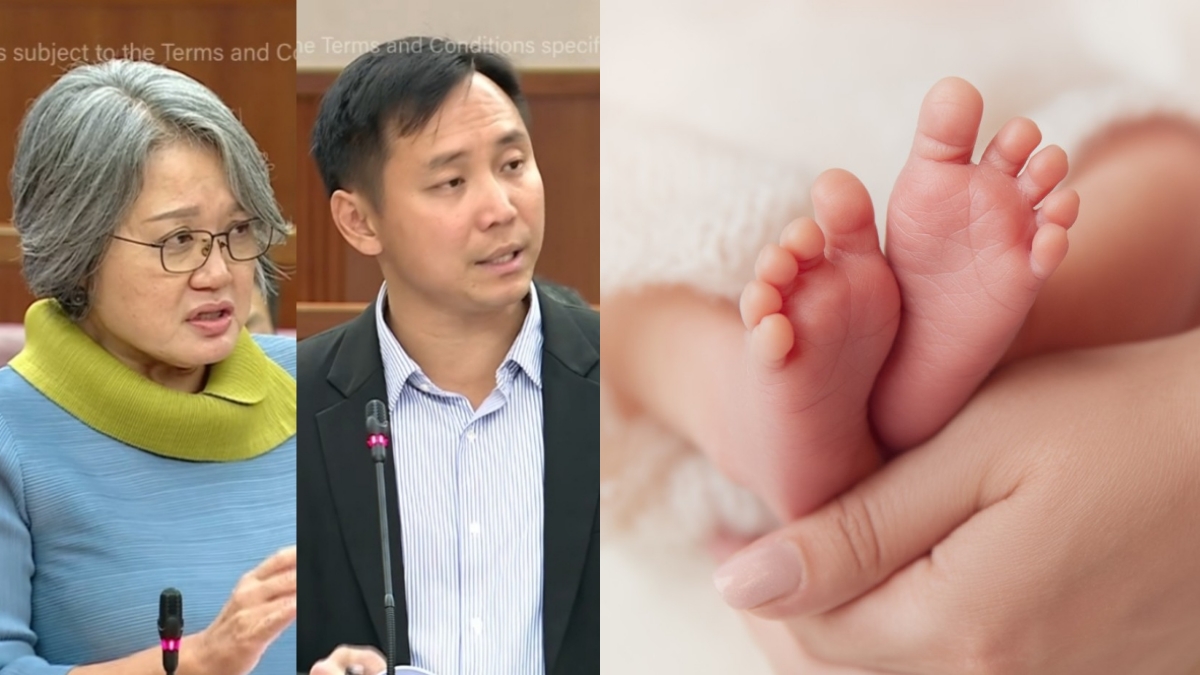
The issue was raised in the House by Workers’ Party MP Sylvia Lim of Aljunied GRC, who highlighted the plight of families whose adoptions had already been approved by the courts but whose children’s citizenship applications have since been delayed.
According to Ms Lim, these families are innocent parties who followed all legal procedures and have been caring for their adoptive children, in some cases for more than a year, while investigations continue.
She asked the Ministry of Social and Family Development how many approved adoptions were under further review, how clarity and resolution could be provided expeditiously, and whether interim assistance would be considered, particularly where adoptees have yet to obtain Singapore citizenship.
Responding on behalf of the ministry, Minister of State for Social and Family Development Goh Pei Ming said MSF was unable to comment on the number of cases being reviewed, given ongoing investigations by the Indonesian authorities.
According to Goh, Singapore authorities are working closely with their Indonesian counterparts to review the allegations, stressing that child trafficking is a serious offence that exploits children’s vulnerabilities and undermines their long-term welfare and development.
He added that MSF has been engaging affected families to provide information on processes and to address their concerns as more details become available, while working with relevant authorities to ensure cases are reviewed expeditiously and in the best interests of the children.
Ms Lim later raised three supplementary questions, focusing on timelines, public confidence in the adoption process, and the financial burden faced by families while citizenship applications remain on hold.
She asked whether the ministry could give any indication of how long investigations might take, noting that prolonged uncertainty was “quite devastating” for families who had already bonded with and cared for their children.
Goh said MSF understood and empathised with the anxiety faced by adoptive parents but was unable to provide a timeline, as investigations involved cross-border cooperation and were still ongoing.
On public confidence, Ms Lim questioned whether adoption agencies or MSF’s partners could have uncovered suspicious circumstances earlier, before adoption orders were granted by the courts.
Goh explained that while adoption agencies operate on a commercial basis, they are subject to guidelines and due diligence requirements, including checks on the origin and background of children placed for adoption.
He said agencies found to have knowingly brought in children of suspicious or unknown origin would be taken to task, but acknowledged that irregularities could also occur in the country of origin without the knowledge of agencies in Singapore.
Turning to financial concerns, Ms Lim highlighted cases where adoption orders had been granted but citizenship applications were on hold, resulting in higher childcare and related costs because the child was still treated as a foreign national.
She asked whether special exceptions could be made to allow families to incur expenses at Singapore citizen rates, given that delays were due to circumstances beyond their control.
In response, Goh clarified that adoption and citizenship are governed by separate legal frameworks and policy considerations. Adoption establishes the legal parent-child relationship, while citizenship decisions involve immigration assessments and are not automatic following adoption.
He said prospective adoptive parents are informed during the Social Investigation process that citizenship applications can take up to 12 months and may not always be approved, even after an adoption order is granted.
Nevertheless, Goh acknowledged the emotional and financial strain faced by families and said those experiencing financial difficulty could approach MSF for assistance, with cases assessed based on individual circumstances.
Ms Lim sought further clarification on whether agencies could do more to prevent similar situations in future, questioning whether parents themselves could realistically detect such issues.
Goh reiterated that agencies are expected to conduct due diligence and comply with guidelines, and that enforcement action would be taken if wrongdoing was uncovered. He added that the current case remained under investigation and that further comment would be premature.
The ministry said it would continue to work with relevant authorities to ensure appropriate safeguards, transparency, and support for affected families, while prioritising the welfare and best interests of the children involved.