High-risk child abuse cases rose 14.5% in 2024; public flagged about 230 cases
About 230 high-risk child abuse cases in 2024 were reported by the public, as authorities urged vigilance during school holidays. Reports and awareness rose sharply, with social service agencies stressing community involvement, early reporting and prevention following attention to cases.

- About 230 high-risk child abuse cases in 2024 were reported by the public, accounting for around 10% of all such cases, as overall tier 2 cases rose 14.5% year on year.
- Reports to the National Anti-Violence and Sexual Harassment Helpline increased sharply, with child abuse and neglect reports nearly doubling since 2021, reflecting greater public awareness and reporting.
- Authorities and social service agencies urged vigilance during school holidays, noting a recent uptick in cases following the Megan Khung report and emphasising prevention and community involvement.
SINGAPORE: Members of the public, including neighbours, family members and bystanders, flagged about 230 high-risk child abuse cases in 2024, as authorities called on the community to remain vigilant during the school holidays.
The cases accounted for around 10 per cent of the 2,303 high-risk child abuse cases reported last year. Another 30 per cent were reported by the education sector, including schools, preschools and the Early Childhood Development Agency (ECDA).
High-risk cases rise sharply, with physical abuse most common
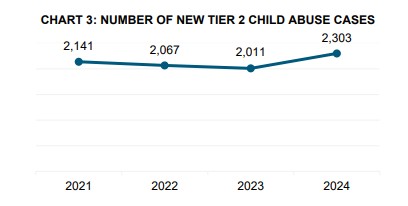
According to the Domestic Violence Trends report released on 10 December, the number of high-risk child abuse cases — known as tier 2 cases — rose by 14.5 per cent in 2024, with about half involving physical abuse.
There were 2,303 new cases last year, compared with 2,011 cases reported in 2023.
These cases may require statutory intervention to ensure a child’s safety, including removal from the home, and are overseen by the Ministry of Social and Family Development’s (MSF) Protective Service.
MSF said reports to the National Anti-Violence and Sexual Harassment Helpline (NAVH) rose from 8,400 in 2021 to 11,100 in 2024.
Reports related to child abuse and neglect nearly doubled over the same period, increasing from 2,200 to 4,500, CNA reported.
“Of the child-related reports that both NAVH and MSF received in 2024, about 17 per cent were escalated to MSF’s Protective Service and taken up as tier 2 child abuse cases,” the ministry said.
Some cases escalate to court intervention
About 10 per cent of tier 2 cases investigated involved court proceedings under the Children and Young Persons Act, with Care and Protection Orders granted by the Youth Court.
Preliminary data showed fewer child abuse cases in the first half of 2025 compared with the same period in 2024.
However, MSF noted an uptick in new tier 2 cases in October.
This followed increased referrals after the release of a report on 23 October into the death of four-year-old Megan Khung.
Public awareness drives spike in reports after high-profile case
“Given that one of the main referral sources was the public, Megan’s case, which attracted widespread coverage, likely contributed to the uptick,” MSF said.
With children out of school during the year-end holidays, the ministry urged family members, neighbours and the public to remain alert to signs of abuse.
“Together, by staying alert and offering support to those around us, we can help protect those at risk of abuse.”
More bystanders coming forward
Family service centres said public reporting is expected to rise as awareness grows and coordination between agencies improves, CNA reported.
A spokesperson for TRANS Family Services said reporting still relies heavily on families and formal networks, but this could change as the public becomes more prepared to act.
“We believe it is possible that in the future … we will see more bystanders, members of the public coming forward to report and be a part of the ‘village’ that protects and nurtures our children,” the spokesperson said, adding that this requires a shift from non-interference to mutual care.
However, abuse often occurs behind closed doors, and non-physical forms such as emotional or psychological abuse, or exposure to domestic violence, are harder for the public to detect.
Natalie Lim, director at Allkin Singapore, said more community members are “taking action”, with most reports coming through NAVH hotline referrals.
“These reports may be vague, but they are important. Even a single call can trigger home visits and assessments to ensure that a child is safe,” she said.
Lim added that there is “clearly greater public awareness and willingness” to report suspected abuse, urging the public to provide as much detail as possible and to act early where they can.
“We appreciate every member of the public who steps forward because their vigilance can prevent harm,” she said.
Prevention efforts to be stepped up
Social service agencies said reported cases may continue to rise before stabilising, as awareness improves.
Lim said long-term stabilisation would depend on addressing family stressors and strengthening prevention measures.
“Stabilisation would signal a shift from reacting only when crises occur to building stronger family supports,” she said.
MSF said it will step up prevention by expanding community partnerships, raising awareness, and working with preschools and schools to equip children with skills to recognise unsafe situations and seek help.
The ministry is also developing “culturally-sensitive public education content” to encourage prevention and help-seeking.