
Changi Airport hits record 70M passengers in 2025 as Terminal 5 plans lift capacity to 140M
Changi Airport handled about 70 million passengers in 2025, exceeding pre-Covid-19 levels. The milestone reinforces Singapore’s decision to proceed with Terminal 5, which will expand capacity, integrate automation and AI, and open in the mid-2030s.
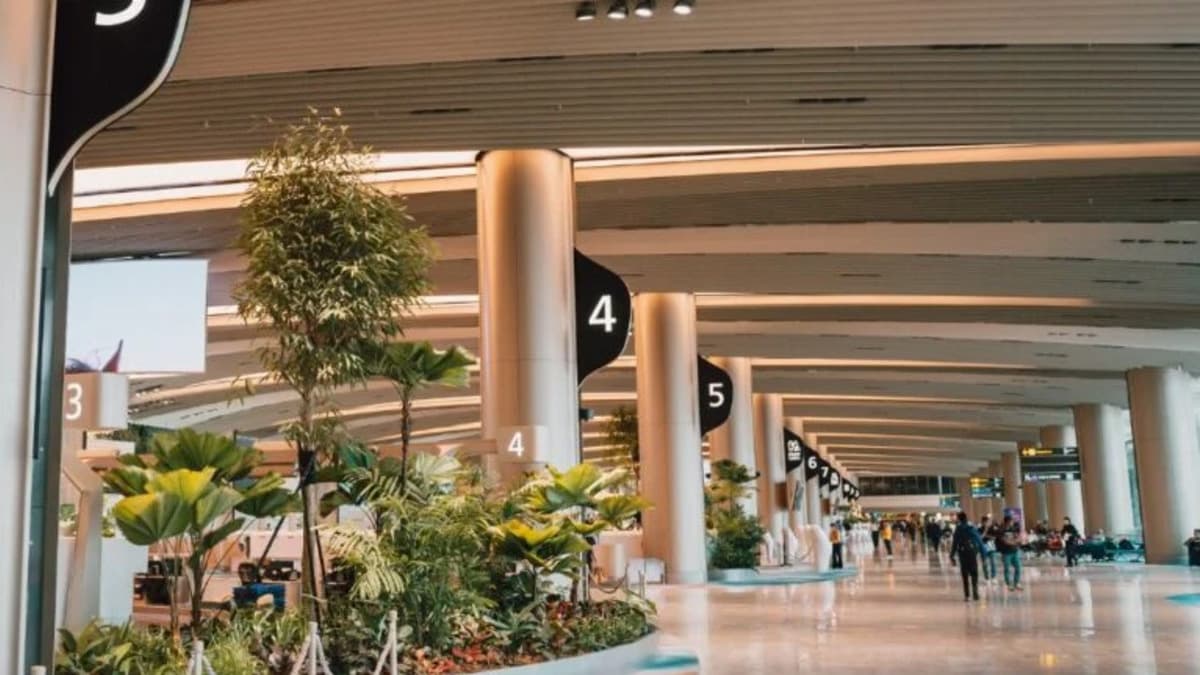
- Changi Airport handled about 70 million passengers in 2025, surpassing its pre-pandemic record set in 2019.
- The recovery in global aviation has reinforced Singapore’s decision to proceed with Terminal 5, which is scheduled to open in the mid-2030s.
- Terminal 5 will significantly expand capacity, integrate automation and AI, and support sustainability and future aviation jobs.
SINGAPORE: Changi Airport handled about 70 million passengers in 2025, surpassing pre-Covid-19 levels and setting a new annual record, Acting Transport Minister Jeffrey Siow said on 5 January, 2025.
The figure exceeded the previous high of 68.3 million passengers recorded in 2019, before the Covid-19 pandemic severely disrupted global air travel.
In comparison, Changi Airport handled 67.7 million passengers in 2024, indicating a strong year-on-year recovery as international travel demand rebounded.
Speaking at the launch of a new exhibition on the future Terminal 5, Siow told the local media that the recovery in global aviation validated the government’s decision to resume plans for the mega terminal.
Plans for Terminal 5 were paused during the pandemic, when aviation demand collapsed and the future of international air travel was uncertain.
“For a moment, we were not sure what the future of aviation would hold. And we reconsidered deeply whether to continue with T5,” Siow said.
He added that the decision to proceed was ultimately one of confidence in Singapore’s future and conviction in the nation’s ability to remain competitive.
According to Siow, global air traffic is now expected to double by 2050, with the Asia-Pacific region leading this growth.
Terminal 5 tender to be launched as technology-driven hub takes shape
Against this backdrop, Changi Airport Group (CAG) will launch the tender for Terminal 5’s superstructure, the above-ground portion of the terminal, in the coming weeks.
Terminal 5, which is scheduled to open in the mid-2030s, is intended to represent the future of aviation for Singapore.
Siow said the terminal has been designed to be technology-intensive, with automation and artificial intelligence integrated across airport operations.
Autonomous vehicles and robotics are already being tested for labour-intensive processes, including baggage handling and cargo movement, according to the minister.
He added that artificial intelligence can improve flight planning, enhance passenger services, and help airport operators respond quickly to disruptions, such as changing weather conditions.
Sustainability is another key focus of the new terminal’s design.
Siow said Terminal 5 will promote the use of sustainable aviation fuel and be fully electrified, supporting efforts to reduce the aviation sector’s environmental footprint.
The terminal has also been designed with passengers at its centre, incorporating feedback from travellers, airlines, and airport tenants.
Ideas from these groups have influenced the layout of lounges and the design of retail spaces, with an emphasis on seamless and intuitive journeys.
For example, passengers will be able to move smoothly from immigration to boarding, while receiving personalised recommendations for dining, retail, and transit services.
Although Terminal 5 will be significantly larger than existing terminals, its layout has been designed to reduce walking distances.
This will allow transit passengers to make connections more quickly, improving overall efficiency and comfort, Siow said.
The expansion is also expected to create new employment opportunities within the aviation sector.
Siow said more jobs will emerge in areas such as data science, systems operations, and sustainability, which are likely to appeal to younger Singaporeans.
He stressed the importance of working closely with institutes of higher learning to ensure that the workforce remains relevant and future-ready.
“It is imperative that the aerospace or aviation sector continues to attract its share of talent,” he said.
Terminal 5 to lift Changi Airport capacity by more than 55 per cent
Reflecting on Singapore’s aviation history, Siow recalled the decision by the nation’s founding leaders to move the airport from Paya Lebar to Changi in 1981.
At that time, Paya Lebar Airport’s capacity was only about eight million passengers annually, and further expansion would not have met future needs.
With the addition of Terminal 5, Changi Airport’s total passenger capacity will increase by more than 55 per cent, from 90 million to 140 million passengers annually.
Siow said Changi Airport has fulfilled its potential and gone beyond it over the decades, through new terminals, refurbishment works, and developments such as Jewel Changi Airport.
He added that there is strong global interest in what Terminal 5 will represent for the future of aviation.
S$5 billion announced in Budget 2025 to boost Changi East and Terminal 5 expansion
Changi Airport won the World’s Best Airport 2025 award from Skytrax for the 13th time.
The airport also received awards for best airport dining, best airport washrooms, and best airport in Asia.
Prime Minister and Finance Minister Lawrence Wong announced on 18 February last year in national budget that an additional S$5 billion would be allocated to the Changi Airport Development Fund.
The funding will support Changi Airport’s long-term growth, including the construction of Terminal 5.
Terminal 5 will form a key component of the Changi East development, a 1,080-hectare area set to become the airport’s largest expansion project to date.



1 Comment