Singapore voices grave concern over US strike in Venezuela, urges respect for international law
Singapore has strongly criticised the US military intervention in Venezuela, reaffirming its commitment to international law and the sovereignty of all states. The statement comes amid growing global condemnation following the capture of Nicolás Maduro by American forces.
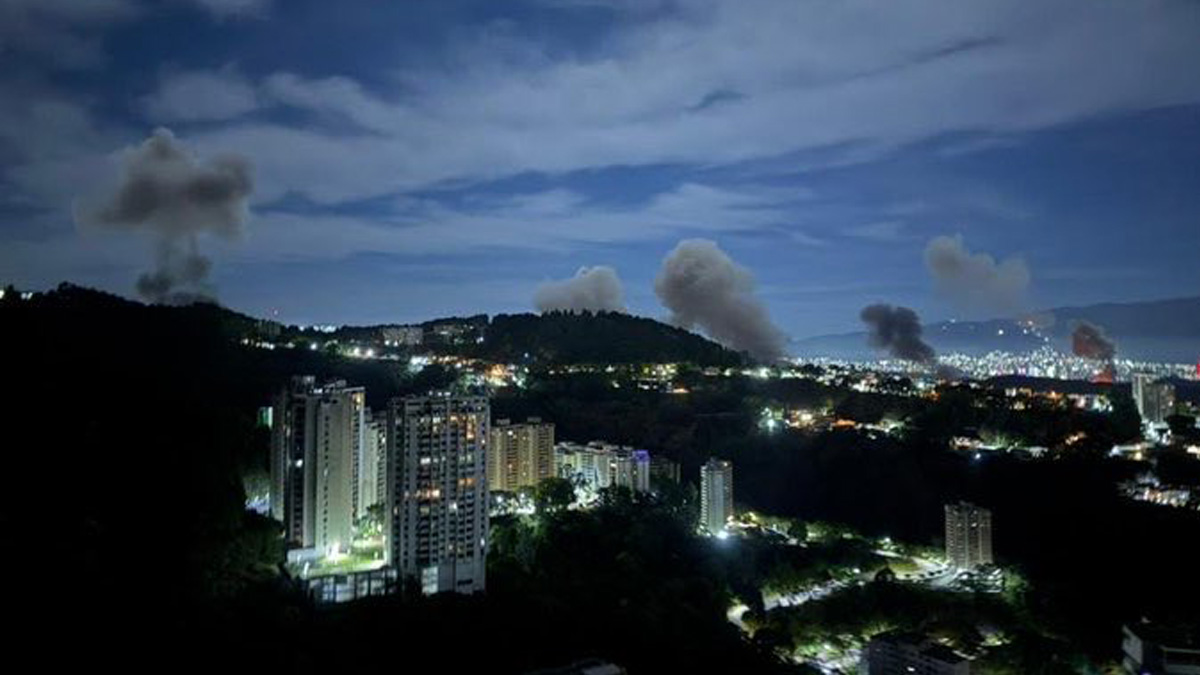
- Singapore has issued a formal statement condemning foreign military intervention in Venezuela.
- The Ministry of Foreign Affairs reaffirmed support for the principles of sovereignty and territorial integrity.
- The statement follows a US military strike that captured Venezuelan President Nicolás Maduro.
Singapore has issued a strongly worded statement expressing grave concern over the United States’ military intervention in Venezuela, marking the country's first official response to the dramatic events of 3 January 2026.
In a press statement dated 4 January, the Ministry of Foreign Affairs (MFA) emphasised Singapore’s deep commitment to international law and the principles of the United Nations Charter, particularly the importance of upholding the sovereignty and territorial integrity of all states.
The MFA stated that “Singapore is gravely concerned by the US intervention on 3 January 2026 in Venezuela,” adding that it “consistently opposes actions contrary to international law by any parties, including foreign military intervention in any country.”
Singapore urged all involved parties to exercise restraint and called for a peaceful resolution “in accordance with international law and the principles of the UN Charter.”
The ministry confirmed that no Singaporeans are currently e-registered in Venezuela, and advised citizens to defer all travel to the country amid the ongoing instability.
Backdrop: US-led operation captures Venezuelan president
Singapore’s statement follows a surprise overnight military strike carried out by United States special forces that led to the capture of Venezuelan President Nicolás Maduro.
According to US President Donald Trump, who announced the operation from his Mar-a-Lago estate, the strike was aimed at removing what he called an “illegitimate dictator” and “kingpin of a vast criminal network” that had trafficked drugs into the United States.
Maduro, who has ruled Venezuela since 2013 following the death of Hugo Chávez, has long been accused by Washington of overseeing a “narco-state”. He was indicted in a US federal court in 2020 for narcoterrorism and conspiracy charges.
Trump confirmed that Maduro and his wife were “captured and flown out of the country” and are currently being held aboard the USS Iwo Jima ahead of their expected arraignment in New York.
International criticism grows
Singapore joins a growing number of countries that have condemned the US action. China’s Ministry of Foreign Affairs described the military operation as a “blatant use of force” and a violation of Venezuela’s sovereignty, while Russia labelled it an act of “armed aggression.” Iran, Cuba, and Mexico have also issued statements denouncing the move.
The European Union has called for restraint and reaffirmed the need for adherence to international legal norms. Kaja Kallas, the EU’s top diplomat, stressed that “under all circumstances, the principles of international law and the UN Charter must be respected.”
Latin American reactions have been mixed. Argentina’s President Javier Milei praised the removal of Maduro as a step toward “freedom,” while Brazil’s Luiz Inácio Lula da Silva said the action crossed “an unacceptable line.”
In a media statement issued on 3 January, South Africa’s Department of International Relations and Cooperation said the US strike constituted a “manifest violation” of the UN Charter and warned that such unilateral force “undermines the stability of the international order.”
Pretoria urged the Security Council to convene urgently to address the situation, asserting that history shows military invasions lead only to instability and deeper crises.
Concerns over precedent and small-state vulnerability
Singapore’s reference to the protection of “especially small states” underscores a longstanding concern in the country's foreign policy: that violations of sovereignty and international law could set precedents that leave smaller nations exposed.
This principle has informed Singapore’s positions on a range of international issues, from the Russia-Ukraine war to maritime disputes in the South China Sea.
By reinforcing the importance of the UN Charter and multilateral diplomacy, Singapore’s statement serves as a reminder of the risks posed by unilateral military actions, regardless of their justification.
Uncertain future for Venezuela
In Venezuela, the situation remains fluid. Though Maduro has been captured, the country’s political structure has not fully collapsed. Defence Minister Vladimir Padrino has called for resistance, and opposition leader María Corina Machado has demanded that opposition figure Edmundo González Urrutia be installed as interim president.
Meanwhile, Trump has declared that the United States will “run the country” during a transitional period, raising questions about the legality and implications of US control over a sovereign nation.