Dinesh Singh Dhillon to step aside as Law Society president-elect amid controversy at 22 Dec EGM
Dinesh Singh Dhillon will step aside as Law Society president-elect at the 22 December EGM, following widespread concern within the Bar over his appointment as a non-elected council member.
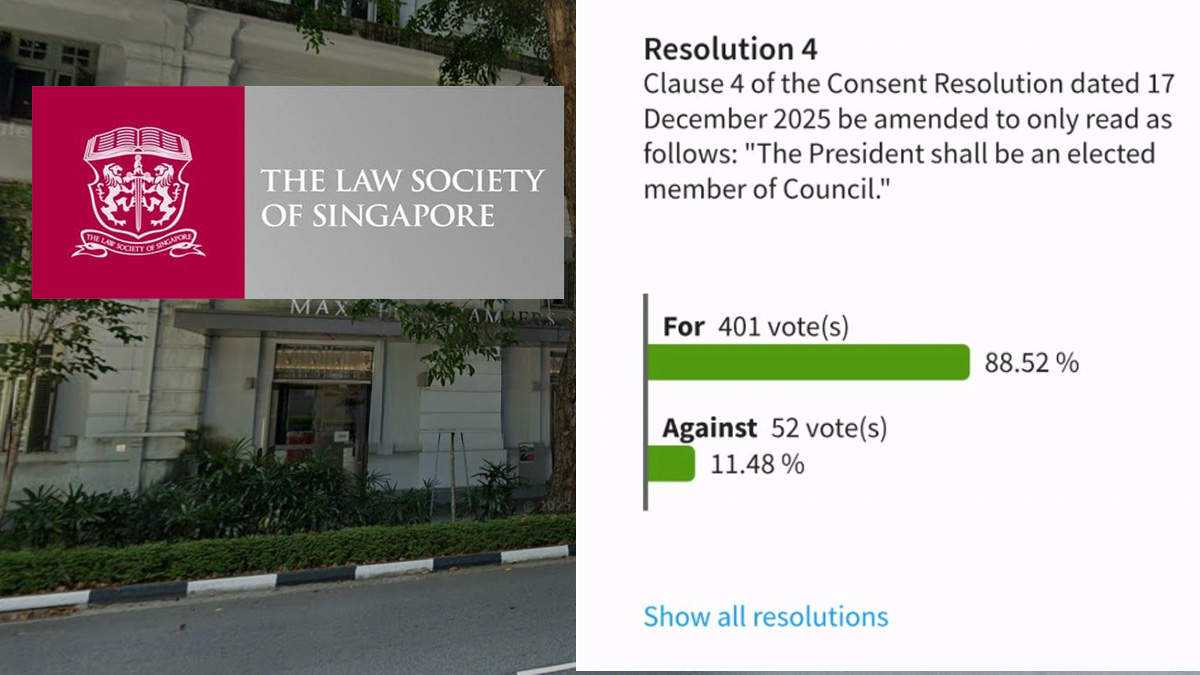
- An extraordinary general meeting (EGM) on 22 December was convened by members to affirm that only elected council members should be eligible for the presidency.
- Dinesh Singh Dhillon will step aside after the EGM, following concerns over his appointment as a ministerial appointee.
- The Law Society Council acknowledged it did not act within the statutory timeframe to call the meeting after a valid requisition.
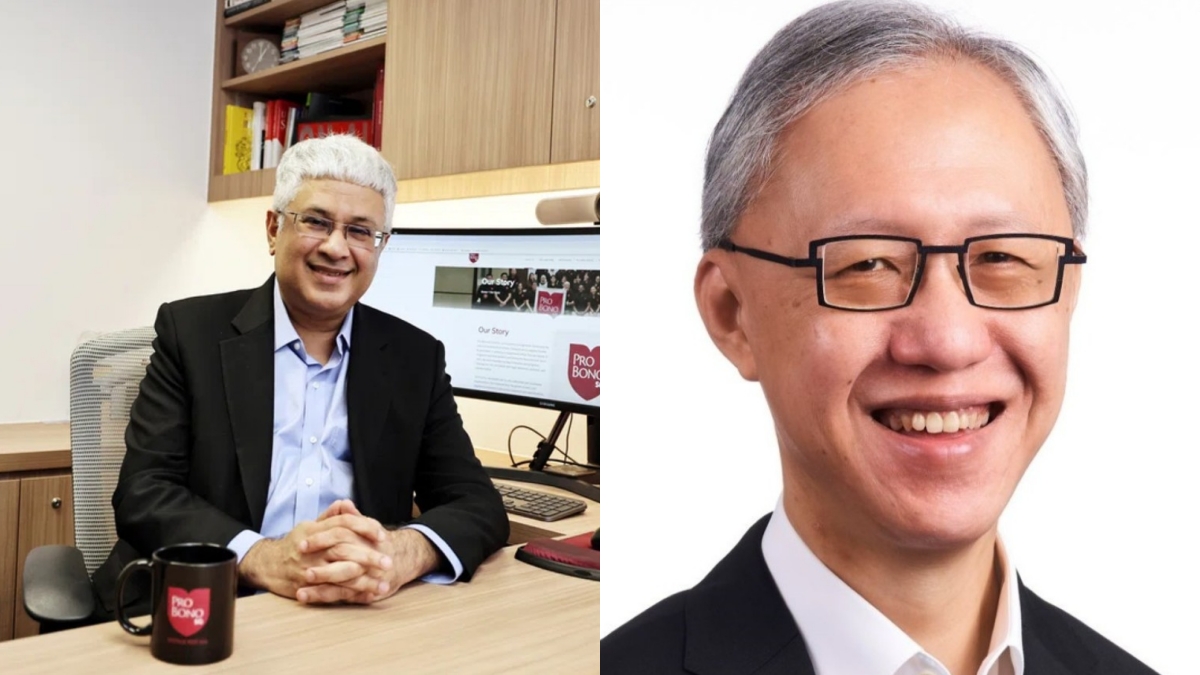
SINGAPORE — Dinesh Singh Dhillon, who was set to assume the presidency of the Law Society of Singapore in 2026, will step aside following an extraordinary general meeting (EGM) on 22 December 2025. Professor Tan Cheng Han, the current vice-president, will be proposed as his replacement.
His withdrawal, set out in a consent resolution circulated to members on 18 December, comes amid growing concern over his eligibility, as he had entered the Council as a statutory appointee rather than being elected by the Law Society’s general membership.
While the resolution outlines a compromise, it is the EGM — convened by members — that will serve as the formal platform to table and confirm the leadership transition.
Background to Dhillon’s appointment and narrow election
Dhillon, Co-Head of International Arbitration at Allen & Gledhill, was appointed to the Law Society Council under Section 48(1)(b) of the Legal Profession Act, which permits up to three appointments by the Minister for Law.
In November 2025, he was elected president for the 2026 term via a council vote. According to The Straits Times, the initial round resulted in a tie with Samuel Chacko. Dhillon won the presidency in the second round by a single vote — 10 to 9.
His elevation to president — despite not being elected to the council by the Law Society’s general membership — sparked concern about transparency and governance.
Statutory requisition ignored, members convene EGM
On 24 November 2025, over 25 members submitted a requisition under Section 68 of the Legal Profession Act, calling for an EGM to discuss whether only elected council members should be eligible to serve as president.
Under the Act, the council was required to issue a notice of meeting within 14 days. It failed to do so.
In a letter dated 9 December 2025, veteran lawyer and former Law Society president Peter Cuthbert Low formally notified the council that requisitionists would proceed with the EGM. The letter, which served as formal notice and included the proposed agenda, was seconded by another past president, Chandra Mohan Nair.
The motion and its purpose
The formal motion to be debated at the 22 December EGM states:
“As a matter of past practice and existing convention, good governance and to uphold confidence in the independence of the Bar, the Council ought to elect as President of the Society a member of Council who has been elected by the members of the Society.”
The motion does not seek to invalidate existing council decisions or change the law, but to formally record the meeting’s collective view on the principle of elected leadership.
On 11 December, a second motion, tabled by criminal lawyer Sunil Sudheesan, proposed a vote of no confidence in incoming council members who had supported the appointment of a statutory (non-elected) council member to the presidency. It also called for the resignation of current council members who had rejected the requisition for an EGM.
And on 12 December, a third motion, filed by Manimaran Arumugam, called for a formal rule that only elected council members should be eligible to serve in any executive office-bearer position — including president, vice-president, and treasurer — thereby seeking to codify restrictions on statutory appointees holding top leadership roles.
Timeline of events leading to the EGM
According to lawyer Luo Ling Ling, who publicised the EGM and helped coordinate its logistics, the key dates are:
-
24 November: Valid requisition submitted by members.
-
5 December: Law Society announced a tea session on 10 December without acknowledging the EGM requisition.
-
8 December: Requisitionists secured a venue for the EGM.
-
9 December (11:50pm): Formal Notice of EGM issued by requisitionists to LawSoc.
-
10 December (3:15pm): LawSoc circulated its own notice — outside the statutory 14-day period.
Luo noted that Peter Low paid for the venue upfront, with others pledging reimbursement. The meeting will take place at 5:00pm on 22 December at the Wyndham Singapore Hotel.
Council admits it failed to act in time
In media statements on 10 December, the Law Society acknowledged receiving the requisition but stated it was still reviewing the request.
By 8 December — the final day of the statutory window — no notice had been issued. As the LawSoc only circulated its EGM notice on 10 December, the requisitionists acted lawfully to organise the meeting themselves.
In the consent resolution, the council accepted that it had held an honest belief that the resolutions proposed were not valid, but also acknowledged it should have consulted members further, even if it believed the requisition did not meet the requirements.
It affirmed that there was no intention to suppress member voices and agreed to bear the costs of the EGM.
Private meeting with Minister did not override process
A Straits Times report on 11 December revealed that, on 3 December, representatives from three factions — outgoing council members, incoming office bearers (including Dhillon), and requisitionists — met with Law Minister Edwin Tong.
Senior Counsel Jimmy Yim facilitated the session, where an interim proposal was discussed: Dhillon would serve one term, and if he wished to continue beyond 2026, he would contest in the general council elections.
However, this meeting had no legal standing in relation to the EGM process and did not replace the statutory obligation to respond to the requisition within 14 days.
Consent resolution and leadership transition
The consent resolution, signed on 17 December and circulated the next day, confirms that:
-
The EGM will proceed on 22 December.
-
Dhillon will step aside as president thereafter.
-
Professor Tan Cheng Han, current vice-president, will be proposed as president.
-
Dhillon will serve as vice-president for 2026.
It also states that the council will propose eligibility criteria for office-bearers within two months of taking office. Members will be given at least six weeks to review these, which are expected to include minimum service periods on council before eligibility for key roles.
The resolution was signed by Dhillon, Low, Nair and Sunil Sudheesan, and witnessed by Luo Ling Ling and Prof Tan.
It described the agreement as “a step in the right direction” and emphasised the importance of restoring unity within the Bar.