Lawyers invoke EGM over unelected Law Society president amid independence concerns
A group of Singaporean lawyers has convened an EGM on 22 December 2025 to seek clarification on the appointment of Dinesh Singh Dhillon as Law Society President 2026. They argue that his unelected status, as a statutory appointee by the Minister, undermines the Bar’s independence and democratic process.
- Lawyers have called an EGM on 22 December 2025 over the appointment of Dinesh Singh Dhillon as Law Society President 2026.
- Dhillon was appointed under ministerial powers and not elected by the general body of lawyers.
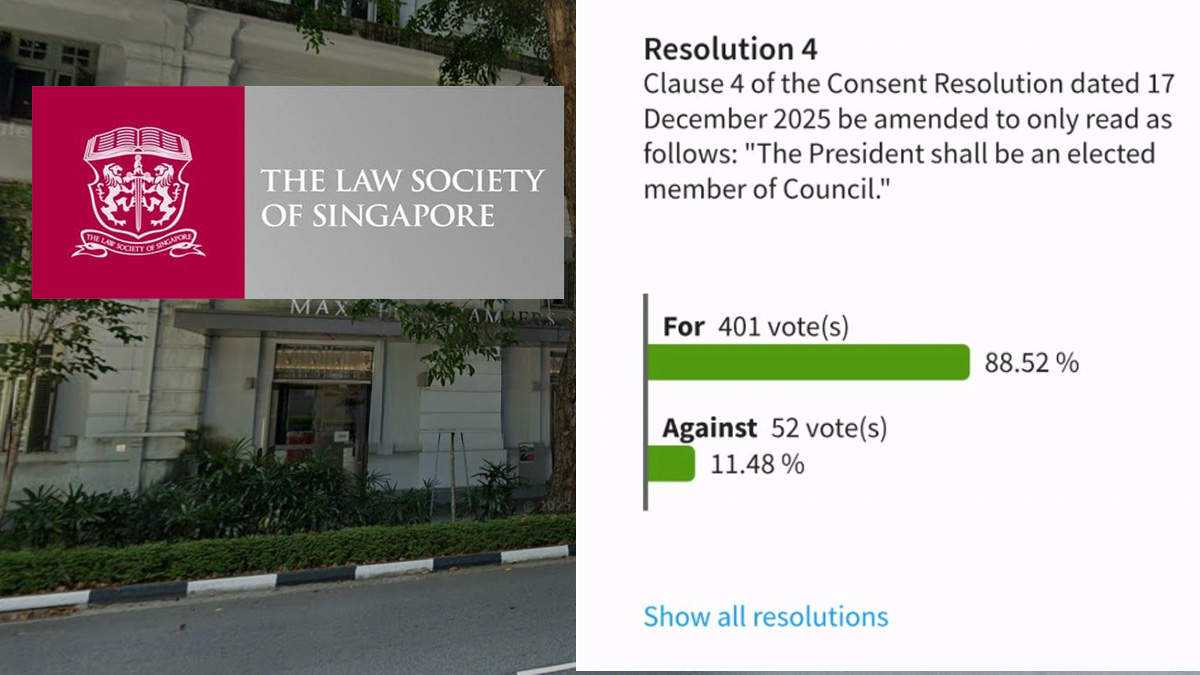
- The EGM seeks to affirm that only elected Council members should hold the presidency.
A group of Singaporean lawyers has formally convened an Extraordinary General Meeting (EGM) of the Law Society of Singapore (LawSoc), scheduled for 22 December 2025, to seek clarification on the appointment of Dinesh Singh Dhillon as President for the 2026 term.
The move follows the Law Society’s decision not to convene an EGM, despite receiving a valid requisition from more than 25 members on 24 November 2025, as permitted under Section 68 of the Legal Profession Act 1966.
In a letter dated 9 December 2025, veteran lawyer Peter Cuthbert Low — Past President of the Law Society of Singapore from 1993 to 1994 — informed the Law Society that the requisitionists would proceed with organising the EGM independently.
The letter, which served as formal notice of the meeting and included the proposed agenda, was seconded by Chandra Mohan K Nair, who also previously served as President of the Law Society from 1995 to 1997.
Grounds for EGM: Independence of the Bar and transparency
The central concern, as outlined in the formal Notice of Motion, is that President-elect Dinesh Singh Dhillon was not elected by members of the Society.
Instead, Dhillon was appointed to the Council under Section 48(1)(b) of the Legal Profession Act, which allows the Minister for Law, Edwin Tong, to appoint up to three advocates and solicitors as statutory members of the Council.
The requisitionists argue that elevating a statutory appointee to the presidency without a general election undermines the “independence of the Bar”. The formal motion to be debated at the EGM states:
“As a matter of past practice and existing convention, good governance and to uphold confidence in the independence of the Bar, the Council ought to elect as President of the Society a member of Council who has been elected by the members of the Society.”
The resolution clarifies that it does not seek to amend any laws or invalidate the current office-bearer election. Instead, it aims to formally record the collective view of the meeting on the principle of elected leadership.
Details of the EGM
The EGM will take place at 5:00pm on 22 December 2025, at the Wyndham Singapore Hotel Ballroom, located at 3 Coleman Street. According to lawyer Luo Ling Ling, who publicised the event on LinkedIn, the venue can accommodate up to 500 attendees.
In comments on the platform, Luo noted that Peter Low had paid for the venue upfront, with others intending to reimburse him. She highlighted that this arrangement was necessary due to the Law Society’s refusal to organise the meeting.
The official notice circulated outlines the EGM agenda, including debate on motions concerning the independence of the Bar and the Council’s refusal to convene the EGM despite the requisition.
Background to the controversy
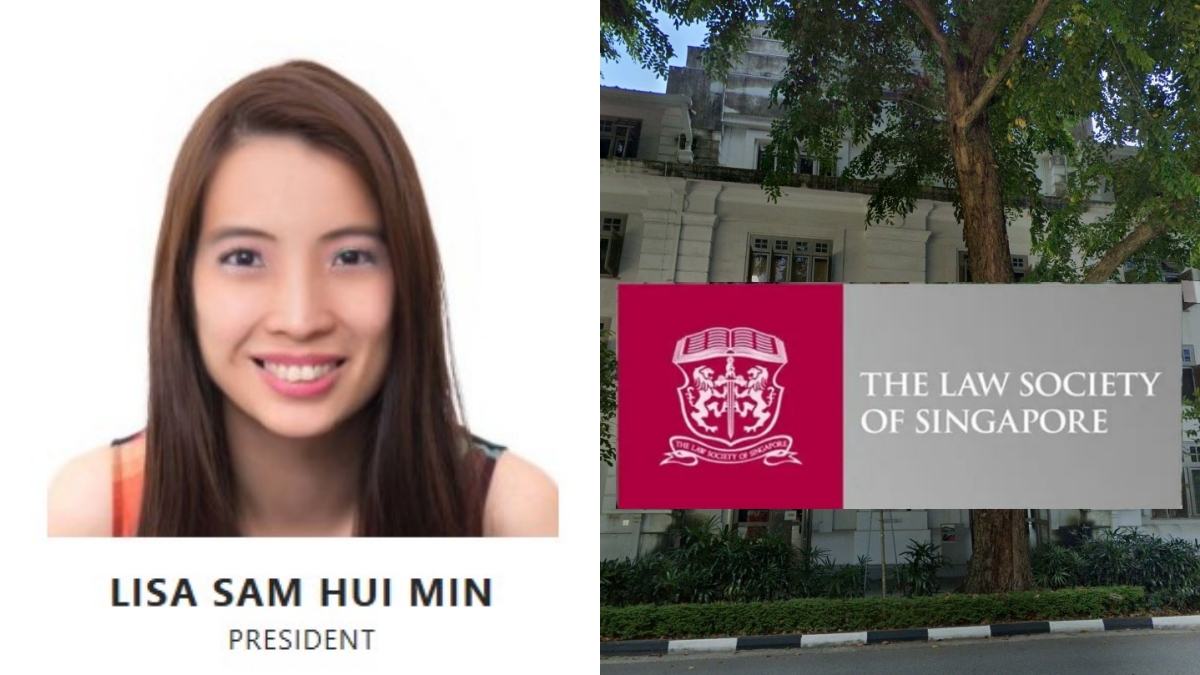
On 17 November 2025, the Law Society announced that Dinesh Singh Dhillon would assume the presidency for the 2026 term, succeeding Lisa Sam Hui Min. Other office bearers include Professor Tan Cheng Han and Daniel Koh Choon Guan as vice-presidents, and Peggy Sarah Yee May Kuen as treasurer.
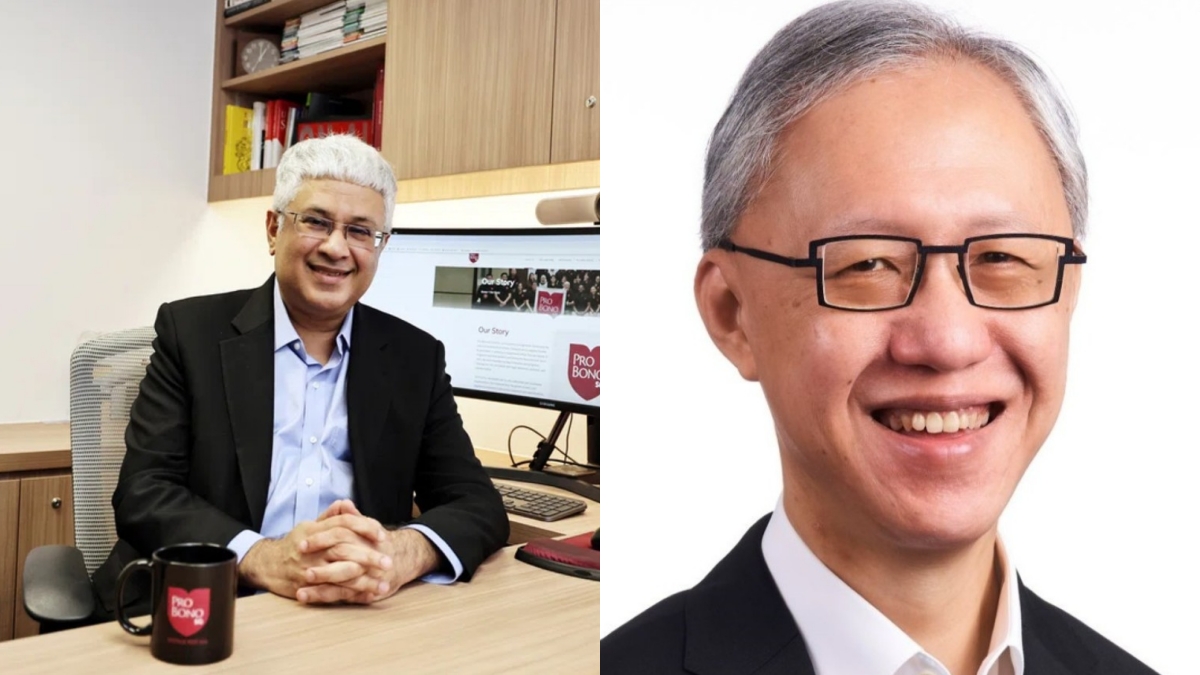
Dhillon, who practises international arbitration at Allen & Gledhill — a law firm where current Attorney-General Lucien Wong and Minister for Home Affairs K Shanmugam, who was Minister for Law until May 2025, were previously partners — holds leadership roles in both pro bono work and international legal organisations.
He was appointed to the Council as a statutory member under Section 48(1)(b) of the Legal Profession Act 1966. This provision allows the Minister for Law to appoint up to three advocates and solicitors to sit on the Council.
The 21-member Law Society Council for 2026 includes three statutory members appointed by the Minister under Section 48(1)(b), and another three appointed by the Council under Section 48(1)(c). All 21 Council members, including those appointed, were entitled to vote internally to elect the office bearers, including the President.
This voting structure forms the basis of the requisitionists’ objection. They argue that permitting appointed — and unelected — Council members to vote in the internal selection of the President undermines democratic legitimacy.
The EGM seeks to challenge this practice and affirm that the President of the Law Society should be elected from among Council members who have themselves been elected by the general body of lawyers.
A call to action
In her LinkedIn post, Luo issued a direct appeal to fellow lawyers to attend the EGM and make their voices heard. “Show up, cast the vote and go home,” she wrote, urging even those usually disengaged from Law Society affairs to participate in what she called a “real-life case study”.
She questioned why some lawyers abstain from elections and whether fear or complacency has compromised professional principles. “There are better ways to make money,” she added, challenging colleagues to reflect on their roles and responsibilities within the legal profession.
Update at 3pm: LawSoc and MinLaw respond to EGM notice
In response to media queries, the LawSoc confirmed that Dinesh Singh Dhillon was appointed to the 2025 Council as a statutory member by the Minister for Law, with a two-year term beginning on 1 September 2025.
Following this, Dhillon was elected as President of the 2026 Council in an internal vote, reportedly winning by a slim margin against incumbent Vice-President Samuel Chacko. The Law Society declined to provide further details on the voting process, citing confidentiality.
LawSoc also confirmed that Dhillon is the first President-elect to have entered the Council as a ministerial appointee. However, it stated that this is not unprecedented for other office bearer roles, such as Vice-President or Treasurer. It added that there is no express rule in the Legal Profession Act that prohibits a statutory member from being elected as President.
The Society reiterated that under the Act, Council members — whether elected or appointed — are eligible to be nominated as office bearers, provided they are not otherwise disqualified.
On 25 November 2025, LawSoc acknowledged receiving a requisition for an EGM and stated that it was reviewing the request in accordance with Section 68 of the Legal Profession Act. However, the requisitionists later noted in their 9 December notice that the Council had resolved not to call the meeting, prompting them to organise it independently.
LawSoc has since invited members to a tea session on 10 December, intended to address “any queries or concerns,” particularly regarding the transition to the 2026 Council and its plans for the year ahead.
The Ministry of Law also responded, affirming that while it has the authority to appoint up to three statutory members under the Act, those appointees are not representatives of MinLaw, but members of the Council in their own right. A spokesperson stated that all Council members — elected or appointed — are expected to act in the best interests of the Law Society and the profession.
The Ministry further clarified that the election of office bearers is solely within the purview of the Law Society Council.