Gurkha officer’s daughter shares struggle of leaving Singapore, urges clearer citizenship path
A digital content creator raised in Singapore as the daughter of a Gurkha officer has shared the emotional toll of being required to leave the country in her teens. While expressing gratitude to Singapore, she called for clearer and more feasible citizenship pathways for Gurkha children born and raised in the city-state.
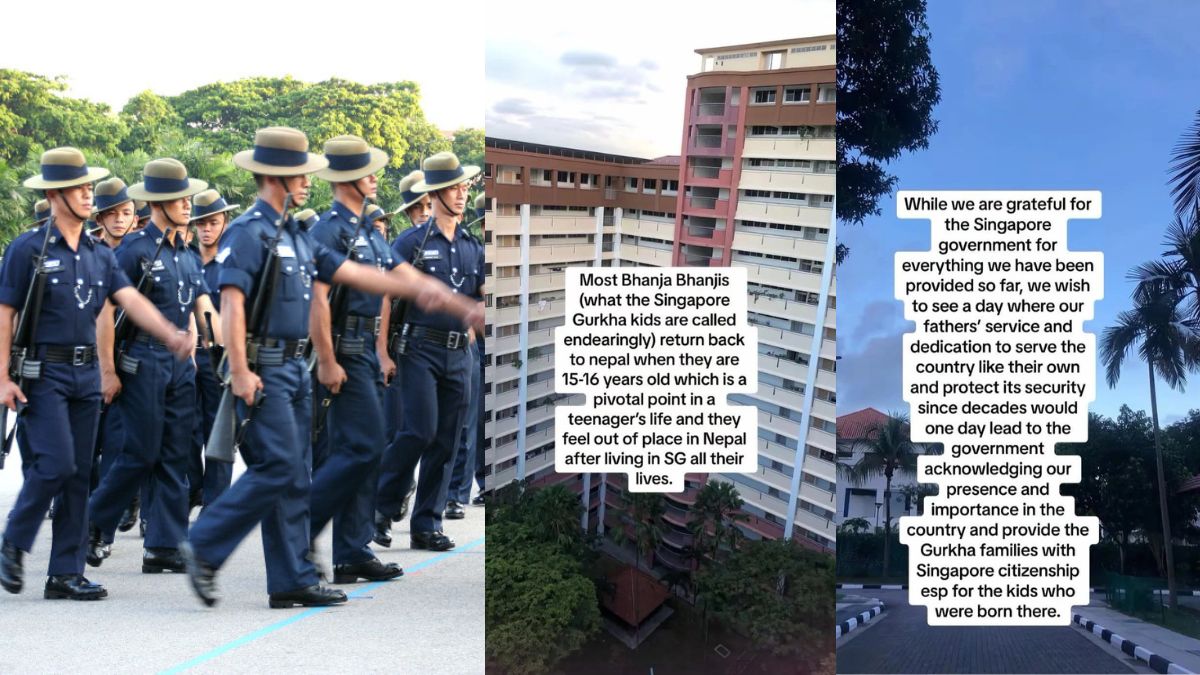
- A Gurkha officer’s daughter shared the hardship of leaving Singapore as a teenager, calling for clearer citizenship pathways for children born there.
- She expressed gratitude to Singapore while describing the emotional impact of returning to Nepal at a pivotal age.
- Her story drew mixed reactions online, with support for Gurkha families weighed against concerns over neutrality.
SINGAPORE: A digital content creator who grew up in Singapore as the daughter of a Gurkha officer has shared her personal struggle after being required to leave the country in her teens.
Jules Thapa, who appears to be the child of a Gurkha Contingent member, recounted her experience in a Facebook post on Thursday (8 January).
While expressing gratitude towards the Singapore government, she also called for a clearer and more feasible pathway to citizenship for Gurkha families, particularly children born and raised in the city-state.
The Gurkha Contingent, part of the Singapore Police Force (SPF), is made up of soldiers recruited from Nepal and is known for its role in maintaining internal security.
Under existing arrangements, Gurkha officers serving in Singapore are not granted permanent residency or citizenship. Their families are required to return to Nepal once the officer’s service ends — typically after 25 to 27 years, or when the officer reaches the age of 45.
As a result, Thapa said many children of Gurkha officers, often affectionately referred to as “Bhanja Bhanjis”, leave Singapore at around 15 or 16 years old — a pivotal stage in their lives.
This, she added, often leaves them feeling displaced after having spent their entire childhood in Singapore.
“I’m so grateful to be raised in Singapore as it’s so safe and peaceful,” she wrote, recalling local food she still misses, including Hainanese chicken rice, char kway teow and Hokkien mee.
“It’s the way the taste still lingers in my mouth just thinking about it.”
‘A Life I Thought Was Forever’
Despite acknowledging the contractual terms of the Gurkha arrangement and her Nepali nationality, Thapa said the transition was emotionally difficult.
“I’d like to speak as a 16-year-old kid who had to return to Nepal and leave behind a life I thought was forever,” she wrote, describing the challenge of adapting to life in a developing country after growing up in what she described as a first-world environment.
She added that Singapore’s safety and stability had shaped her worldview, making the adjustment even harder, particularly during a period of political instability in Nepal.
“The first few years were hard and confusing and left me wondering about the ‘what ifs’ of continuing life as an adult in Singapore,” she said.
Gratitude, Not Entitlement
Despite the hardship, Thapa stressed that she remained grateful for the foundation Singapore had given her, particularly its education system and sense of safety.
“There are no words to describe how Singaporean I’ve felt growing up in Singapore,” she wrote, adding that this sense of belonging was something she would never take for granted.
She emphasised that Gurkha children were not demanding citizenship out of entitlement.
“We don’t feel entitled to citizenship just because our dads served,” she wrote, adding that they knew Singapore by heart and shared the same values and sentiments as locals.
Call for a Feasible Solution
Thapa said she hoped both the Singapore and Nepali governments would explore a feasible solution for Gurkha children, whom she described as “byproducts of a contract set by adults”.
She added that Gurkha children were equally capable of contributing to Singapore’s economy and society if given the opportunity.
“We wish to see a day where our fathers’ service and dedication to protect Singapore’s security would lead to the government acknowledging our presence and importance,” she wrote, calling for citizenship options, especially for children born in Singapore.
Messages of Support and Appreciation
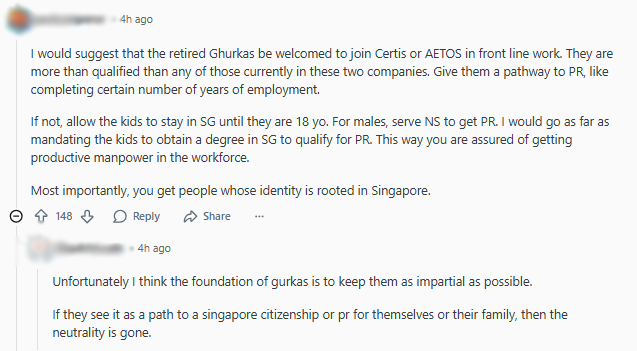
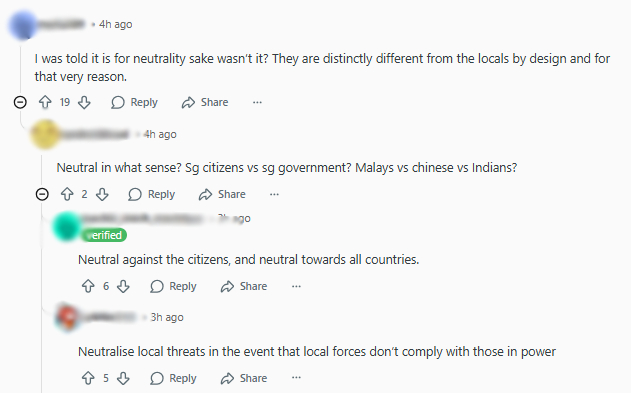
Thapa’s post, which was also reshared on Reddit, drew mixed reactions from netizens. While many expressed sympathy and strong support for Gurkha families, others argued that the existing arrangement was necessary to preserve the Gurkhas’ neutrality as a security force.
Many netizens expressed gratitude towards Gurkha officers for their role in protecting Singapore and said it was understandable for their children to feel a strong sense of belonging after growing up in the country.
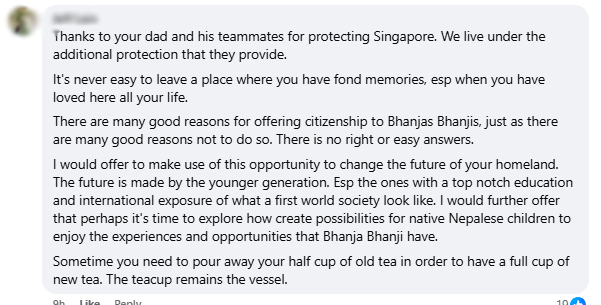
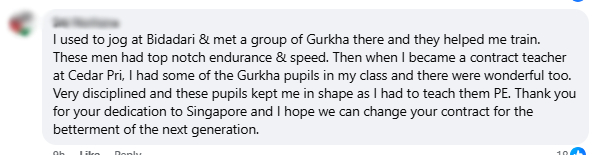
A number of Singaporeans said they would support granting permanent residency or citizenship to Gurkha families who had served the country, describing Singapore as their home.
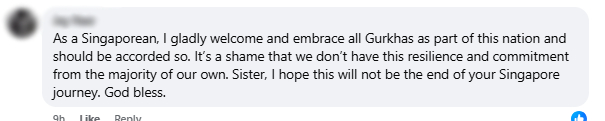

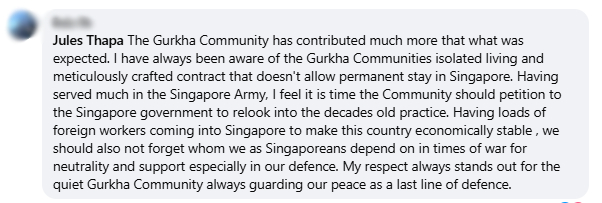
Others argued that the Gurkha community had contributed far beyond what was expected of them and said it was time for the government to relook a decades-old practice that required them to leave after years of service.
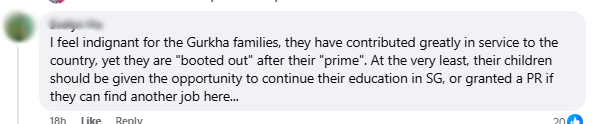
One user commented that, at the very least, Gurkha children should be allowed to continue their education in Singapore or be given the opportunity to remain if they secure employment locally.
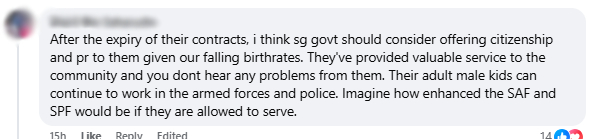
Another user suggested that offering citizenship or permanent residency could benefit Singapore in the long term, particularly given falling birth rates, noting that Gurkha officers have a strong track record and that their children could continue serving in the armed forces or police.
Arguments for Maintaining Neutrality
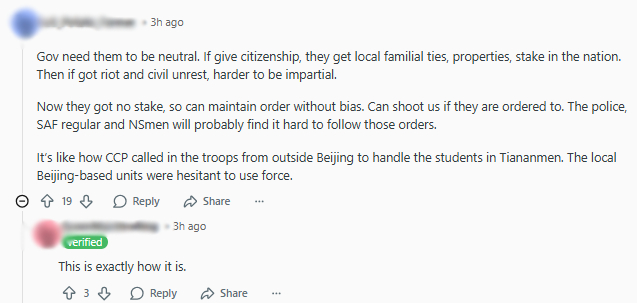
However, some netizens argued that the current policy was fundamental to maintaining the Gurkhas’ neutrality.
They said the Gurkha Contingent was designed to remain impartial, and that granting citizenship or permanent residency could create local attachments that might compromise their role during civil unrest.
Others added that allowing Gurkhas to develop local familial ties, own property or have a stake in local politics could make it harder for them to act without bias when maintaining order, arguing that their status as a foreign force was key to ensuring neutrality.