Halimah Yacob says Hwa Chong bento meals ‘look good’; netizens raise nutrition and variety concerns
Former President Halimah Yacob said Hwa Chong’s bento meals “look good”, but her remarks triggered a wave of online criticism over nutrition, value and choice. Netizens compared the food to SAF cookhouse meals, while the school and SATS defended the programme as meeting national guidelines.
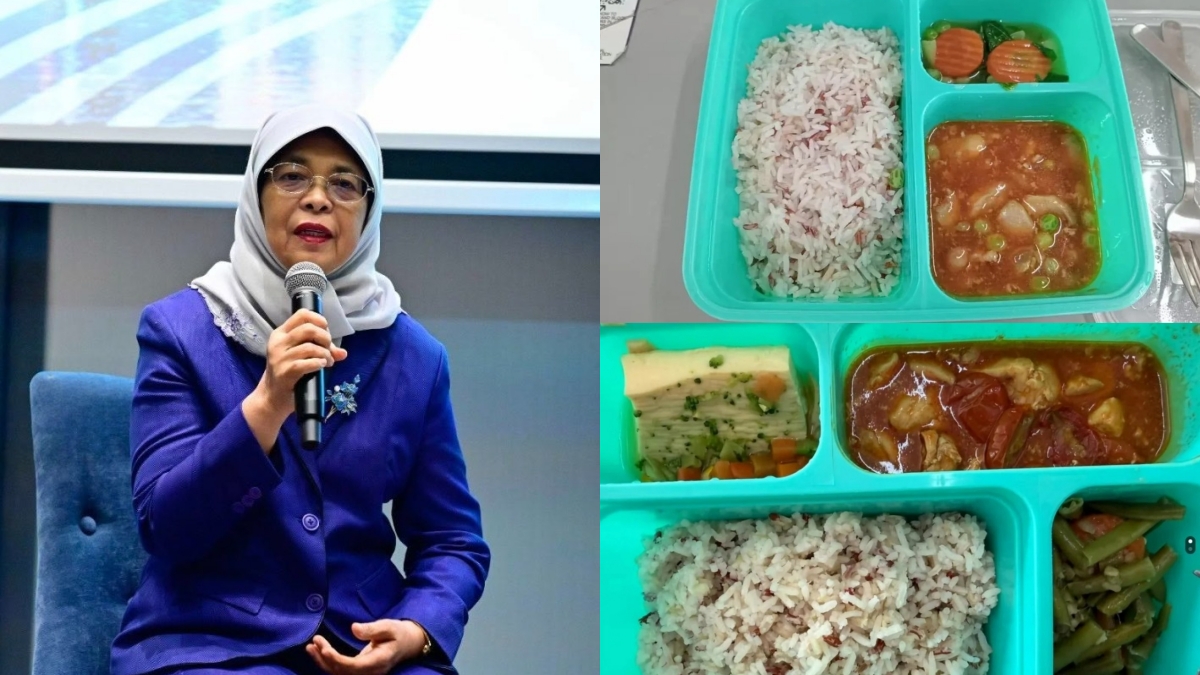
- Former President Halimah Yacob said Hwa Chong’s bento meals “look good”, prompting strong reactions online.
- Netizens debated nutrition, value for money, centralised catering, and the loss of canteen choice.
- Hwa Chong Institution and SATS defended the meals as compliant with national nutritional guidelines.
SINGAPORE: Hwa Chong Institution (HCI) recently faced public scrutiny after photos of centrally catered bento-style meals served in its canteen circulated online.
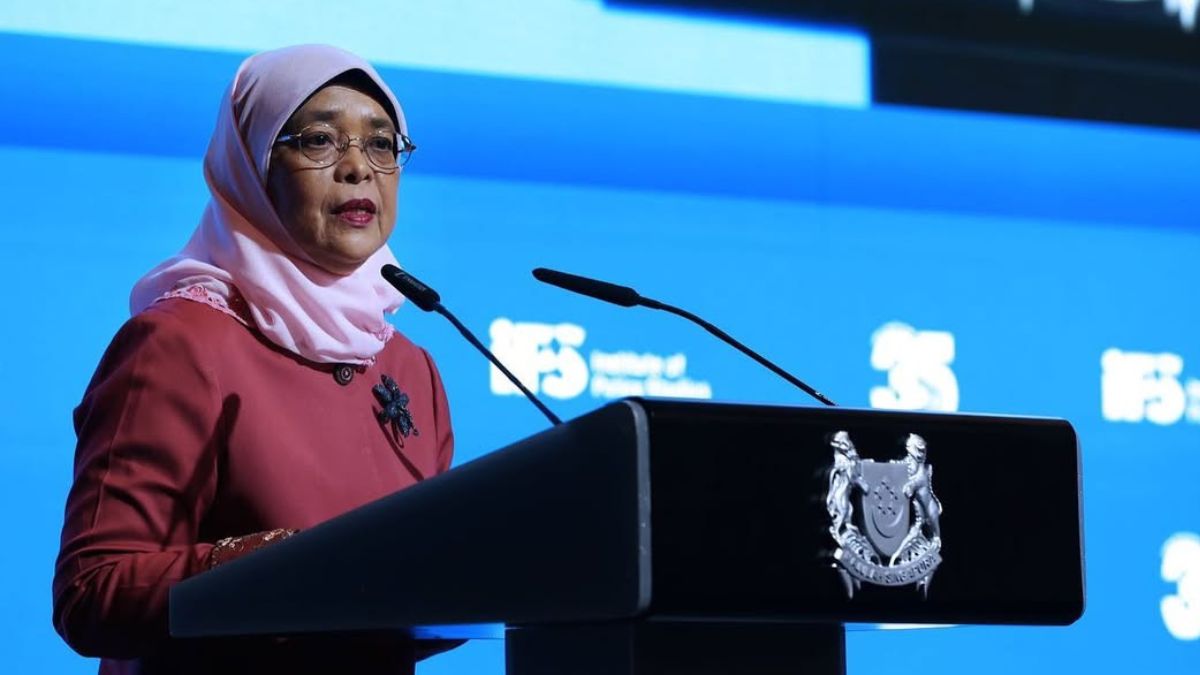
In a Facebook post on 7 January 2026, Former President Halimah Yacob said the meals “look good” to her and recalled that food during her school days was simpler, with limited options and smaller portions, partly due to financial constraints.
She added that the images brought back memories of her student years.
Concern raised over nutrition, presentation, and value
However, her comments quickly drew disagreement from netizens, many of whom questioned whether the meals meet modern expectations for nutrition, presentation, and variety, particularly given that students pay for the food.
A significant portion of online commentary centred on comparisons between the bento meals and Singapore Armed Forces cookhouse or prison food.
Some comments on Halimah and HCI's official FB account argued that the presentation and standard resembled institutional meals rather than food meant for growing students.
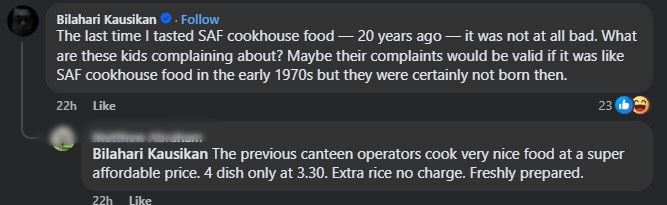
Singaporean diplomat Bilahari Kausikan weighed in, saying that SAF cookhouse food he ate 20 years ago “was not at all bad”.
He questioned why students were complaining, adding that such criticism might only be valid if the food resembled cookhouse meals from the early 1970s.
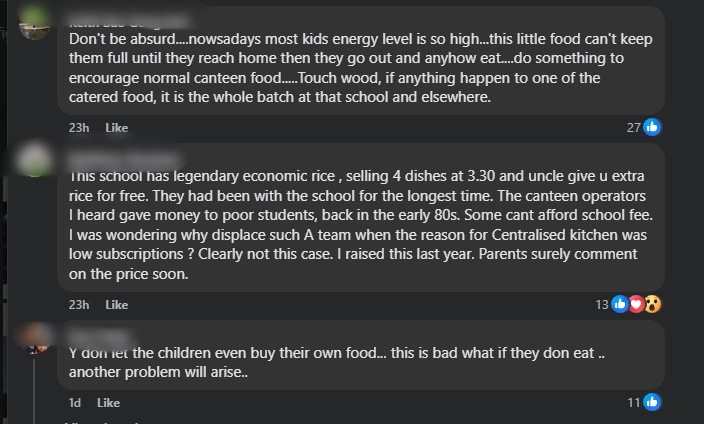
Others rejected the comparison, arguing that previous school canteen operators prepared fresher and tastier food at lower prices.
One netizen said four dishes previously cost S$3.30, with extra rice provided at no charge.
Food safety concerns over central kitchen delivery process
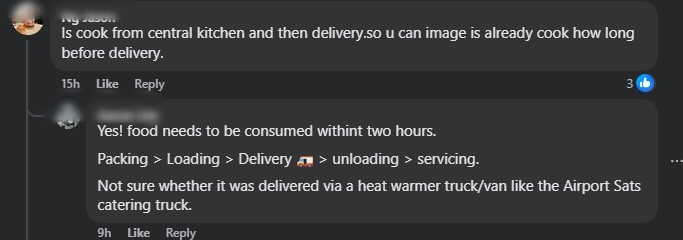
While a comment raised concerns that centrally cooked meals may take too long to reach students, noting food should be consumed within two hours and questioning whether proper heat-controlled delivery was used.
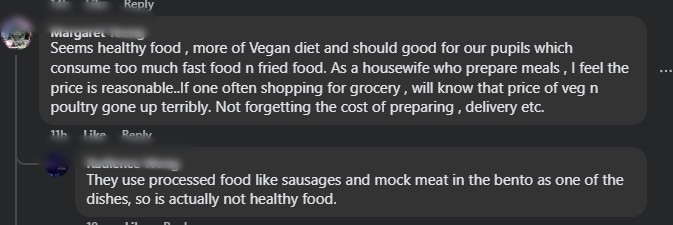
Several netizens pointed out that the meals appeared heavy on carbohydrates and light on vegetables and protein, potentially falling short of Health Promotion Board’s “My Healthy Plate” guidelines.
Others argued that processed items undermined claims of balanced nutrition.
Presentation also emerged as a key issue.
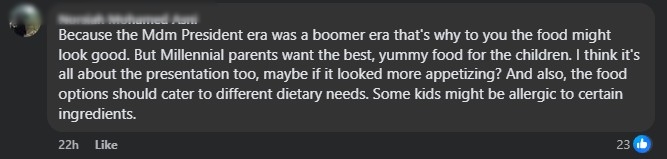
Commenters said that while the meals might be nutritionally adequate, they looked unappealing to children.
One comment suggested that expectations differ across generations, noting that Millennial parents prioritise attractive, tasty food.
Loss of traditional canteen culture and student choice
Beyond nutrition, many commenters lamented the perceived erosion of traditional school canteen culture.
A recurring theme was the lack of freedom for students to choose food based on preference, budget, or appetite.
Some suggested allowing children to buy their own food to learn money management skills from a young age.
Others said paid meals should offer more variety and flexibility, rather than fixed bento sets with limited options.
These views reflected broader concerns about student autonomy and whether centralised catering prioritises operational efficiency over everyday student experience.
Hwa Chong defends viral bento photos as unrepresentative
The controversy began after photos posted on Reddit on 3 January 2026 showed turquoise trays containing rice, vegetables, and protein.
Netizens questioned whether the portions and quality justified their price, with some comparing them unfavourably to SAF cookhouse meals.
According to a report by CNA on 6 January 2026, HCI said a circulating photograph did not accurately reflect typical food offerings or portion standards. The school said it had been closely monitoring food quality and portion sizes.
Hwa Chong added that the bento meals are provided by SATS and designed by certified nutritionists to meet students’ dietary needs.
SATS: Meals meet MOE and HPB guidelines
A SATS spokesperson said the meals comply with Ministry of Education and Health Promotion Board guidelines, balancing nutrition, food safety, and quality.
The spokesperson added that menus are designed with students’ developmental needs in mind.
The hybrid canteen model, launched on 2 January 2026, combines pre-prepared bento sets with live food stalls offering Indian fusion, Chinese, Western, and local cuisine. The initiative aims to reduce long queues and address manpower shortages.
Bento meals are priced at S$3.60 for regular options and S$4.80 for premium sets, with menus rotated regularly.
Hwa Chong said the programme ensures students receive balanced, reasonably priced meals while maintaining variety.
The school invited students and parents to sample the food and review menus on 5 January.
Feedback collected reportedly indicated portions were sufficient, meals were served warm, and prices were reasonable. Participants also welcomed lighter seasoning and the continued presence of live stalls.
The school said a canteen review committee comprising staff, students, and parents will be formed to assess food quality, pricing, menu variety, and overall experience.
Students and parents remain divided
Despite reassurances, some students interviewed by CNA said the viral images reflected actual meals served.
Nine students shared mixed views, with younger students describing the food as bland, watery, or overly salty, and citing small portions.
A Secondary 3 student said the criticism was exaggerated, though he felt the meals were inferior to freshly cooked food. Some students reportedly returned to traditional stalls, leading to longer queues.
Parents also questioned the value for money and pre-ordering system, saying it reduced flexibility and increased food waste.
A petition urging Hwa Chong to reconsider its partnership with SATS has attracted more than 1,300 signatures, citing safety, pricing, and nutrition concerns.