Singapore's legal profession to tackle AI disruption and attrition as judiciary marks bicentennial
Amid a landmark bicentennial year for Singapore’s judiciary, Chief Justice Sundaresh Menon announced new measures to address lawyer attrition and the challenges posed by generative AI, co-leading a future-focused committee with Law Minister Edwin Tong.
- Around 60% of young lawyers surveyed in 2024 and 2025 indicated plans to leave legal practice within five years.
- A new committee, co-led by Chief Justice Sundaresh Menon and Law Minister Edwin Tong, will address professional attrition and AI's impact on legal work.
- Singapore’s judiciary celebrates 200 years with commemorative events and initiatives throughout 2026.
At the Opening of the Legal Year on 12 January 2026, Chief Justice Sundaresh Menon unveiled wide-ranging reforms to tackle growing attrition in Singapore’s legal profession and the transformative impact of artificial intelligence (AI) on legal practice.
These announcements come as the judiciary celebrates the bicentennial of the Second Charter of Justice of 1826, marking 200 years since the founding of Singapore’s legal system.
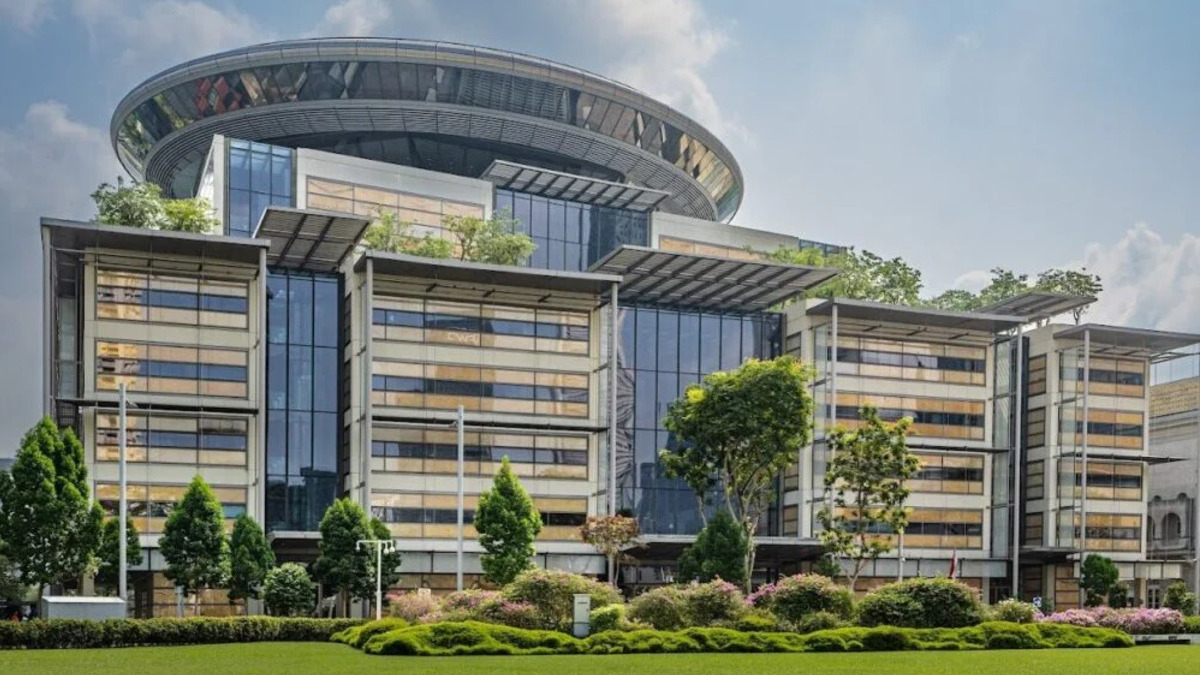
Addressing legal professionals, dignitaries, and foreign guests at the Supreme Court auditorium, Chief Justice Menon revealed that he and Law Minister Edwin Tong will co-lead a new committee focused on safeguarding the future of the legal profession.
The committee will comprise representatives from the judiciary, the Attorney-General’s Chambers (AGC), the Ministry of Law, the Singapore Academy of Law (SAL), the Law Society of Singapore, the Singapore Corporate Counsel Association, and academic institutions.
Alarming attrition rates among young lawyers
Recent surveys conducted at the 2024 and 2025 mass call ceremonies showed that approximately 60% of newly qualified lawyers planned to leave legal practice within the next five years.
Commonly cited reasons included excessive workload, inadequate work-life balance, mental well-being concerns, low flexibility, poor workplace culture, and better remuneration opportunities in alternative careers.
Chief Justice Menon expressed concern that legal practice may no longer be seen as a viable long-term career for many. He warned that if this trend continues, it could significantly impact the pipeline of experienced legal professionals in Singapore.
The SAL's data supports these findings, showing increased transitions from private practice to in-house legal roles, particularly among those with two to four years of post-qualification experience.
Generative AI reshaping legal work
The Chief Justice also identified generative AI (Gen AI) as a key disruptor to traditional legal workflows. He cautioned that while AI may improve efficiency, it risks diminishing foundational legal skills such as research, drafting, and reasoning.
“There is a real possibility that AI will compromise the development of these skills,” he said. “We should expect skills degradation to take place, which may even impact our ability to check the accuracy of AI-generated work product.”
Attorney-General Lucien Wong echoed these concerns in his address, noting that while AGC officers use a range of commercial AI tools, they do not fully meet the organisation’s security and operational needs. Instead, the AGC has developed its own in-house tools, including a judgment summariser, a treaty analyser, and a criminal procedure chatbot.
Wong emphasised that human qualities—such as fairness, honour, and the ability to discern the right questions to ask—remain irreplaceable. “AI may be able to answer your questions, but it cannot tell you when you are asking the wrong question,” he noted.
Law Society president Professor Tan Cheng Han warned that AI will likely reduce demand for routine legal work typically undertaken by junior lawyers. He raised concerns that limited access to technological tools could further erode clients’ access to justice.
A four-pronged response to systemic challenges
Chief Justice Menon outlined four strategic workstreams that the new committee and profession at large should prioritise:
-
Legal education reform: Law schools must revise their curricula to reflect modern practice and technological realities. Continuing education should become practical and engaging for professionals, extending beyond a formal requirement.
-
AI management and training: Legal professionals must develop fluency in using AI responsibly. Tools must be designed to support, not replace, core competencies.
-
Mental well-being: Firms and institutions must recognise the stresses faced by younger lawyers and build better support systems. The rise in remote work and client expectations has reduced mentorship opportunities and increased professional isolation.
-
International legal opportunities: Singapore lawyers are encouraged to expand into ASEAN, Asia, and beyond, with vibrant markets in the Middle East and Africa offering growth potential.
The Singapore Academy of Law is already taking steps to support these goals. SAL recently launched an AI-powered career coaching app and enhanced the LIFTED training framework. LawNet 4.0 has been upgraded with natural language search and new tools for regional practice.
Bicentennial of the legal system
Chief Justice Menon’s address also reflected on the legal system’s bicentennial. In 1826, the Second Charter of Justice established formal courts in Singapore, marking the beginning of institutional rule of law.
To commemorate the occasion, a year-long exhibition curated by the Singapore Academy of Law, titled The Charter & the Courts, has been launched at the Supreme Court. A commemorative medallion was also unveiled and distributed to guests at the Opening of the Legal Year.
In November 2026, a Bicentennial Celebration Week will feature a global Rule of Law conference, a gala dinner, and a formal court sitting attended by foreign Chief Justices and dignitaries.
A judicial precinct, consisting of the Octagon, the State Courts Towers, and the former Family Justice Courts building, will be consolidated to house the Syariah Court and related institutions, reflecting the Judiciary’s commitment to modernising its infrastructure.
Institutional continuity amid controversy
Notably, the speeches at the Opening of the Legal Year did not refer to internal controversies at the Law Society in December 2025, which had led to a call for an extraordinary general meeting following concerns over the appointment of Dinesh Singh Dhillon as president. A resolution was passed naming Professor Tan as president and Dhillon as vice-president. An internal investigation into allegations of workplace bullying is ongoing.
In his speech, Professor Tan honoured the contributions of past president Lisa Sam, especially her work in enhancing regional and professional partnerships, and commended the efforts of ProBono SG under Mr Dhillon’s leadership.
As Singapore’s legal profession enters its third century, the measures announced at the Opening of the Legal Year signal a determination to confront the technological, cultural, and structural changes reshaping the future of law.