South Korea shuts 4,000 schools as world’s lowest birth rate shrinks student population
More than 4,000 schools across South Korea have closed as the student population continues to shrink, driven largely by the country’s low birthrate. Student enrolment is projected to fall by more than 800,000 by 2029, deepening pressure on the education system.
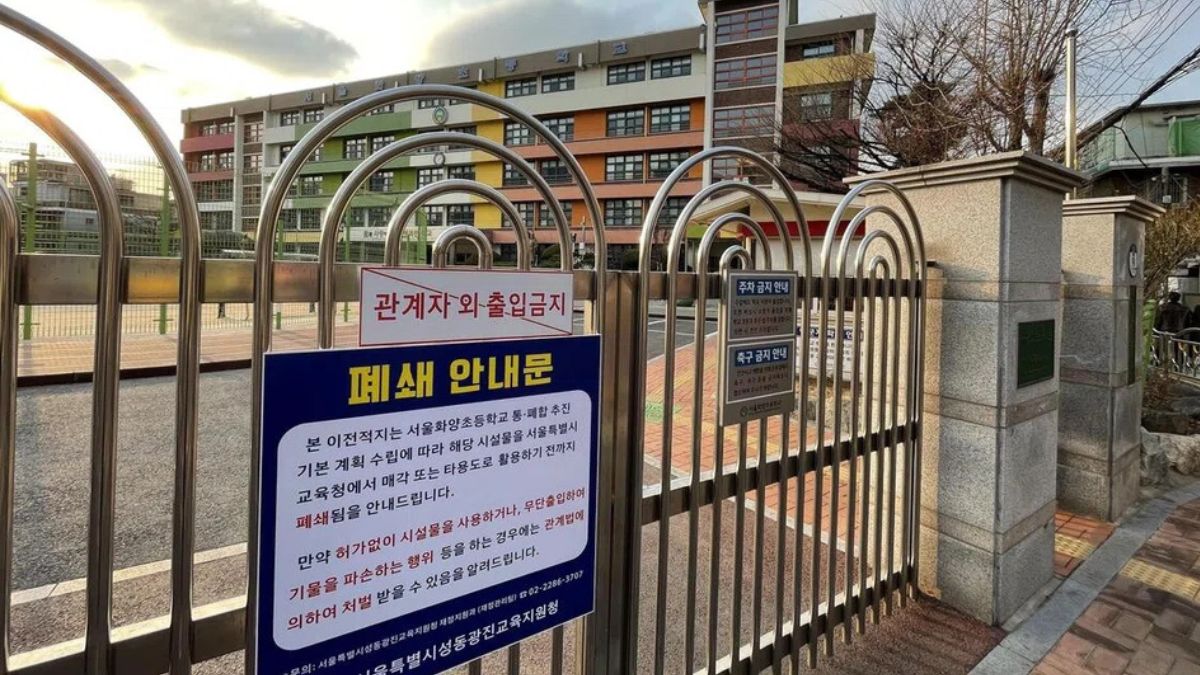
- More than 4,000 schools across South Korea have closed as the country’s student population continues to shrink.
- Student enrolment is projected to fall by more than 800,000 by 2029, accelerating school closures and teacher cuts.
- Hundreds of closed school sites remain unused, raising concerns over long-term management and wasted public assets.
SOUTH KOREA: More than 4,000 elementary, middle and high schools across South Korea have closed as the country’s student population continues to shrink, according to newly released government data.
Figures from the Ministry of Education, disclosed on Sunday (28 Dec) by lawmaker Jin Sun-mee of the ruling Democratic Party of Korea, show that 4,008 schools under 17 regional education offices nationwide have shut down to date amid a prolonged decline in enrolment.
Elementary schools account for the vast majority of closures, with 3,674 permanently shut, compared with 264 middle schools and 70 high schools.
Over the past five years alone, 158 schools have closed, while a further 107 are projected to shut over the next five years.
The decline is largely driven by South Korea’s ultra-low birthrate, the lowest in the world, with the total fertility rate remaining below 0.8.
The pace of closures also suggests that enrolment is expected to fall more sharply in provincial regions than in the capital area.
Regionally, the highest number of closures were recorded in North Jeolla Province, where 16 schools shut down, followed by South Jeolla Province (15), Gyeonggi Province (12) and South Chungcheong Province (11).
Student numbers set to fall further
South Korea’s broader demographic outlook indicates that the contraction will intensify in the years ahead.
The state-run Korean Educational Development Institute estimates that the number of elementary, middle and high school students stands at about 5.07 million this year and is projected to fall to around 4.25 million by 2029 — a drop of more than 800,000 pupils in just six years.
That figure would be less than half the enrolment level of more than 10 million recorded during the 1980s.
The ministry’s data also highlight concerns over the management of closed school sites. Of the 4,008 schools that have shut down, 376 remain unused. Among them, 266 have been left idle for more than a decade, while 82 have been abandoned for over 30 years.
Jin’s office said the figures indicate that follow-up management and repurposing of former school facilities are lagging behind the pace of closures, raising concerns over wasted public assets.
“A considerable number of schools have already closed, and this will continue as student numbers decline,” Jin said.
“We must not stop at simply shutting schools down, but instead develop a long-term road map to repurpose them as assets for local communities.”
The impact of declining enrolment has also been felt in the teaching workforce.
According to the Education Ministry, the total number of teaching positions for the 2025 academic year was reduced by 2,232, including cuts of 1,289 elementary school teachers and 1,700 middle school teaching posts.
In response, provincial and metropolitan education offices have adopted interim measures, such as lowering class sizes at some schools to around 10 to 15 students and increasing the number of classes.
A separate study has found that South Korea has the lowest proportion of children among countries with populations exceeding 40 million.
Research based on a Japanese government analysis of a United Nations population report shows that children aged 14 and under account for just 10.6 per cent of the country’s population as of 1 July, the lowest among 37 countries in the group.
Statistics Korea projects that the share of children in the population will fall below 10 per cent by 2026 and drop further to under 9 per cent by 2029.
Births show signs of recovery
Despite the long-term demographic challenges, recent data suggest a modest rebound in births. Government figures released on Wednesday (24 Dec) show that South Korea’s number of births rose in October for the 16th consecutive month.
The number of babies born in October totalled 21,958, up 2.5 per cent from a year earlier and the highest October figure since 2020, according to the Ministry of Data and Statistics.
From January to October, the country recorded 212,998 births, a 6.5 per cent increase year on year.
Annual births had fallen to a record low of 230,028 in 2023 before rising to 238,317 last year.
If the current pace continues, births are expected to increase again this year.
The total fertility rate stood at 0.81 in October, up slightly from 0.79 a year earlier, but still among the lowest globally.
Officials attributed the rise partly to demographic shifts, as the children of the second baby boom generation — those born between 1964 and 1974 — have entered their early to mid-30s, when marriage and childbirth typically increase.
Marriage numbers also continued to edge up, with 19,586 marriages recorded in October, a 0.2 per cent increase from a year earlier.
However, deaths continued to outnumber births, with the population declining naturally by 7,781 people in October as deaths totalled 29,739.