Drones deployed in Thailand to deliver flood aid as receding waters aid rescue
Thai authorities are using drones to deliver food to flood-stranded residents in the south as part of a wider relief push, aided by receding waters. With telecom outages in place, drone operations rely on satellite internet to reach isolated communities.
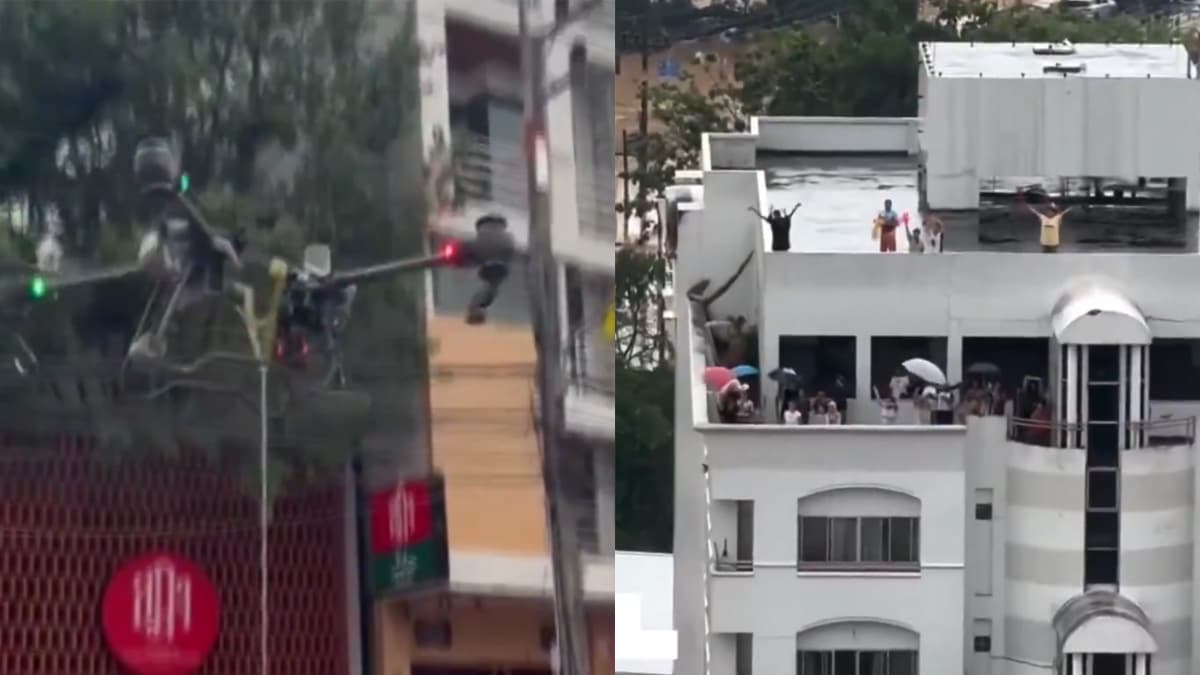
- Thailand deploys drones to deliver food and aid to flood-stranded residents amid telecom outages.
- Nearly 3 million people have been affected by severe flooding in southern provinces.
- Receding waters are allowing expanded rescue efforts, with military and tech support.
Thai authorities have turned to drones to deliver critical supplies to communities stranded by extensive flooding in the southern region, as receding waters open access for broader disaster relief.
Floods triggered by a week of heavy rain have killed at least 33 people in Thailand, with nearly 3 million affected across nine provinces, including the worst-hit city of Hat Yai.
According to government spokesperson Siripong Angkasakulkiat, unmanned aerial vehicles are now a central tool in efforts to reach isolated populations.
Drones take centre stage in urgent aid effort
"It’s a race against time," Siripong said on Thursday (27 Nov). He confirmed that drones were being prepared to air-drop food parcels to residents cut off by waters as deep as two metres.
The drone units are operating under difficult conditions, including widespread telecommunications outages. To overcome this, operators have relied on satellite internet to guide the aircraft to target zones and coordinate deliveries.
“This allows us to keep communications going and reach people in areas where normal access is impossible,” Siripong noted.
Regulatory shift enables expanded drone operations
Thailand’s drone-based flood response was made possible in part by a swift regulatory intervention from the Civil Aviation Authority of Thailand (CAAT). On 25 November 2025, CAAT issued an emergency regulation titled:
“Permission to operate or launch unmanned aircraft for disaster-relief operations in flood-affected areas in southern Thailand, B.E. 2568.”
The new rule temporarily lifts restrictions on drone flights in disaster-declared southern provinces, allowing operations in prohibited, restricted, and danger zones under strict conditions. Crucially, it also permits drone flights after 18.00 hrs, enabling round-the-clock aid delivery and surveillance missions.
To ensure operational safety, drones must be equipped with visible position and direction lights, and all operators are required to coordinate with ground and air units to avoid disrupting rescue or emergency aircraft.
Private sector support through drone innovation
Following this regulatory shift, True Corporation launched a coordinated drone deployment to bolster relief missions. The company has deployed 20 drones (TGD25 models), each with a capacity of 25 litres, to deliver essential supplies such as food, medicine, and emergency items.
Operated by expert engineers using real-time GPS systems and supported by satellite connectivity, the drones are reaching communities that remain isolated due to flooded infrastructure.
According to Ekgarach Panjaweenin, Chief Digital Officer of True Corporation, the initiative highlights the potential of digital and autonomous technology in responding to national emergencies. The operation specifically targets hard-hit zones such as Hat Yai and Narathiwat, complementing the efforts of state agencies and military units already on the ground.
Combining technology and military response
The drone deployments form part of a wider relief operation backed by the Thai military. On Wednesday, 20 helicopters, planes, and convoys of trucks were mobilised to deliver food, medicine, and inflatable boats.
Thailand's only aircraft carrier, HTMS Chakri Naruebet, has also been tasked with providing air support and distributing emergency supplies. However, in places where traditional airlifts or land transport are not viable, drones offer the most precise and rapid form of delivery.
The integration of drones has added agility to the operation, allowing aid packages to be delivered directly to rooftops and upper floors of flooded buildings.
Private sector support through drone innovation
In parallel with government efforts, True Corporation has launched a dedicated drone operation to support relief in flood-stricken southern Thailand.
The company deployed 20 TGD25 drones, each capable of carrying up to 25 litres of supplies, including food, medicine, and emergency equipment. Operated by a team of field engineers and supported by real-time geolocation technology, the drones are navigating submerged areas inaccessible by land.
According to Ekgarach Panjaweenin, Chief Digital Officer of True Corporation, the initiative reflects the company's commitment to leveraging digital capability in times of national crisis. The drones are flying missions over severely affected zones such as Hat Yai, where conventional transport is blocked, ensuring rapid and precise delivery to those most in need.
Supporting the stranded and vulnerable
In Hat Yai, over 3,000 people have been moved to safety, including critically ill patients who were evacuated from a partially flooded hospital. Yet thousands remain marooned in rural areas and submerged neighbourhoods.
Drone teams have prioritised areas where individuals have been cut off for days. Supplies include dry food, bottled water, basic medicines, and communication devices.
The deployment is not just logistical but life-saving. In certain cases, people awaiting rescue have depended entirely on these drops for sustenance.
Satellite systems key amid communication breakdown
With local telecom networks disabled in some provinces, the success of the drone missions hinges on satellite connectivity. Thai disaster response units have coordinated with technology providers to ensure continuity.
“The drones can still fly even if towers are down,” one operations officer said, adding that drone footage has also been used to map out the extent of flooding and assess road damage for ground teams.
Regional context and environmental triggers
The floods in Thailand coincide with similar extreme weather in neighbouring Malaysia, where two people have died and 34,000 have been evacuated. Meanwhile, Cyclone Senyar in Indonesia has killed 28 and caused further devastation.
Meteorologists say the extreme conditions may be linked to the interaction of Typhoon Koto over the Philippines and Cyclone Senyar in the Malacca Strait. Scientists have warned that climate change is likely increasing the frequency and severity of such weather events.