Thai forces uncover fake police scam operations at seized Cambodian compound
Thai forces have uncovered a sophisticated transnational scam compound in Cambodia's O'Smach complex after seizing the area during recent border clashes, exposing fake police stations, trafficking victims, and billions in fraud operations.
- Thai military reveals major scam hub uncovered at Cambodia’s O’Smach compound after December clashes.
- Evidence includes fake police offices, scripts, and human trafficking-linked operations.
- Cambodia denies Thai claims, insists crackdown on scams is underway ahead of April pledge.
A seized compound in Cambodia’s O’Smach area has been confirmed as a major international scam centre, following a recent inspection by Thai authorities and a delegation of military attachés from 20 countries.
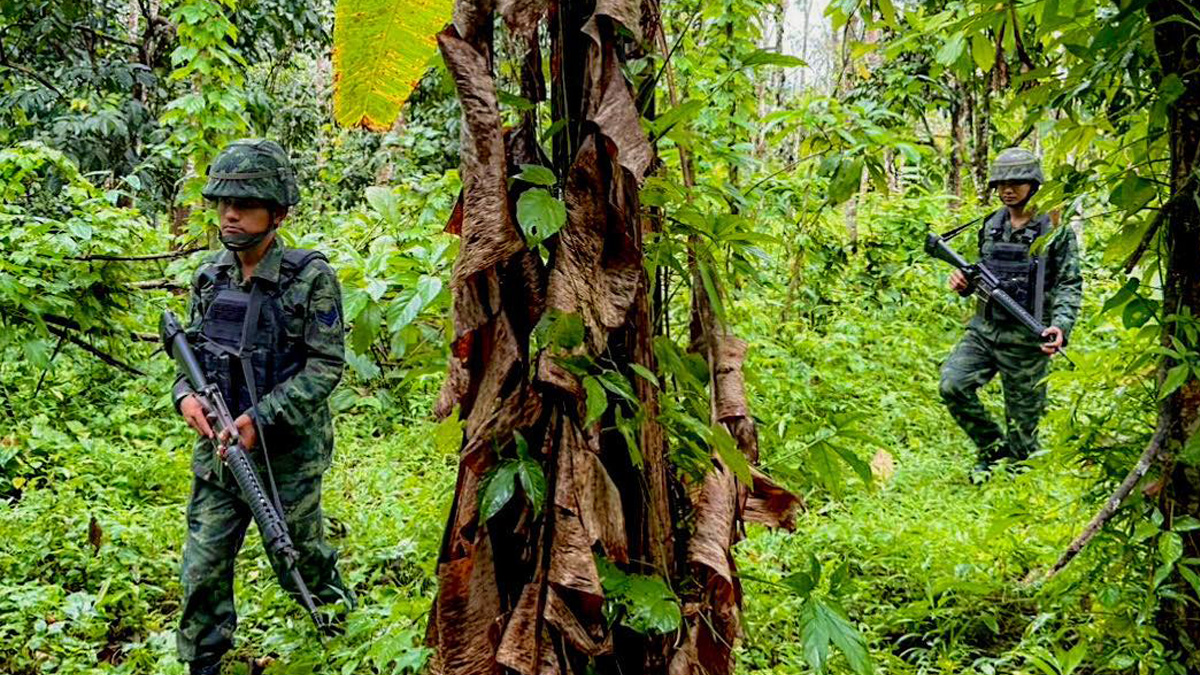
The compound, which sits near the disputed Thai–Cambodian border, was captured by Thai forces in December 2025 during armed clashes between the two countries. The site is now under Thai military control.
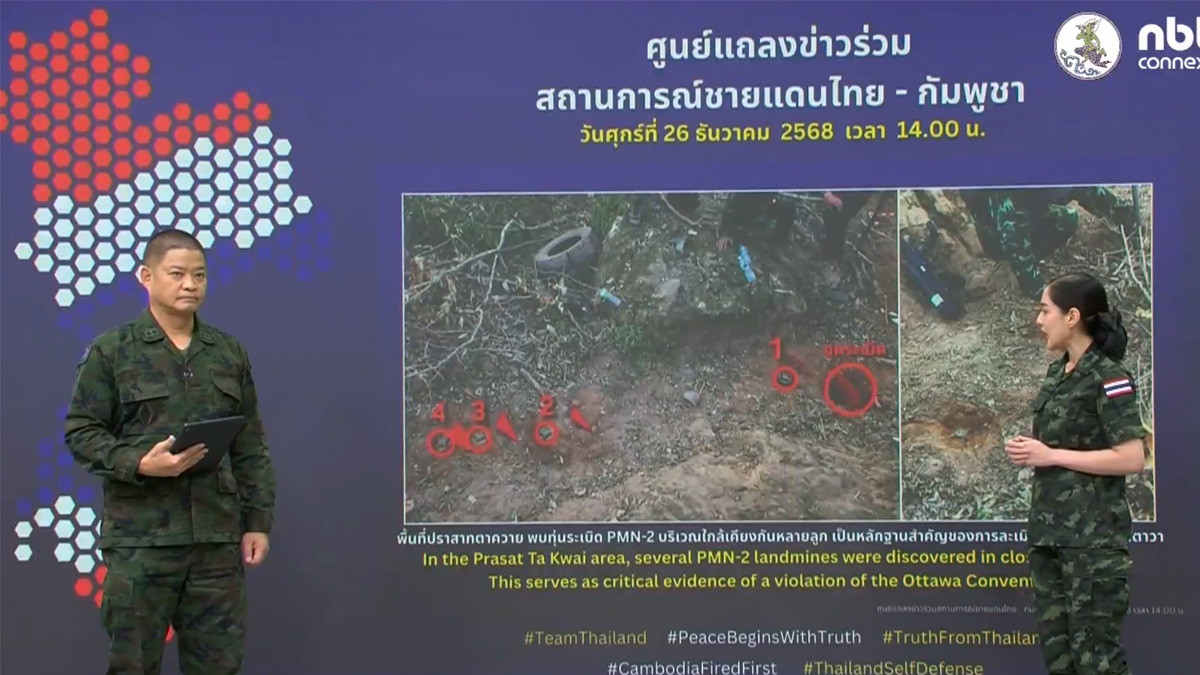
According to the Royal Thai Army, the compound had been operating as a sophisticated scam hub, involving thousands of trafficked workers. Many had been forced into fraudulent activity under threats of violence or punishment.
“We want the world to see how it’s being used as a criminal base against humanity,” said Lieutenant General Teeranan Nandhakwang, director of the army’s intelligence unit.
O'Smach compound: scam scripts, fake police setups, trafficked workers
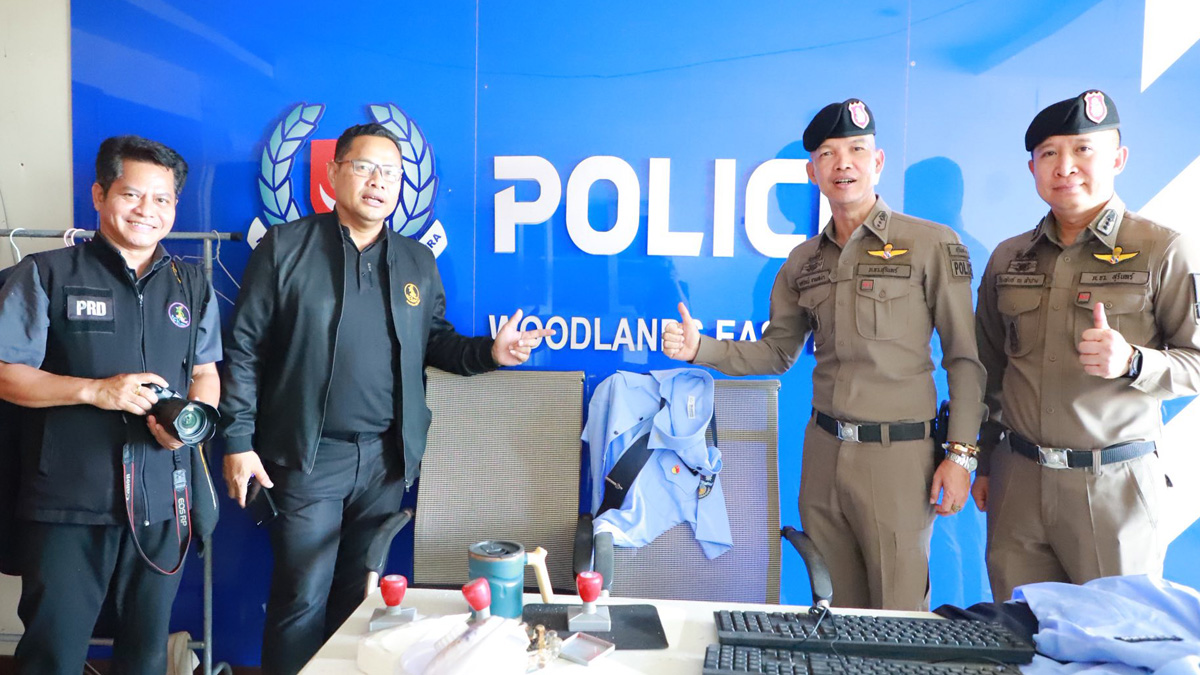
Buildings in the compound featured piles of documents, contact lists of targets, and elaborate scam scripts. Rooms were designed to imitate police stations, bank branches, and official settings from countries including Singapore, China, India, Indonesia, Vietnam, Brazil, and Australia.
Thai soldiers also discovered 871 SIM cards used for anonymous communication, fake police uniforms and insignia, and dozens of smartphones configured for fraudulent calls.
Thai officials said the operation was highly structured, with distinct departments assigned by target country, and roles ranging from initial contact to financial extraction.
One room was set up as a Vietnamese bank branch with a full waiting area and service counters. Another was made to resemble an Australian police station, complete with signage and desks.
“They are well-organised. They have good infrastructure and systems,” Teeranan said, noting the level of detail used to convince scam victims to cooperate.
International delegation inspects O’Smach site
On 2 February 2026, an international delegation visited the O’Smach site to assess the scale of the criminal operations. The group included military attachés from 20 countries and top Thai law enforcement officials.
The visit was led by Police General Thatchai Pitaneelaboot, Deputy National Police Chief and Director of the Anti-Trafficking in Persons Center, alongside Lieutenant General Teeranan and Major General Sompop Pharawet of the Suranari Task Force.
Officials observed bunk-style accommodation for lower-tier operatives, suggesting tightly controlled living conditions. In contrast, mid-level personnel reportedly had access to more comfortable lodgings.
Workstations with computers were organised by country—targeting users in Vietnam, Germany, and Australia, among others. Each station operated with pre-set dialogues and false premises designed to create fear or manipulate trust.
“This inspection aimed to expose the real conditions of criminal operations affecting international human rights,” said Teeranan.
He added that Thailand had previously requested cooperation from Cambodia after confirming the presence of Thai victims among the trafficked workers. No formal response has been received to date.
Border tensions and ceasefire agreement
The compound was secured by Thai forces during clashes in December 2025, which saw several Cambodian casino complexes bombed and occupied. Thailand claimed these compounds were used to house armed forces and launch attacks.
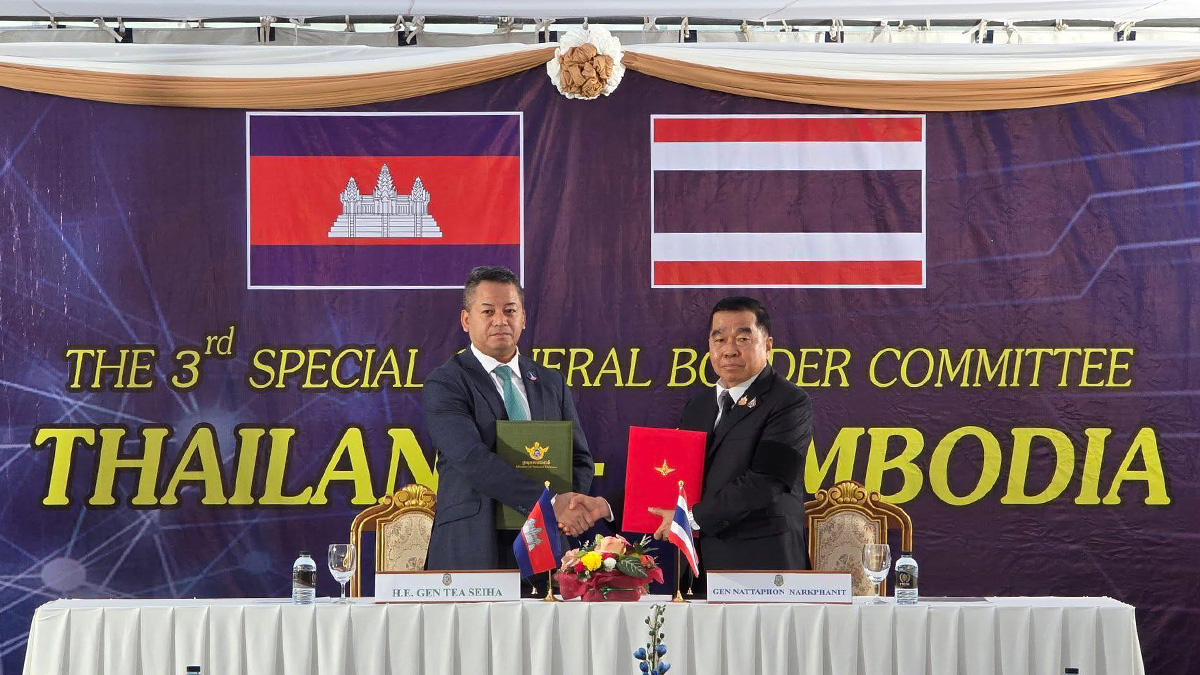
The conflict ended with a ceasefire in late December. Both countries agreed to maintain their forces at the positions held at the time of agreement—leaving the compound under Thai control.
Cambodia has denied that scam compounds were used to justify Thai military action. Ministry of Interior spokesperson Touch Sokhak stated that Cambodia was already cracking down on scam operations and intended to dismantle them entirely before April.
Rising concern over Southeast Asian scam hubs
The inspection of the O’Smach site adds weight to concerns that border regions across Southeast Asia have become centres for scam operations exploiting legal grey zones and weak enforcement.
These operations have tricked victims across the globe out of billions of US dollars and lured workers into slave-like conditions with false promises of jobs or by coercion.
Human rights groups have repeatedly called for stronger cross-border cooperation, and this latest inspection may intensify international pressure for ASEAN-led mechanisms to tackle cybercrime and trafficking.
Despite Cambodia’s denials, the findings presented by Thai and international observers appear to confirm systematic abuse and widespread criminal activity operating across national lines.