Thai customs: Tourists using Singapore as a transit hub for cannabis trafficking to the UK
Thai customs officials said tourists, mainly British holidaymakers, have been using Singapore as a transit point to traffic cannabis from Thailand to the UK, with more than 400kg seized at Samui Airport despite warnings of severe jail terms.
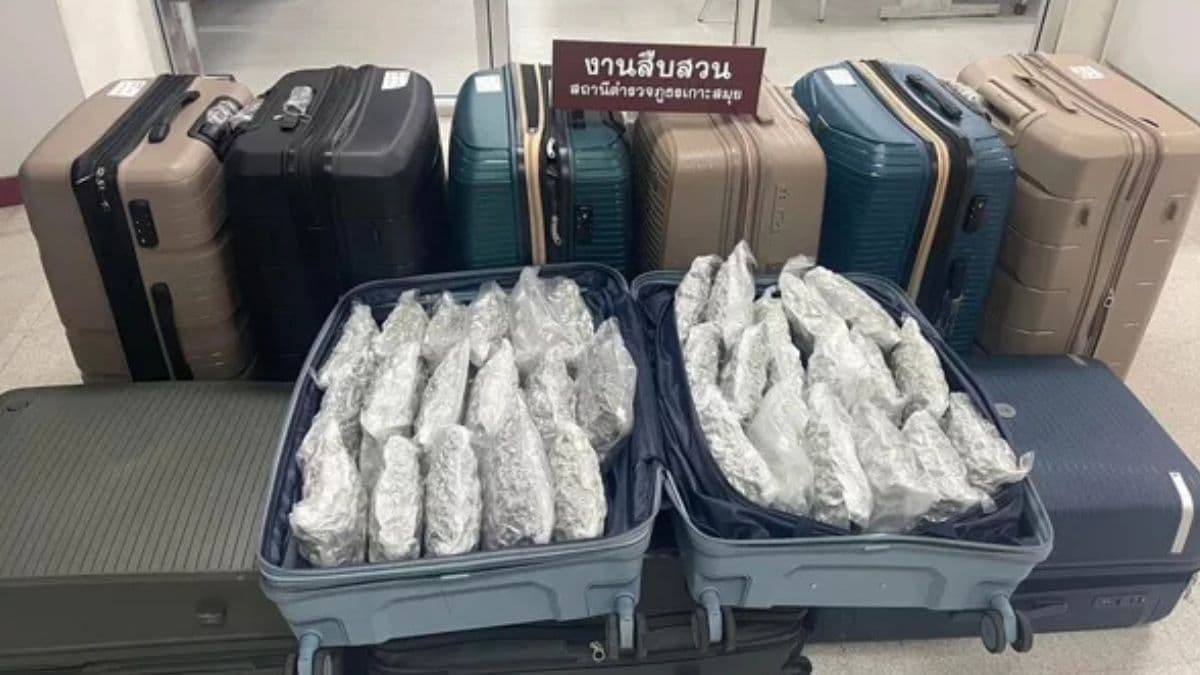
- Thai officials said tourists have been using Singapore to traffic cannabis from Thailand to the UK.
- Authorities seized 406.6kg of cannabis at Samui Airport, mostly involving British travellers.
- Singapore has previously intercepted drugs transiting through the country.
Thai customs authorities have reported that some British tourists have used Singapore as a transit point while trafficking cannabis from Thailand to the United Kingdom.
Samui Customs Office chief Ruangyos Komoltham said on 28 January 2026 that numerous seizures between March and September last year followed a similar pattern: dried cannabis concealed in luggage, departing from Samui Airport, routed through Singapore en route to the UK.
According to Bangkok Post, British nationals made up the majority of suspects in these cases. Despite warnings issued by UK authorities in 2024 about the risk of long prison sentences, the smuggling attempts continued.
In total, 406.6 kilogrammes of dried cannabis were seized by the Samui customs office over the seven-month period, with an estimated street value of 4 million baht (US$126,400).
One of the largest seizures occurred on 12 March 2025. Officials discovered nearly 144 kilogrammes of cannabis flowers in suitcases belonging to five British and one Malaysian traveller.
All six admitted to customs and police that they were carrying the drugs. It remains unclear whether they were travelling together or separately.
The seized cannabis was later donated for medical use to Tha Chang Hospital in Surat Thani province.
Methamphetamine seized from passenger arriving from Singapore in New Zealand
In a separate case involving Singapore as a transit point, New Zealand authorities arrested a woman who arrived in Auckland on 4 January 2026 on Singapore Airlines flight SQ285.
The New Zealand Customs Service said 18.45 kilogrammes of methamphetamine were found hidden in her checked baggage. The drugs were packed in 18 vacuum-sealed packages and had a street value of NZ$5.53 million (US$3.18 million).
Customs officials noted that Singapore is a frequently monitored route due to the global trafficking risk.
The woman has been charged with drug smuggling and remains in custody pending court proceedings scheduled for April.
Earlier enforcement actions involved drug shipments routed via Singapore
These cases reflect the continued exploitation of major air transit routes for international drug trafficking.
Singapore’s geographic position and connectivity make it a frequent stopover point, but authorities have stressed that the city-state is not passive in the face of such risks.
In September 2025, Singapore’s Central Narcotics Bureau (CNB) announced that it had intercepted several drug parcels in transit through Singapore. These parcels, which originated in the United States and were bound for New Zealand and Australia, contained more than 10 kilogrammes of methamphetamine.
The operation involved coordination with the US Drug Enforcement Administration (DEA), the New Zealand Customs Service, the Australian Federal Police (AFP), and other regional partners. Intelligence shared by CNB led to additional seizures in New Zealand and Australia, amounting to roughly 60 kilogrammes of methamphetamine.
In earlier enforcement actions, Brunei’s Narcotics Control Bureau seized 49 kilogrammes of methamphetamine headed to multiple international destinations, some of which followed similar concealment and routing patterns.
CNB Deputy Director for Operations, Assistant Commissioner Aaron Tang, said at the time: “Drug syndicates that attempt to exploit Singapore’s infrastructure and connectivity as a major transhipment and logistics hub will not find us to be a safe haven nor safe route for their illegal activities.”
The DEA has linked the syndicate involved to Mexican cartels, using the Asia Pacific region for higher-profit drug distribution.
Authorities have reiterated the importance of intelligence-sharing and multilateral cooperation in disrupting transnational narcotics trafficking through the region.