Thailand dissolves parliament as Anutin concedes minority rule unsustainable
Thailand’s Prime Minister Anutin Charnvirakul has dissolved parliament via royal decree, citing the inability of his minority government to govern amid political turmoil, economic uncertainty, and a deadly border crisis with Cambodia.
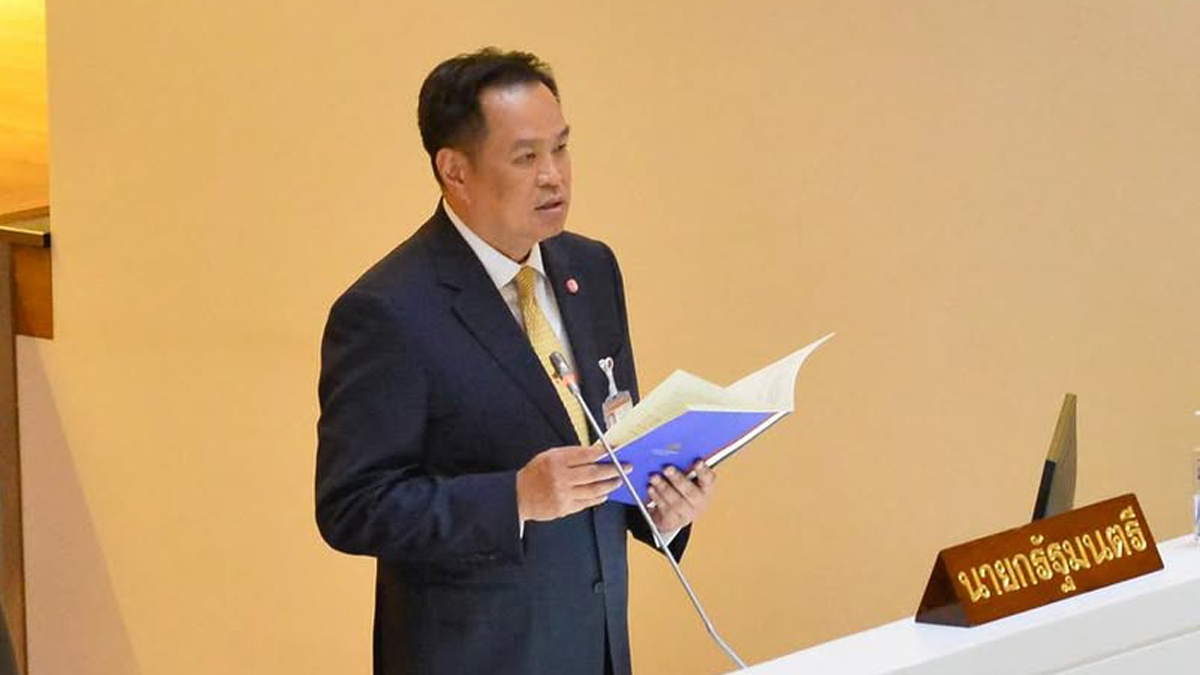
- Thailand’s House of Representatives has been dissolved by royal decree at the request of Prime Minister Anutin Charnvirakul.
- The decision follows mounting crises, including a border conflict with Cambodia and breakdowns in parliamentary cooperation.
- A general election must be held within 45 to 60 days, under the Thai constitution.
Thailand’s Prime Minister Anutin Charnvirakul has formally dissolved the country’s parliament following a royal decree issued on 12 December, 2025, clearing the path for general elections to be held within 45 to 60 days.
The dissolution follows escalating political instability, a deadlock in parliamentary governance, and a border crisis with Cambodia that has left at least 20 people dead.
The Royal Gazette published the decree titled the “Royal Decree Dissolving the House of Representatives, B.E. 2568 (2025)”, with the endorsement of King Maha Vajiralongkorn. According to the decree, the government has determined that only a general election can restore effective governance and national stability.
Anutin, who assumed office in September 2025 as head of a minority coalition, conceded that his administration lacked sufficient parliamentary support. The coalition had been under pressure since its formation and was reliant on a fragile alliance with the opposition People's Party.
In a public statement, Anutin said, “I am returning power to the people,” and added that the decision was necessary to avoid deeper political and economic damage.
Government spokesman Siripong Angkasakulkiat told Reuters that the collapse of parliamentary cooperation led to the decision. “This happened because we can't go forward in parliament,” he said.
According to the royal decree, the Election Commission must now set an election date no sooner than 45 days and no later than 60 days from the decree's publication. The chairman of the commission is tasked with enforcing the decree. The document was countersigned by Anutin in his official capacity.
Mounting pressures on a minority government
In the preamble to the decree, the King noted that Anutin had communicated his government’s inability to maintain effective control amid multiple challenges. These included economic volatility, social unrest, growing political divisions, and worsening tensions along the Thai–Cambodian border.
Thailand is facing several concurrent difficulties: fallout from global trade disputes, high household debt, stagnant consumer spending, and rising international pressure over constitutional reform. The country has also been struggling with digital crime, online scams, and cyber threats.
Despite efforts by the government to address these concerns—such as pushing for constitutional amendments and deploying diplomatic means to ease border tensions—critics argued that a minority government lacked the political weight to implement lasting solutions.
“If this situation is allowed to persist,” the decree warned, “it could lead to a decline in international confidence, economic losses, and weakened public trust in democracy.”
Border clashes intensify urgency
The announcement came as Thai forces were engaged in a fourth day of clashes with Cambodian troops along the shared border. The conflict, involving exchanges of heavy artillery at multiple locations, has resulted in at least 20 deaths and nearly 200 injuries.
Anutin confirmed that the military operations would proceed unaffected by the political transition. “Dissolving parliament does not change our commitment to national defence,” he told reporters.
Accelerated timeline
Anutin had previously indicated plans to dissolve parliament by January 2026, with elections expected in March or April. The new move accelerates that schedule significantly.
The crisis intensified after the People's Party accused Anutin’s Bhumjaithai party of failing to uphold a coalition agreement. Among their demands had been a referendum on constitutional amendments.
"When the People's Party couldn't get what they want, they said they will submit a no-confidence motion and asked the PM to dissolve parliament immediately," said government spokesman Siripong.
People's Party leader Natthaphong Ruengpanyawut said the opposition had attempted to work within the system. “We have tried to use the voice of the opposition to push forward amending the constitution,” he told reporters.