Human Rights Watch flags deepening repression and conflicts across Asia in 2026
The Human Rights Watch 2026 report underscores increasing authoritarianism, digital surveillance, and suppression of dissent across Asia, warning of a sustained erosion of democratic norms and accountability.
- Human Rights Watch’s 2026 report highlights entrenched repression, digital censorship, and impunity in many Asian states.
- China, India, Myanmar, and Afghanistan are flagged for systemic abuses and rollback of civil liberties.
- Rights organisations urge international actors to counterbalance authoritarian expansion and protect civic space.
Repression, impunity, and instability plague Asia
The World Report 2026 by Human Rights Watch (HRW), released in January, has raised concerns over widespread human rights violations across Asia, with notable focus on deepening repression in China, India's democratic backsliding, and crises in Myanmar and Afghanistan.
The 712-page report reviews human rights developments in nearly 100 countries and territories in 2025.
In the preface to the report, Human Rights Watch Executive Director Philippe Bolopion warned that the global human rights system is "in peril," facing a coordinated assault by authoritarian powers and weakened democratic leadership.
He highlighted how autocratic leaders—particularly in China, Russia, and increasingly the United States—are dismantling international norms and emboldening repression worldwide.
Bolopion’s message sets a stark backdrop for regional developments, noting that Asia is among the regions where "sham elections, mass surveillance, and suppression of dissent" are becoming increasingly normalised, undermining decades of human rights progress.
HRW’s former Executive Director (2022-2025), Tirana Hassan, criticised the “failure of international leadership” to respond robustly to the erosion of civic freedoms and the growing influence of authoritarian powers.
Elaine Pearson, HRW’s Asia Director, stated: “Sham elections and violent crackdowns aren’t signs of strong leadership, but of leaders fearful of losing power.”
She added that too many governments in Asia are "rigging electoral systems and dismantling independent institutions" while the international community has often remained "muted or complicit" in response.
China: Dissent silenced and abuses concealed
In the People’s Republic of China, the ruling Chinese Communist Party (CCP) maintained strict controls over expression, association, and religion. HRW reported intensified surveillance and censorship, particularly in the Xinjiang and Tibet regions.
The government continued its systematic repression of Uyghur Muslims in Xinjiang, with mass arbitrary detention, forced labour, and family separations remaining unaddressed. As of late 2025, the Chinese authorities refused to allow independent investigators to access the region.
Online censorship also increased, with the Cybersecurity Administration of China expanding content controls targeting dissent and foreign content.
In Hong Kong, authorities deepened the implementation of the National Security Law. Civil society groups were disbanded, independent media shuttered, and pro-democracy activists continued to be arrested and tried. Electoral reforms imposed by Beijing eliminated meaningful opposition from public office.
India: Shrinking democratic space under the Modi government
In India, Prime Minister Narendra Modi’s Bharatiya Janata Party (BJP) government was criticised for undermining democratic institutions and targeting religious minorities. HRW cited arbitrary detentions, internet shutdowns, and misuse of anti-terror laws, particularly in Jammu and Kashmir.
The report noted a significant increase in hate speech and violence against Muslims, often with impunity. Journalists and activists critical of the government were subjected to harassment, tax raids, and charges under sedition and anti-terrorism laws.
The government also intensified its control over civil society organisations. Dozens of NGOs had their registration under the Foreign Contribution Regulation Act (FCRA) cancelled, effectively cutting off their funding.
Digital surveillance expanded through the use of spyware and intrusive monitoring technologies, often without judicial oversight.
Myanmar: Continued atrocities under military junta
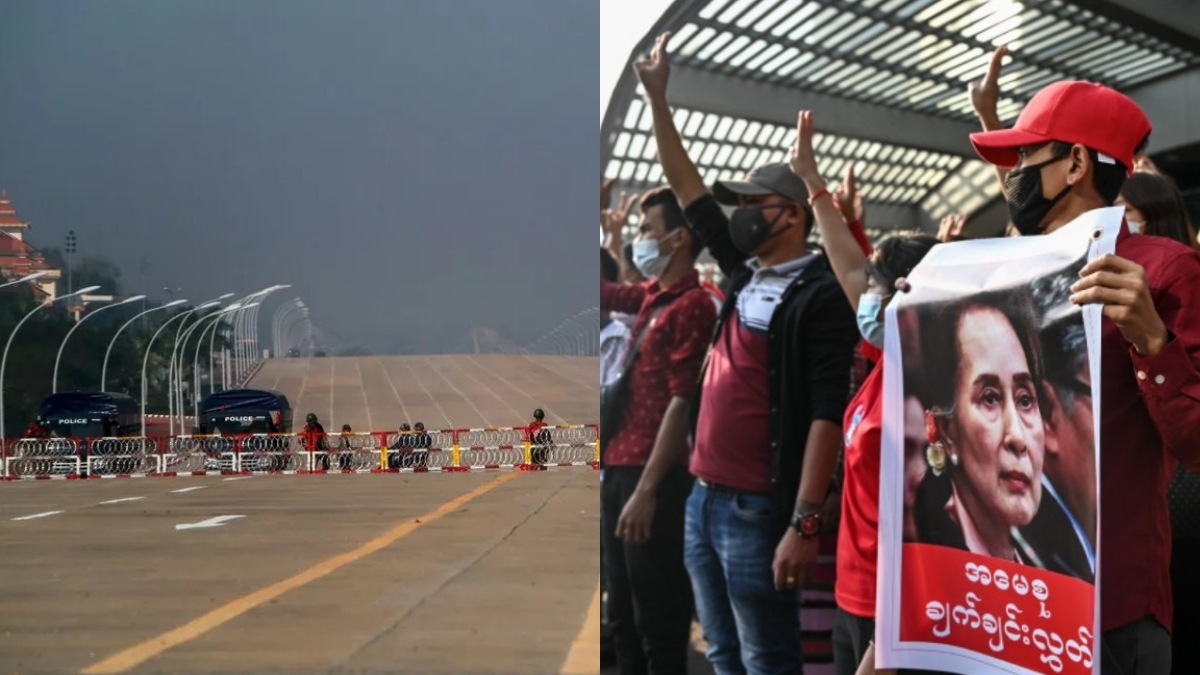
Nearly three years after the military coup of 1 February 2021, Myanmar remained mired in civil conflict and humanitarian catastrophe. The military junta, led by Min Aung Hlaing, continued to commit widespread atrocities against civilians.
HRW documented mass killings, airstrikes on villages, arbitrary arrests, and torture of detainees. The report indicated that over 2 million people were displaced by the end of 2025, and access for humanitarian agencies was severely restricted.
Ethnic minorities, especially the Rohingya, remained vulnerable. Rohingya refugees in Bangladesh and displaced persons inside Myanmar continued to face dire conditions, with little prospect of safe return.
The report noted ASEAN's failure to enforce its Five-Point Consensus on Myanmar, and called for stronger international sanctions and an arms embargo.
Afghanistan: Taliban entrenches gender apartheid
Under Taliban rule, Afghanistan saw severe restrictions on women's rights and civic freedoms throughout 2025. HRW stated that the Taliban “enforced gender apartheid,” banning women from most secondary and higher education, public service jobs, and travelling without a male guardian.
The group also detained journalists and rights defenders, shut down independent media, and imposed severe restrictions on civil society.
Despite the deteriorating situation, international engagement remained fragmented, with few governments pressing for accountability or linking humanitarian aid to human rights benchmarks.
Other developments in the region
In the Philippines, the administration of President Ferdinand Marcos Jr took limited steps to investigate abuses under the previous Duterte government. The International Criminal Court’s investigation into the “war on drugs” killings faced government resistance.
In Thailand, while elections were held in May 2023, HRW noted continued influence of the military in governance and repressive laws curtailing freedom of expression.
Vietnam intensified crackdowns on dissent. Political prisoners faced harsh sentences, and the death penalty continued to be used.
In Sri Lanka, the government faced ongoing protests and criticism over economic mismanagement, but responded with force and arbitrary arrests.
Bangladesh's ruling Awami League continued its clampdown on opposition figures ahead of the January 2026 elections, raising concerns over electoral integrity.
In Singapore, authorities continued to suppress dissent through legal restrictions on free speech, public assembly, and political opposition. The Protection from Online Falsehoods and Manipulation Act (POFMA) was used to compel corrections and remove online content critical of the government, while the Public Order Act and contempt of court laws were deployed to criminalise peaceful protest and criticism of the judiciary. Independent media and civil society groups faced structural barriers, and opposition politicians encountered obstacles to campaigning and organising.
In Malaysia, Human Rights Watch observed that despite the unity government's rhetorical commitment to reform, restrictions on civil liberties persisted. Authorities continued to use the Sedition Act and Communications and Multimedia Act to investigate or prosecute critics, journalists, and activists. Peaceful protests were discouraged through police intimidation, and impunity remained for past custodial deaths and police abuses. Malaysia still lacked a legal framework for refugee protection, leaving asylum seekers vulnerable to detention and deportation.
Regional trends: Digital authoritarianism and civic space erosion
Across Asia, HRW flagged a growing pattern of digital authoritarianism, with governments deploying surveillance technologies, disinformation laws, and internet controls to stifle dissent. In countries such as Singapore and Malaysia, so-called “fake news” laws like POFMA and the Communications and Multimedia Act were instrumental in suppressing online criticism and curbing press freedom.
Freedom of assembly and association also came under pressure. Authorities across the region increasingly used public order laws to ban protests, harass organisers, and restrict civil society operations.
Impunity for state violence persisted. Investigations into abuses by police or military forces remained rare, and perpetrators were seldom held accountable.
Calls for international accountability and principled diplomacy
HRW’s report criticised the global response to rights violations in Asia as inconsistent and overly cautious. Major democracies were urged to act collectively to support civil society, impose targeted sanctions on abusers, and defend international human rights norms.
According to Tirana Hassan, “The world’s democracies cannot afford to be selective in their support for rights defenders. Silence and inaction embolden abusers.”
HRW recommended expanding Magnitsky-style sanctions, reinforcing international investigative mechanisms, and conditioning diplomatic engagement on human rights improvements.