US lawmakers condemn Trump’s Venezuela strike, warn of constitutional overreach
Democratic lawmakers in the United States have condemned President Donald Trump’s military operation in Venezuela, warning it lacks congressional approval and sets a dangerous precedent. Critics argue the use of force to remove Nicolás Maduro bypassed constitutional restraints and risks long-term instability.
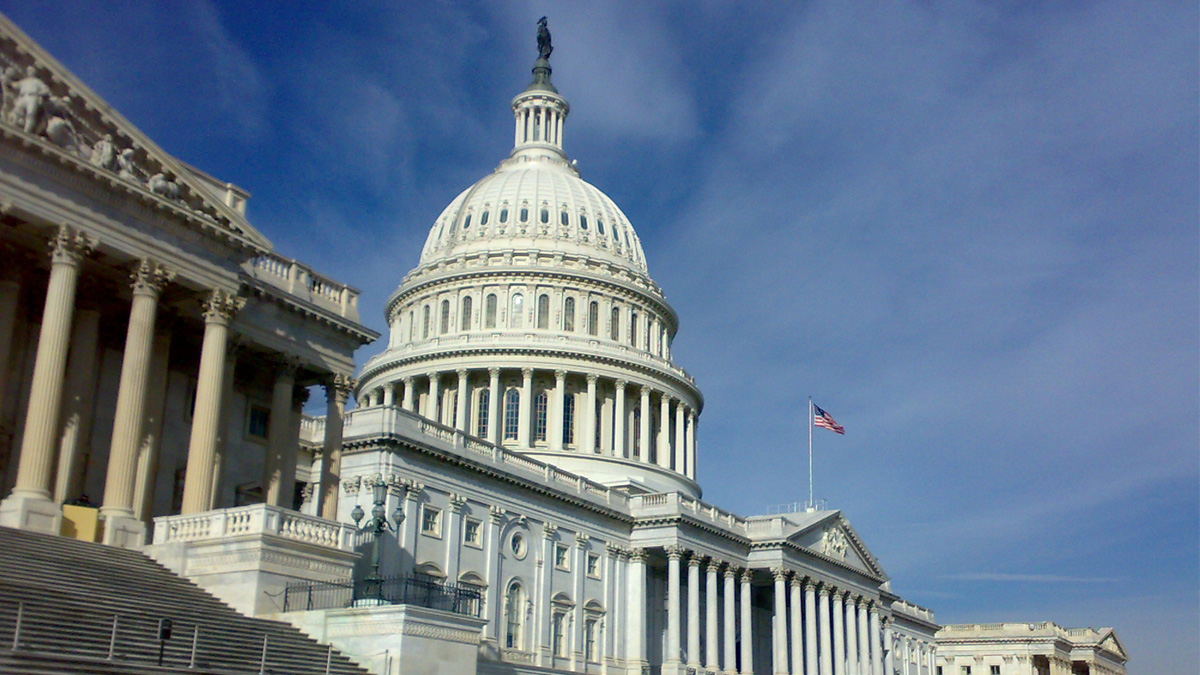
- Democratic senators and representatives say Trump’s military strike lacked legal authorisation and violated constitutional norms.
- Critics warn the move sets a dangerous precedent that could be exploited by authoritarian regimes.
- Lawmakers demand clarity on the legal basis, long-term strategy, and whether Congress was misled about the mission's intent.
UNITED STATES: President Donald Trump’s surprise military operation in Venezuela has triggered a wave of criticism from US lawmakers and international governments, who say the move lacked constitutional authority, breaches international law, and risks long-term instability in the region and beyond.
On 3 January, US special forces captured Venezuelan President Nicolás Maduro and his wife in a high-risk strike near Caracas. Trump later declared that the United States would “run Venezuela” temporarily during a transitional phase, citing Maduro’s indictment on narcotics charges and the 2024 election outcome as justification.
Congressional concerns over legality and precedent
Lawmakers from across the Democratic Party have condemned the action for bypassing Congress, describing it as unconstitutional and destabilising.
Senator Mark Warner (D-VA), Vice Chairman of the Senate Intelligence Committee, warned the operation undermines long-standing international norms.
“If the United States asserts the right to use military force to capture foreign leaders, what prevents China from claiming the same over Taiwan or Russia over Ukraine?” Warner asked. “Once this line is crossed, the rules that restrain global chaos begin to collapse.”
Senator Tim Kaine (D-VA) called the move “unauthorised” and likened it to past failed interventions in Latin America. Senator Chris Coons (D-DE) added that the operation “should have been approved by Congress,” and warned it risks further instability in Venezuela.
Senator Chris Van Hollen (D-MD) accused Trump of using the military to “seize Venezuela’s oil for billionaire backers,” while Representative Eugene Vindman (D-VA) declared that Trump had “started a war without congressional approval.”
Senator Bernie Sanders also issued a strong statement condemning the action, calling it “rank imperialism.”
“Trump’s attack on Venezuela will make the United States and the world less safe,” Sanders wrote. “This is the horrific logic of force that Putin used to justify his brutal attack on Ukraine.”
He further criticised the administration’s invocation of the Monroe Doctrine and its focus on Venezuela’s oil reserves, stating: “It recalls the darkest chapters of U.S. interventions in Latin America.”
White House defends decision
At a press conference following the operation, President Trump defended the strike as necessary and successful.
“Congress leaks,” Trump said, explaining why lawmakers were not briefed in advance.
He added that Maduro and his wife had been transferred to the USS Iwo Jima and would face prosecution in New York.
Secretary of State Marco Rubio and Defence Secretary Pete Hegseth insisted the strike was within existing legal authority, pointing to the 2020 indictment of Maduro on narcotics charges.
However, many lawmakers disputed that legal framing, calling for a formal debate on war powers and the legality of executive-led regime change.
Global condemnation across regions
The US strike has prompted strong reactions from countries across the world, many of whom argued the intervention violated Venezuela’s sovereignty and international law.
China's Foreign Ministry said it was “deeply shocked” by the operation and “firmly opposes it.” A spokesperson warned that “hegemonic acts of the US seriously violate international law and threaten peace in Latin America.”
Russia, Iran, and Cuba also condemned the action, with Iran urging the United Nations Security Council to intervene.
In Africa, South Africa called the strike a “manifest violation” of the UN Charter and demanded an emergency Security Council session.
The Department of International Relations and Cooperation stated: “Military invasions against sovereign states yield only instability and deepening crisis.”
Asia-Pacific voices echo concern
Singapore’s Ministry of Foreign Affairs issued a statement on 4 January expressing “grave concern” and reiterating its opposition to foreign military interventions.
“Singapore is deeply committed to international law and the principles of the UN Charter that safeguard the independence, sovereignty and territorial integrity of all states,” it said.
Malaysia’s Prime Minister Anwar Ibrahim called for the immediate release of Maduro and warned that “forcible removal of a sitting head of government sets a dangerous precedent.”
Malaysia’s foreign ministry added that the “use of force violates the UN Charter” and urged all parties to seek a peaceful resolution.
Next steps and political fallout
The operation has reignited debate in Washington over presidential war powers. Senator Kaine has announced plans to introduce an updated War Powers Resolution aimed at reasserting Congress’s role in authorising military force.
As Maduro awaits trial in New York and US officials assume control in Caracas, the lack of a clear post-intervention plan has left lawmakers and foreign governments questioning what comes next.
While President Trump maintains that the operation was a decisive move against dictatorship and narco-crime, critics both domestic and international argue it may have set a dangerous new precedent.
The debate now centres not only on Venezuela, but on the future of democratic oversight, international law, and America’s role in the world.