Amnesty warns intimidation of University of Indonesia students threatens academic freedom and free speech
Amnesty International Indonesia has condemned intimidation targeting University of Indonesia student activists, warning the threats endanger academic freedom and calling for a transparent criminal investigation.
- Amnesty International Indonesia has condemned intimidation targeting University of Indonesia student activists.
- The organisation warns the threats endanger freedom of expression and campus democracy.
- Amnesty has called for a transparent criminal investigation by state authorities.
Human rights organisation Amnesty International Indonesia has condemned the wave of intimidation targeting student activists at the University of Indonesia, warning that the threats pose a serious danger to freedom of expression and academic life.
In a press release issued on 20 January 2026, Amnesty’s Executive Director, Usman Hamid, said the intimidation directed at members of the Student Executive Board (BEM UI), election organisers and their families should not be viewed narrowly as a dispute arising from a student election.
“The intimidation of BEM activists threatens freedom on campus and resembles the pattern of terror experienced by environmental activists and social media influencers late last year after criticising the government,” Hamid said.
He argued that the incidents point to a broader attempt to weaken the student movement, which has historically played a key role in holding those in power to account.
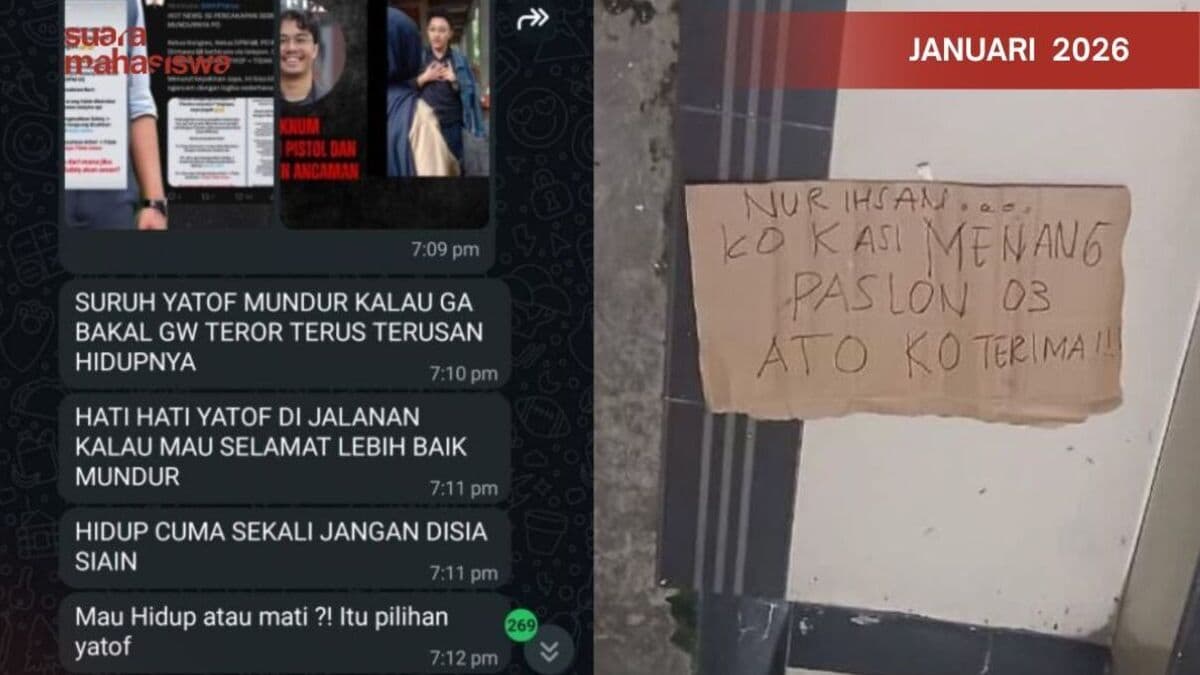
According to Amnesty, credible information indicates that a number of UI students have experienced doxxing, cyber attacks, physical threats and the delivery of mysterious packages, both online and offline. These acts followed discussions and critical posts questioning the possible involvement of political figures and security personnel in BEM UI activities, including the 2026 student election.
Hamid stressed that it is legitimate for students to raise questions about alleged interference in campus democracy. He warned that intimidation of this kind is designed to create a chilling effect—discouraging critical speech and paralysing civic engagement.
“Campuses should be safe spaces for freedom of thought, assembly and critical expression, not environments overshadowed by fear,” he said. “If democratic processes on campus are tainted by threats, academic freedom will slowly wither, ultimately weakening civil society.”
Call for State Accountability
Amnesty urged the government to conduct a thorough and transparent investigation into the threats against UI students, as well as similar acts of intimidation previously experienced by activists and online commentators.
While acknowledging the University of Indonesia’s decision to establish an internal investigative team, the organisation stressed that such measures cannot replace the role of law enforcement authorities.
“The initiative by the rectorate is important, but it cannot substitute for a proper criminal investigation to uncover both the perpetrators and the masterminds behind these acts,” Hamid said.
Amnesty also linked the intimidation to a wider political context, pointing to what it described as the re-emergence of restrictions on citizens’ critical speech, often justified through arguments invoking respect for state institutions or public officials.
Such justifications, Hamid warned, echo colonial-era reasoning and should not be tolerated in a democratic society.
Student Activism Under Pressure
The Student Executive Board, commonly known as BEM UI, has long been recognised as a key platform for student advocacy at UI, frequently taking positions on national issues ranging from governance and democracy to civil liberties.
Amnesty cautioned that sustained intimidation of student leaders risks eroding this tradition and normalising fear within academic spaces.
“The student movement has historically been a moral force in Indonesian public life,” Hamid said. “Allowing intimidation to go unchecked would not only endanger students, but also undermine one of the pillars of democratic oversight.”
As investigations continue, Amnesty International Indonesia said it would closely monitor developments and called on authorities to ensure that campuses remain spaces where critical voices are protected rather than punished.