Indonesia’s Supreme Court faces credibility test in choosing new Constitutional Court justice
Indonesia’s Supreme Court has begun selecting a replacement Constitutional Court justice, prompting civil society groups to call for transparency and independence amid lingering controversy over a 2023 ruling that reshaped presidential eligibility.
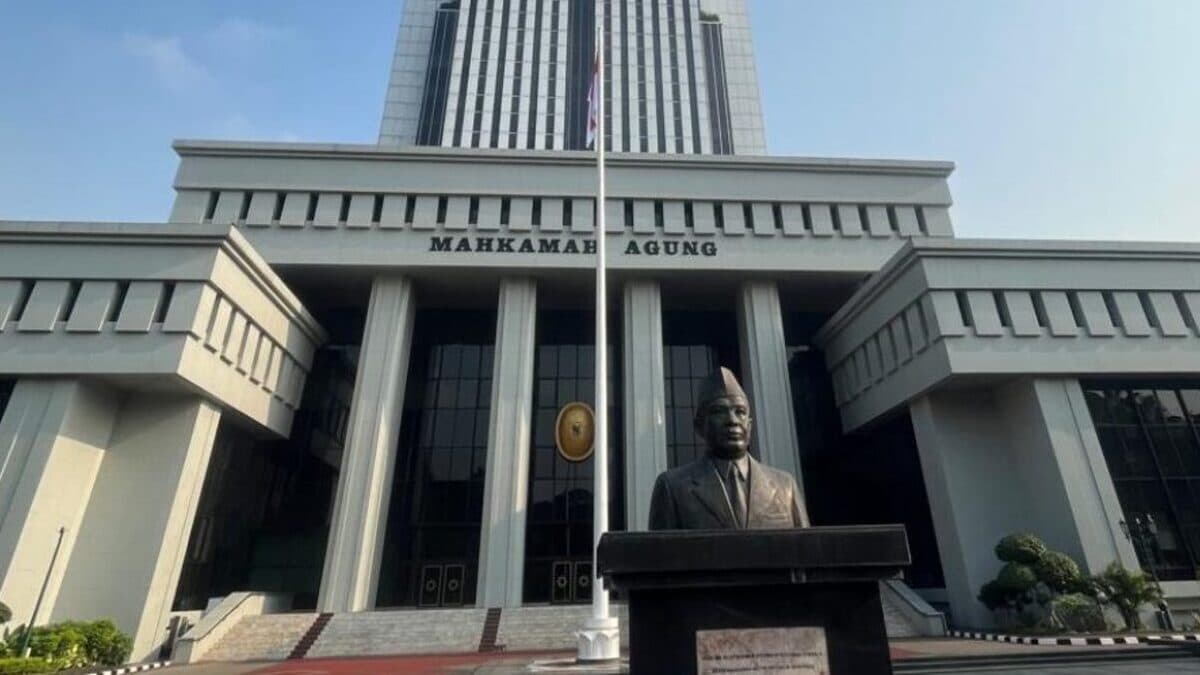
- Indonesia’s Supreme Court has begun selecting a new Constitutional Court justice, drawing scrutiny from civil society groups.
- Legal activists warn the process is a test of judicial credibility following past ethical controversies.
- The selection revives debate over the 2023 ruling that enabled Vice President Gibran Rakabuming Raka to contest the election.
Indonesia’s Supreme Court is facing renewed scrutiny as it begins selecting a replacement justice for the country’s powerful Constitutional Court, a process civil society organisations describe as a decisive test of judicial credibility and independence.
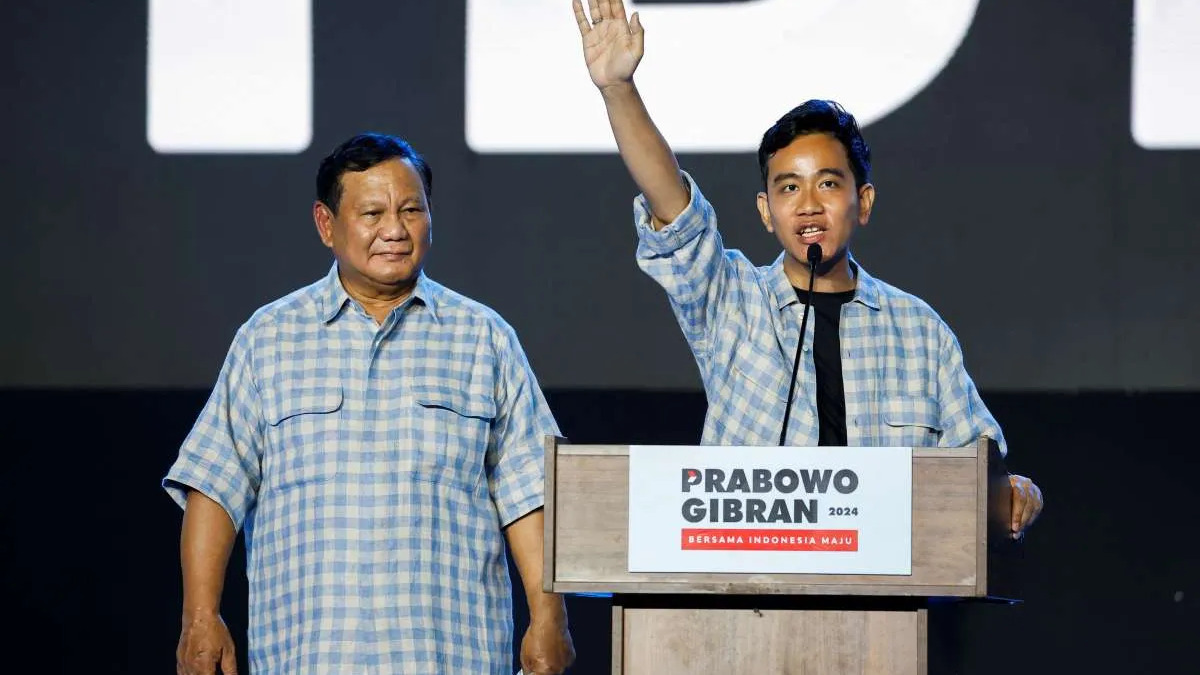
The selection has also revived controversy surrounding a landmark 2023 Constitutional Court ruling that enabled President Prabowo Subianto’s running mate — and now Vice President — Gibran Rakabuming Raka, son of former president Joko Widodo, to contest the election despite not meeting the previously required minimum age.
Legal activists warn that the credibility of Indonesia’s highest courts remains fragile, and that the new appointment must help restore public trust rather than deepen perceptions of political influence within the judiciary.
Supreme Court begins search for replacement justice
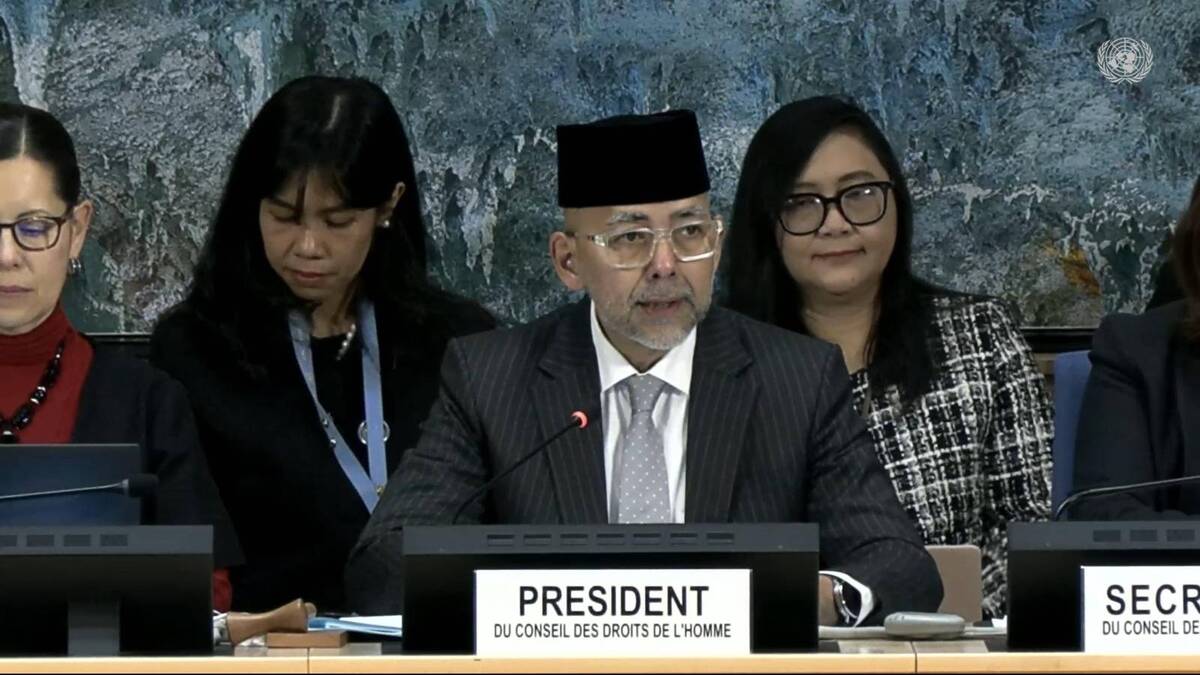
On 2 February 2026, Indonesia’s Supreme Court (Mahkamah Agung, or MA) announced ten candidates who passed administrative screening to replace Constitutional Justice AU, whose term ends in April after fifteen years in office.
All candidates currently serve as career judges within the judiciary.
Under Indonesia’s constitutional system, the nine-member Constitutional Court is composed of three justices nominated by the President, three by parliament, and three by the Supreme Court.
The arrangement is designed to maintain institutional balance between branches of power.
However, civil society groups say the Supreme Court’s internal mechanism for selecting candidates remains opaque and insufficiently regulated, leaving the process vulnerable to political considerations.
In a joint statement, Indonesia’s Legal Aid Foundation network (YLBHI), the Institute for Judicial Independence Study and Advocacy (LeIP), the Indonesia Judicial Research Society (IJRS), and KontraS urged the Court to conduct a transparent, merit-based selection.
“The Constitutional Court carries enormous responsibility in safeguarding citizens’ constitutional rights,” the groups said. “Selecting unqualified candidates risks undermining both the Constitutional Court and the Supreme Court’s own reputation.”
Constitutional Court’s critical role
Indonesia’s Constitutional Court, established after democratic reforms following the fall of authoritarian rule in 1998, serves as guardian of the constitution.
It reviews legislation, resolves disputes between state institutions, rules on election disputes, and adjudicates impeachment proceedings.
Legal scholars note that its existence prevents parliament and the executive from exercising unchecked power, ensuring laws comply with constitutional protections.
When the Court declares a law unconstitutional, its decisions are binding on all institutions, including the President, parliament and law-enforcement agencies.
Given this authority, civil society organisations argue that constitutional justices must possess not only legal expertise but also independence, integrity and strong human rights perspectives.
Concerns over judicial credibility
Activists say recent events have placed pressure on the Supreme Court to demonstrate higher standards in nominations.
Justice AU, the outgoing justice, previously faced ethical sanctions after being found in violation of judicial conduct rules during his tenure as Chief Justice of the Constitutional Court.
Additional criticism emerged over his attendance record in hearings.
Meanwhile, the judiciary more broadly has faced reputational damage following corruption investigations involving court officials, reinforcing concerns about systemic weaknesses.
Public trust in the Supreme Court, while improving — reaching 69 per cent in a January 2025 survey — remains vulnerable to controversy, according to observers.
Civil society groups argue that appointing a justice lacking integrity or independence would reverse recent gains in public confidence.
Jokowi link continues to shadow Court
The urgency surrounding the new appointment is partly shaped by lingering controversy over the Constitutional Court’s 2023 ruling that altered presidential eligibility requirements.
In October 2023, the Court ruled that candidates under 40 could contest presidential or vice-presidential elections if they had previously held elected office, including as regional heads.
The decision enabled Gibran Rakabuming Raka, then Mayor of Surakarta and the eldest son of President Joko Widodo — widely known as Jokowi — to stand as vice-presidential candidate despite being only 36.
The ruling was contentious not only for its political consequences but also because the Constitutional Court’s Chief Justice at the time, Anwar Usman, is Jokowi’s brother-in-law, making him Gibran’s uncle by marriage.
Critics argued that the Court should have avoided hearing the case due to a clear conflict of interest. Anwar Usman did not recuse himself and formally announced the decision granting the petition in part.
Four justices dissented, while others expressed differing reasoning, revealing deep divisions within the Court itself.
Following intense public backlash, the Constitutional Court’s Honour Council later ruled that Anwar Usman had violated ethical standards by failing to step aside from a case directly affecting his close family members.
He was subsequently removed from his position as Chief Justice, though he remained a constitutional justice.
The ruling nevertheless cleared the path for Gibran to join Prabowo Subianto as vice-presidential candidate in the 2024 election, a ticket that ultimately won.
Independence under the spotlight
For many legal observers, the controversy demonstrated how judicial decisions can carry immense political consequences, particularly when institutional safeguards appear weak.
Civil society groups warn that if future constitutional justices are perceived as politically aligned, public trust in the judiciary could deteriorate further.
They argue that candidates must demonstrate strong legal reasoning, ethical integrity, independence from political pressure, and sensitivity to human rights issues, given that many Constitutional Court cases involve citizens’ fundamental rights.
Organisations involved in the latest appeal also urged the Supreme Court to repeat the selection process if no suitable candidates are found, rather than appoint a justice merely to meet procedural deadlines.