Death toll from West Java landslide rises to 74 as search enters ninth day
Search teams have recovered 74 victims from a deadly landslide and flash flood in West Java, with several people still missing as authorities warn of ongoing geological risks.
- Search teams have recovered 74 victims from a deadly landslide and flash flood in West Java, with about six people still missing.
- The disaster struck Cisarua Subdistrict after prolonged heavy rain triggered upstream slope failure and debris flows.
- Authorities warn of ongoing geological risks and call for stronger mitigation beyond reforestation alone.
Indonesian search and rescue teams have recovered 74 victims from the devastating landslide and flash flood that struck a hillside community in West Java, as evacuation operations entered their ninth day on Sunday (1 Feb).
Rescue workers continue to search for several victims still believed to be buried beneath debris after one of the deadliest landslides in the province in recent years destroyed homes and swept through settlements in Cisarua Subdistrict, West Bandung Regency.
Search Efforts Continue Amid Safety Concerns
The latest recovery took place over the weekend when joint search and rescue (SAR) teams discovered four additional body bags at two separate search locations, bringing the total number of victims recovered so far to 74.
Ade Dian Permana, head of the Bandung Search and Rescue Office (Basarnas), said the operation has been conducted cautiously, with personnel safety remaining the top priority.
Two bodies were recovered at Worksite A2, while another two were found at Worksite A3 after authorities expanded the search area.
“The expansion of the search area has had a positive impact on evacuation results. We continue our activities while ensuring the safety of all personnel,” Ade said in a statement released via the West Bandung Regency Government’s official website.
Weather conditions have generally been favourable, though light rain briefly fell during search operations. Ade said the rain did not significantly disrupt the mission due to coordinated safety procedures at each worksite.
Authorities estimate that around six victims may still be missing beneath the landslide debris.
Identification Process Ongoing
Of the recovered victims, the Disaster Victim Identification (DVI) team has successfully identified 57 of the bodies currently undergoing examination, while 16 body bags remain in the identification process.
Identification efforts involve forensic examinations, DNA testing, and coordination with families of missing persons.
Disaster Struck After Prolonged Heavy Rainfall
The disaster struck in the early hours of Saturday, 24 January, in Kampung Babakan Cibudah, Pasirlangu Village, after prolonged heavy rainfall drenched the area from the previous afternoon through the night.
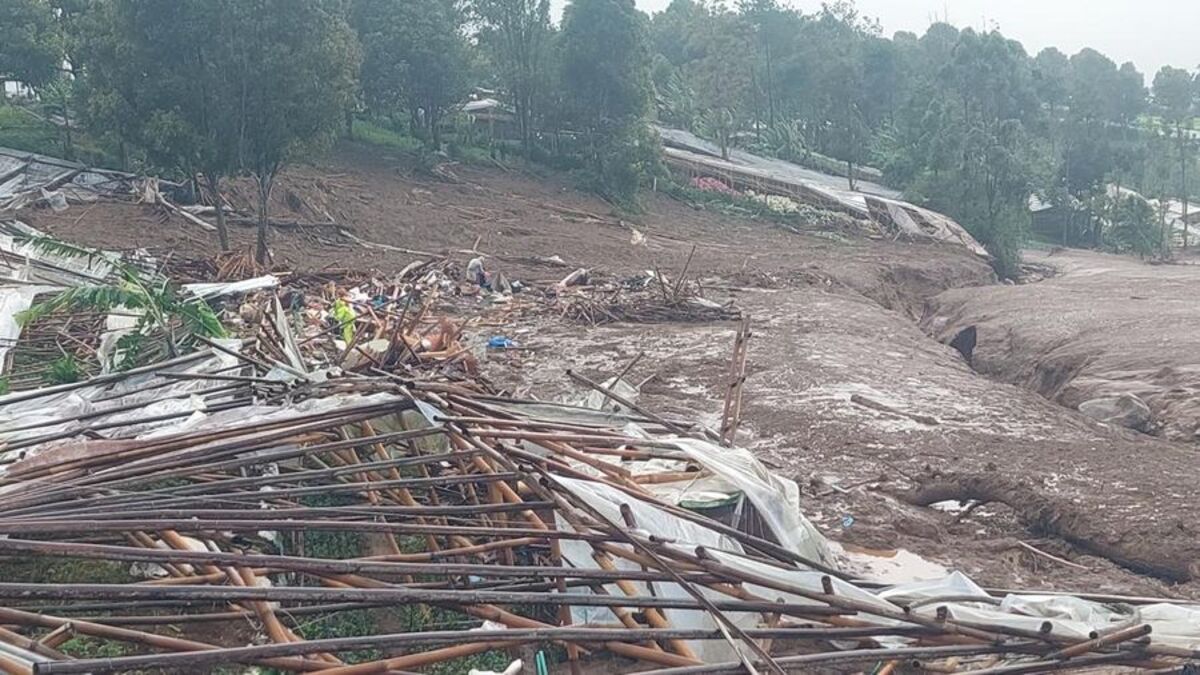
At around 3:00 a.m. local time, water-saturated slopes collapsed, sending mud, rocks, and debris rushing through settlements and river channels. Houses were buried, roads were cut off, and residents were trapped in their homes as the mudflow surged through the valley.
Initial casualty reports indicated fewer deaths, but numbers rose sharply as rescue teams gradually gained access to isolated areas.
Official data indicate that 113 people were directly affected. While 23 survivors were rescued alive, dozens were initially reported missing, prompting an extensive multi-agency search operation.
Emergency Status and Displacement
The West Java Provincial Government declared a 14-day Emergency Response Status beginning 23 January. Authorities established emergency command posts and temporary shelters while securing evacuation routes amid fears of further landslides.
Approximately 30 houses across two neighbourhood units were buried under mud and debris in Pasirlangu Village.
By the second day after the disaster, evacuation centres at the Pasirlangu Village Office were already hosting around 680 displaced residents. The number increased as nearby communities voluntarily evacuated, fearing further slope failures.
Residents from neighbouring areas not directly hit also chose to leave their homes due to ongoing anxiety about additional ground movement.
What Caused the Disaster?
Experts remain divided on the primary trigger of the catastrophe, though most agree that prolonged rainfall played a critical role.
Environment Minister Hanif Faisol Nurofiq suggested land-use changes may have contributed to slope instability, pointing to agricultural expansion into upland areas driven by urban demand for vegetables such as potatoes and cabbage.
However, geologists warn that the immediate cause may have been more complex.
According to Imam Achmad Sadisun of the Bandung Institute of Technology (ITB), the most destructive force did not originate from slopes directly beneath residential areas. Instead, a landslide upstream created a temporary natural dam that trapped river water.
When the blockage suddenly collapsed, accumulated water mixed with mud and boulders surged downstream, striking settlements with enormous force.
“Houses were not destroyed by landslides beneath them, but by material carried from upstream through river channels,” Imam explained.
Ongoing Risks Remain
Geological surveys have identified signs of similar natural blockages upstream, raising concerns that renewed heavy rainfall could trigger further debris flows.
Experts warn residents living near riverbanks to remain vigilant. Sudden drops in river flow during heavy rain may signal upstream blockages, potentially followed by sudden floods when those barriers collapse.
Imam stressed that future disaster mitigation must involve more than tree planting. Structural measures such as debris barriers, sediment control systems, and real-time monitoring technology are also needed.
“What causes the greatest destruction is not only the water, but the sediment material carried by it,” he said.
Multi-Agency Rescue Effort
The operation has involved personnel from Basarnas, the Indonesian Armed Forces (TNI), National Police (Polri), disaster agencies, ministries, volunteers, and community organisations working around the clock.
Daily operational evaluations are conducted to adjust search strategies while ensuring personnel safety in unstable terrain.
As search operations continue, authorities face growing calls to improve land management, early warning systems, and disaster preparedness in mountainous areas increasingly vulnerable to extreme weather.