Indonesian churches oppose government projects in Papua over Indigenous land and environmental concerns
A major church assembly in Merauke has become a focal point of opposition to Indonesia’s National Strategic Projects, with church leaders, activists and legal groups urging the suspension of developments accused of violating Indigenous land rights and causing environmental damage.
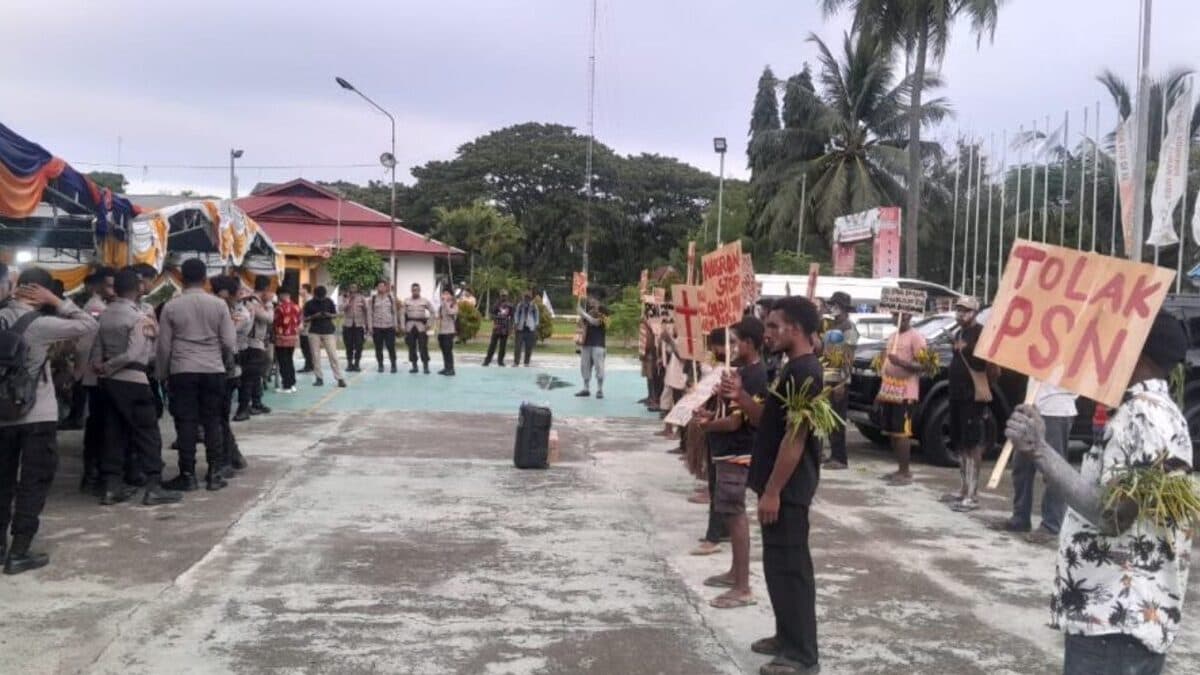
- Church leaders and civil society groups used a national church assembly in Merauke to oppose National Strategic Projects in South Papua.
- Indigenous communities and legal advocates allege land seizures, lack of consent, environmental destruction and social conflict linked to the projects.
- Churches and rights groups are urging President Prabowo Subianto to suspend the projects and open dialogue with affected communities.
A major church assembly in Indonesia’s easternmost region has become the centre of growing opposition to government-backed development projects, with church leaders and civil society groups urging the suspension of National Strategic Projects (PSN) in Merauke, South Papua, over alleged violations of Indigenous land rights and environmental destruction.
The debate unfolded during the 2026 Full Workers Assembly of the Communion of Churches in Indonesia, known locally as MPL-PGI, which took place in Merauke from 30 January to 2 February.
The gathering brought together delegates from more than 100 member churches, regional church bodies, ecumenical organisations and government representatives from across the country.
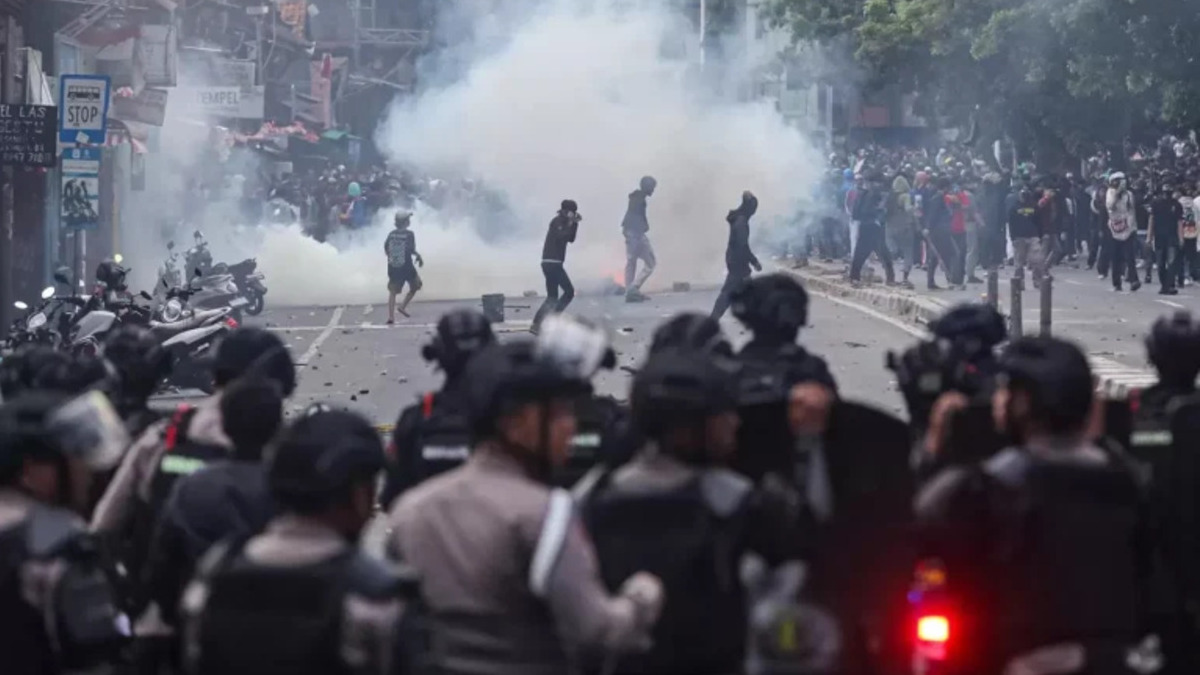
However, what was expected to be a routine church meeting took a dramatic turn when Catholic and Protestant congregants, alongside activists and students grouped under the banner Merauke Solidarity, staged a spontaneous action at the opening session held at the Hiad Sai Sports Hall.
The demonstration drew attention to the impact of state-backed development policies on Indigenous communities in Papua, particularly in Merauke, where large-scale agricultural and infrastructure projects are currently underway as part of Indonesia’s National Strategic Projects programme.
Churches urged to defend affected communities
Representatives from villages in Ngguti and Kaptel districts joined the protest, submitting a formal statement to church leaders and regional officials present at the assembly, including the Governor of South Papua, the Regent of Merauke and the Chairperson of the South Papua People’s Assembly.
The statement was read before Reverend Jacklevyn Frits Manuputty, chairperson of the daily executive board of the Communion of Churches in Indonesia (PGI), and called on churches nationwide to support communities they say have lost land and livelihoods due to the projects.
Merauke Solidarity urged church institutions to “accompany, listen to and struggle together” with communities affected by development programmes implemented under the National Strategic Projects framework.
This year’s assembly theme, drawn from the biblical passage Ephesians 5:8–9, called on churches to “live as children of light producing goodness, justice and truth,” alongside a broader call to build a pluralistic society living in peace with all creation.
Activists argued that the church’s spiritual message must translate into concrete action in defence of vulnerable communities.
Demands directed at church leadership
In its statement, Merauke Solidarity presented a series of appeals directed at church institutions and government authorities.
Among them was a call for all churches affiliated with PGI to include prayers for communities affected by PSN projects in their regular services.
The coalition also urged churches to pray for President Prabowo Subianto and government ministries to review and halt projects that allegedly seize Indigenous living spaces and trigger conflict within local communities.
Church leaders were also encouraged to speak openly from their pulpits about environmental protection and to oppose projects seen as excessively exploiting forests and customary lands.
Particular attention was directed at church authorities in Merauke, Asmat, Boven Digoel and Mappi, urging them to engage local governments to evaluate development projects that have reportedly generated conflict and displacement.
The statement further requested that PGI leadership formally write to President Prabowo, asking for evaluation and suspension of projects in areas including Wanam, Jagbob, Tanah Miring and Nakias, where communities claim forced eviction has occurred.
Merauke Solidarity concluded by urging religious leaders nationwide to join humanitarian solidarity efforts to defend justice and protect communities from what they described as oppression and environmental exploitation.
Legal aid groups support church stance
Support for the church assembly’s position has also come from legal advocacy groups. The Papua branch of Indonesia’s Legal Aid Institute (LBH Papua Merauke) publicly backed PGI’s stance, arguing that opposition to the projects is grounded in documented legal and human rights concerns.
According to LBH Papua Merauke director Teddy Wakum, implementation of PSN projects in Merauke has proceeded without meaningful consultation or Free, Prior and Informed Consent (FPIC), a principle requiring Indigenous communities to approve projects affecting their land.
He said communities in Wanam village, Ilwayab district, including members of the Moiwend Basik-basik and Gebze clans, have been directly affected without proper consultation.
Similar concerns were reported in Honggari and Dumande villages in Malind district, where LBH Papua Merauke claims communities were not adequately consulted before project implementation.
Land loss and social tension
The projects, which have been running for more than a year, are said by activists to have caused multiple social and environmental impacts. These include disputes between communities, alleged coercive practices, loss of traditional food sources, ecological degradation and damage to local ecosystems.
LBH Papua Merauke estimates that tens of thousands of hectares have been affected across areas including Wanam, Nakias, Jagebob and Soa village in Tanah Miring district, where dozens of families are said to have experienced displacement.
The organisation also cited monitoring conducted by Indonesia’s National Commission on Human Rights (Komnas HAM), which reportedly found indications of rights violations, including disregard for customary land rights, shrinking living spaces, forced evictions, cultural disruption and the involvement of security forces at project locations.
Constitutional protections cited
Legal advocates argue that Indigenous communities’ rights are protected under Indonesia’s Constitution and several national laws, including provisions recognising customary communities and court decisions affirming that customary forests are not state-owned land.
LBH Papua Merauke further contends that actions affecting customary land in Wanam may constitute criminal violations under Indonesian law.
Together with Merauke Solidarity, the legal aid group issued five key demands, including full support for communities rejecting PSN projects, calls to reduce military presence in project areas, and requests for the President to halt ongoing projects and initiate dialogue with affected communities and religious leaders.
The group also urged the withdrawal of security forces from project sites in Wanam, claiming their presence has created fear among residents.