Red skies alarm residents in southern Indonesia, officials say rare but harmless weather effect
The sky over parts of southern Pandeglang, Indonesia, turned red on 18 December, prompting online speculation. Indonesia’s meteorological agency said the phenomenon was caused by Rayleigh scattering, a natural optical effect intensified by rain, water vapour and airborne particles, and posed no danger.
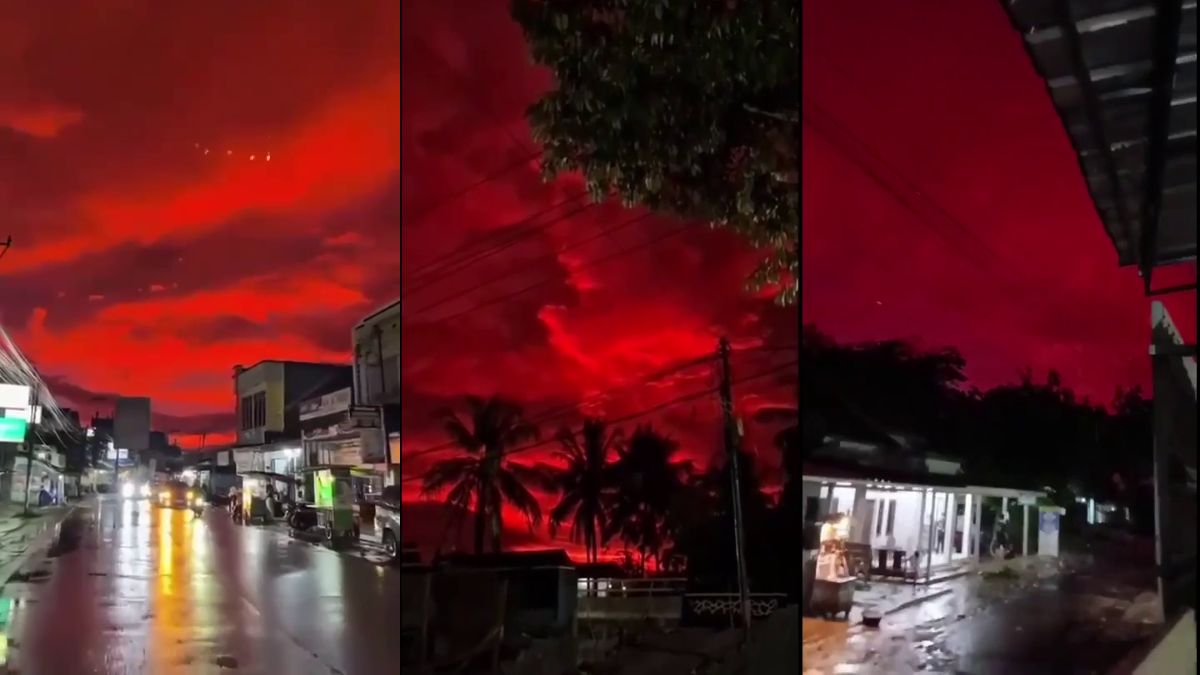
- Parts of southern Pandeglang saw the sky turn deep red on 18 December, triggering widespread online speculation.
- Indonesia’s BMKG confirmed the phenomenon was due to Rayleigh scattering, a normal atmospheric effect with no safety risk.
- High moisture, aerosols, and rainfall intensified the red colouring, making the sky appear more dramatic.
INDONESIA: The sky over parts of southern Pandeglang, Indonesia, turned an intense shade of red on the afternoon of 18 December, prompting widespread speculation online before authorities confirmed the cause was a natural atmospheric effect.
Photos and videos of the unusual colouring circulated widely on social media, with residents questioning whether the phenomenon signalled an environmental or geological event.
Meteorological agency rules out danger
Indonesia’s Meteorology, Climatology and Geophysics Agency (BMKG) said the red sky was the result of Rayleigh scattering, a recognised optical phenomenon that occurs under specific atmospheric conditions.
BMKG Region II Banten head Hartanto said the occurrence was normal and posed no threat to public safety.
How Rayleigh scattering causes red skies
Hartanto explained that the effect occurs when sunlight is refracted while the sun is low in the sky, typically near sunset, forcing light to travel a longer distance through the Earth’s atmosphere.
Under these conditions, shorter wavelengths such as blue are scattered, while longer wavelengths — including red, orange and yellow — are able to penetrate the atmosphere and reach the human eye.
Weather conditions intensified the effect
The intensity of the red colouring was amplified by high concentrations of water vapour and the presence of aerosol particles such as dust or pollutants, Hartanto said.
Rainfall in Pandeglang at the time further enhanced the red reflection on cloud cover, making the phenomenon appear more vivid.
Hartanto urged the public not to engage in unfounded speculation and stressed that the red sky was not linked to any impending natural disasters.