Wreckage of sunken tourist boat found in Padar Strait as Indonesia probes maritime safety failures
Indonesian search and rescue teams have located the wreckage of tourist vessel KM Putri Sakinah in the Padar Strait near Labuan Bajo, as authorities investigate negligence and maritime safety failures following the deaths of four Spanish nationals.
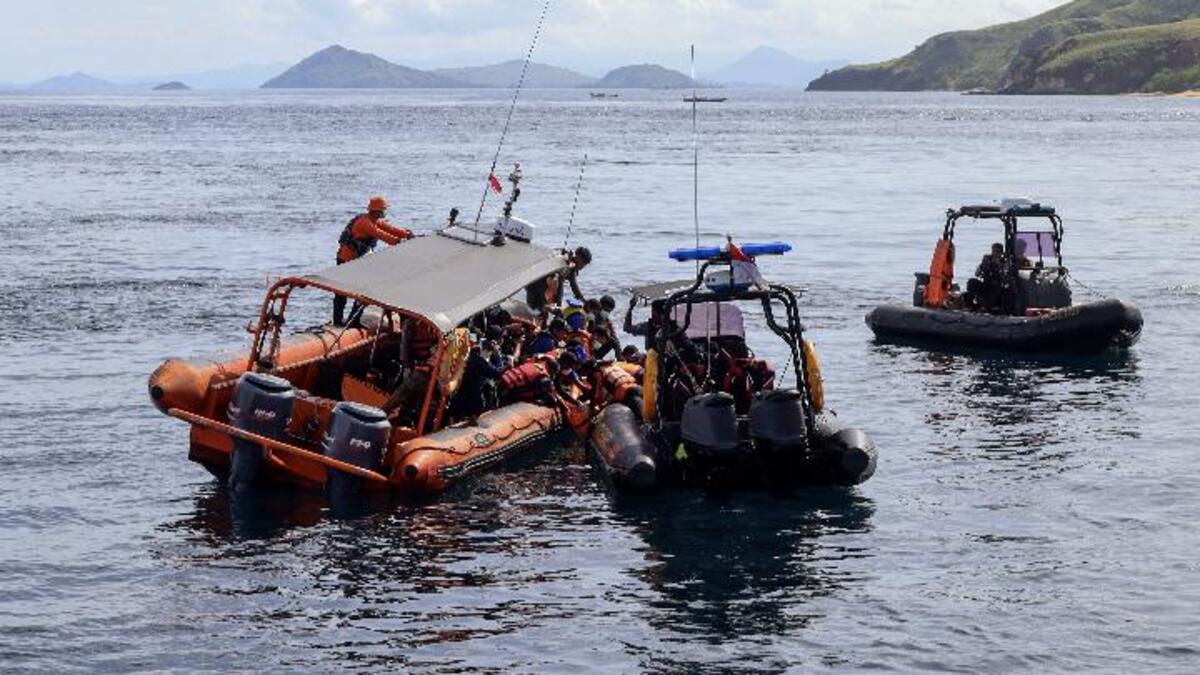
- Indonesian SAR teams located the wreckage of tourist vessel KM Putri Sakinah in the Padar Strait on 6 January 2026.
- The sinking has claimed four Spanish lives and triggered a criminal investigation into negligence and safety compliance.
- The tragedy has intensified scrutiny of maritime safety standards in Komodo National Park.
Indonesian search and rescue teams have located the wreckage of the tourist vessel KM Putri Sakinah in the waters of the Padar Strait, near Labuan Bajo in East Nusa Tenggara (NTT), marking a grim milestone in a maritime tragedy that has claimed the lives of four Spanish nationals and intensified scrutiny of safety standards in one of Indonesia’s most prominent tourism destinations.
A joint search and rescue (SAR) team discovered the partially submerged wreck on Tuesday, 6 January 2026, during ongoing operations in the waters of Padar Strait, within the Komodo National Park. The body of one passenger was found trapped inside the wreckage.
The victim was evacuated aboard the SAR vessel KN SAR Puntadewa and transported to Labuan Bajo for further identification and handling.
According to the East Nusa Tenggara Regional Police, the discovery took place in Loh Pede, Komodo Island, Komodo Village, West Manggarai Regency, at coordinates 08°36'35.139" south latitude and 119°40'36.826" east longitude.
“The Chief of Police of East Nusa Tenggara expresses deep condolences to the families of the victims,” said Commissioner Henry Novika Chandra, head of public relations for the NTT Regional Police, in a written statement.
Discovery led by local fisherman
Police said the wreckage was first sighted at around 2:28 p.m. local time by a fisherman from Komodo Island, identified as Saiful, who noticed debris floating near the coast of Loh Pede.
He pulled the wreck towards shore, where a body was seen trapped inside the vessel.
At 2:49 p.m., a joint SAR team comprising personnel from the police, the National Search and Rescue Agency (Basarnas), the Indonesian military (TNI), and other relevant agencies arrived at the scene to secure and examine the wreckage before evacuating the victim.
Authorities said search and rescue efforts will continue, with operations evaluated daily based on developments in the field.
“We pray and strive together for all the victims to be found quickly,” Henry said.
Spanish family among victims
The sinking of KM Putri Sakinah has claimed the lives of four Spanish nationals from the same family: Fernando Martin Carreras, Martin Garcia Mateo, Martines Ortuno Maria Lia, and Martinez Ortuno Enriquejavier. Two other Spanish passengers—Fernando Martin’s wife and one child—survived the incident.
Among the deceased was Fernando Martin Carreras, a coach with Valencia CF Women’s B team, whose death drew expressions of grief from Spain’s football community. His body was identified earlier through physical characteristics and personal belongings, including distinctive tattoos and jewellery, and confirmed by family members.
Seven people survived the sinking: four crew members, including the captain, one Indonesian tour guide, and the two Spanish family members.
Timeline of the sinking
The semi-phinisi tourist vessel was carrying 11 people on a leisure trip that began with a visit to Kalong Island in Komodo National Park.
The boat then continued its journey toward Padar Island, with an estimated arrival early Saturday morning.
According to police, the vessel experienced engine failure while sailing through the Padar Strait at around 8:45 p.m. local time on Friday, 26 December 2025.
Rough sea conditions followed, and the boat eventually sank.
Search operations began immediately and were expanded over subsequent days to include sonar systems, remotely operated underwater vehicles (ROVs), and professional divers, amid strong and shifting currents and limited underwater visibility.
Investigation into permits and negligence
As recovery efforts continue, Indonesian authorities have launched a criminal investigation into the circumstances surrounding the sinking. The West Manggarai Police have formally opened an inquiry focusing on alleged negligence.
Commissioner Henry Novika Chandra said investigators are examining all aspects of the vessel’s departure and operation, including sailing permits, vessel seaworthiness, and compliance with safety procedures.
“The authorities responsible for granting sailing permits are being thoroughly investigated,” Henry said, adding that investigators plan to seize and examine the ship’s documentation.
Witnesses, including crew members and individuals involved in the tour’s organisation, have been questioned. Police said suspects will be named once sufficient evidence has been gathered.
“This legal process is intended to provide certainty and justice for the victims,” Henry said. “We hope it will also serve as a lesson for all players in the marine tourism industry.”
Weather warnings and systemic gaps
The tragedy has also renewed attention on weather preparedness and monitoring in eastern Indonesian waters.
Indonesia’s Meteorology, Climatology and Geophysics Agency (BMKG) had issued an early warning on 25 December 2025 for southern waters of East Nusa Tenggara, including the Komodo area, citing strong winds, high waves and the risk of sudden storms during the west monsoon season.
In parallel, the Labuan Bajo Harbourmaster issued a Notice to Mariners covering 22–28 December, urging vessel operators to increase vigilance, monitor weather updates continuously, and avoid exposed or narrow routes when conditions worsened.
However, maritime observers have pointed to a critical weakness: the waters around Labuan Bajo and Komodo National Park are monitored by only two tidal and oceanographic sensors, with no dedicated instruments to measure real-time current strength or sudden wave surges.
This limitation is particularly dangerous in narrow straits such as Padar, where currents from the Flores Sea and the Sape Strait converge.
Localised and short-lived weather phenomena can develop rapidly, especially after sunset, producing strong currents and steep waves that are difficult to predict using existing sensor coverage.
As a result, broad forecasts may indicate manageable conditions, while hazardous anomalies emerge with little warning at sea.
Spotlight on safety in a flagship destination
Komodo National Park is one of Indonesia’s priority tourism destinations, drawing tens of thousands of international visitors each year.
The sinking of KM Putri Sakinah has raised urgent questions about maritime oversight, emergency preparedness and the balance between tourism growth and passenger safety.
Authorities said the vessel had been declared seaworthy prior to departure, and weather earlier on 26 December was reported as partly cloudy—underscoring the gap between official assessments and the realities of highly dynamic marine environments.
For families of the victims, the discovery of the wreckage offers a measure of closure, but it also deepens calls for accountability.
As search efforts continue and investigations advance, the tragedy in the Padar Strait stands as probability one of the most serious maritime incidents to hit Indonesia’s tourism sector in recent years—one that may yet prompt reforms in how safety risks are managed in the country’s most celebrated waters.