Mount Fuji cherry blossom festival cancelled amid overtourism concerns in Fujiyoshida
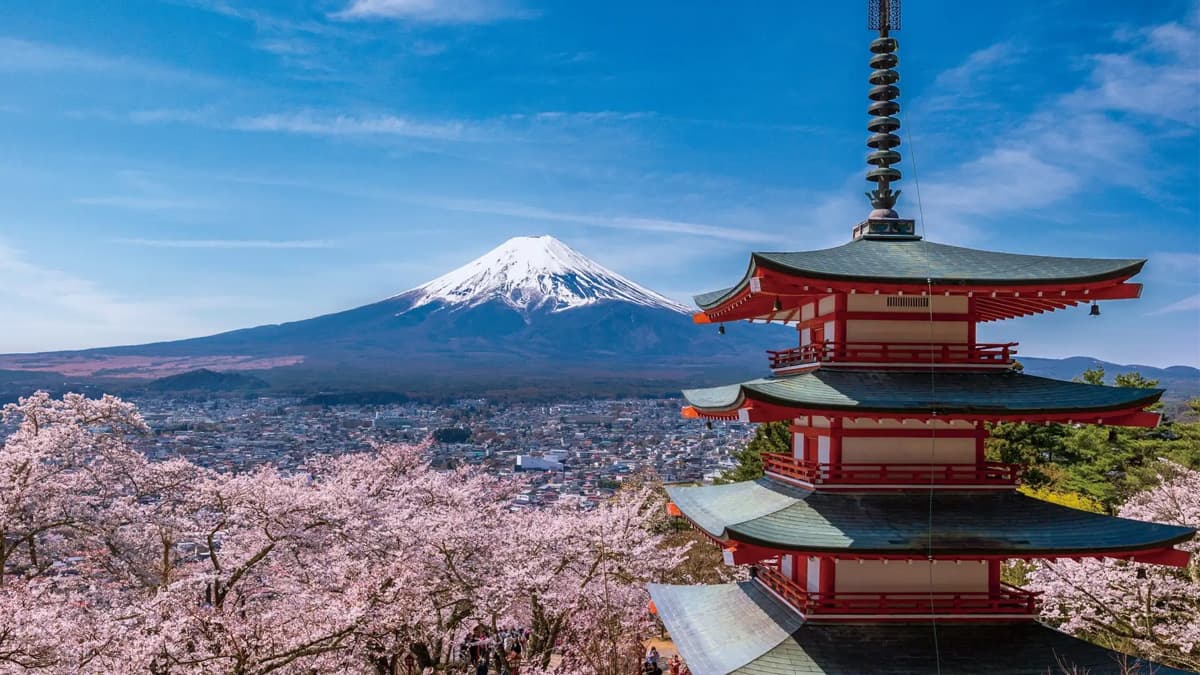
The iconic cherry blossom festival at Mount Fuji’s Chureito Pagoda has been cancelled due to overtourism concerns, with Fujiyoshida officials citing severe disruption to local residents’ lives.
- Fujiyoshida cancels 2026’s Mount Fuji cherry blossom festival after rising resident complaints.
- Overtourism driven by weak yen and social media exposure causes sanitation and safety issues.
- City plans safety measures despite cancellation and aims for sustainable tourism reform.
The city of Fujiyoshida in Yamanashi Prefecture has cancelled its annual cherry blossom festival at Arakurayama Sengen Park for 2026, citing mounting concerns over overtourism that has disrupted the daily lives of local residents.
The decision was announced on 3 February 2026, with city officials stating that the move aims to protect the “dignity and living environment” of the community, which has struggled with the influx of tourists.
The event, popular for its panoramic view of cherry blossoms, Mount Fuji, and the iconic Chureito Pagoda, typically draws over 200,000 visitors each spring. In recent years, social media exposure and a weak yen have intensified interest, particularly from foreign tourists.
Fujiyoshida Mayor Shigeru Horiuchi said in a statement, “Behind Mount Fuji’s beautiful landscape is the reality that the quiet lives of citizens are threatened. We have a strong sense of crisis.” He confirmed that the city would no longer promote or use the event’s name in 2026 and beyond.
The cherry blossom season is expected to attract large crowds regardless, but without the official event designation, the city hopes to reduce extreme concentrations of tourists.
Authorities reported that in previous years, visitors overwhelmed the small city. Traffic became chronically congested, and incidents of tourists trespassing onto private property, discarding cigarette butts, and even defecating in residential gardens have been documented.
Parents also raised alarm over children’s safety, noting that tourists blocked narrow school routes, forcing students onto the roads. One report cited lines of up to three hours to access the viewing platform, while nearby roads became heavily gridlocked.
The 2025 tourism boom further intensified the problem. According to national data, Japan saw a record 42.7 million visitors that year, surpassing 2024’s previous high of 37 million. The weak yen has made Japan increasingly attractive for international travellers.
Other tourist destinations such as Kyoto have also reported overtourism-related issues. In particular, foreign tourists have been accused of harassing geisha performers for photos.
Fujiyoshida’s decision follows similar responses from other municipalities. Measures to control tourism near Mount Fuji have included hiking caps, entrance fees, and the installation of barriers to obstruct photo spots.
While the cherry blossom festival is cancelled, the city plans to implement crowd and traffic control measures from 1 to 19 April 2026. Temporary parking, portable toilets, security staff, and traffic officers will be deployed during peak bloom to protect residents and manage visitor safety.
According to a city statement, this approach marks the beginning of a longer-term transition toward sustainable tourism. Fujiyoshida plans to shift from short-term responses to a mid- and long-term framework that balances tourism with residents’ needs.
“We want to build a city where locals and visitors can coexist, one that our citizens can be proud of,” said Mayor Horiuchi. “This is not merely the end of a festival, but the beginning of a redefinition of our tourism identity.”
The city will continue working with regional stakeholders to design policies that encourage responsible tourism, including better visitor education and urban planning that reflects both the area's cultural value and residential integrity.