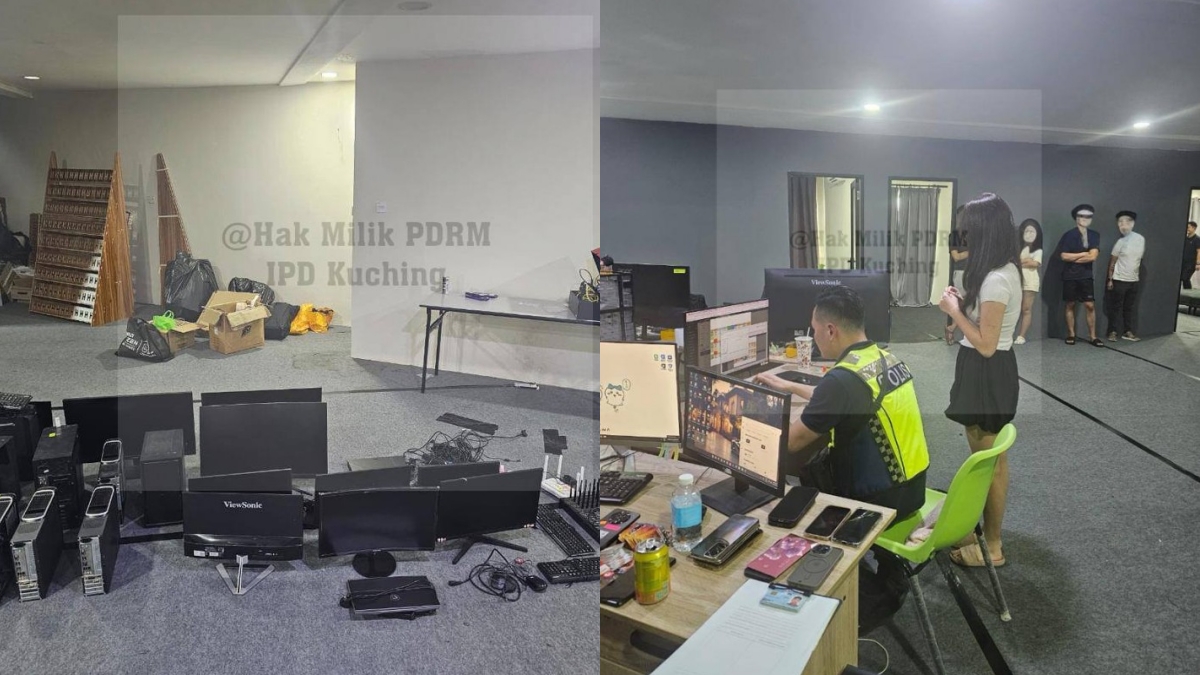
Malaysian police bust Pahang scam call centre using in-house app as syndicates shift to remote towns
Malaysian police dismantled a scam call centre in Pahang, arresting five suspects linked to a syndicate that developed a fraudulent mobile application to target foreign victims through fake currency exchange services.
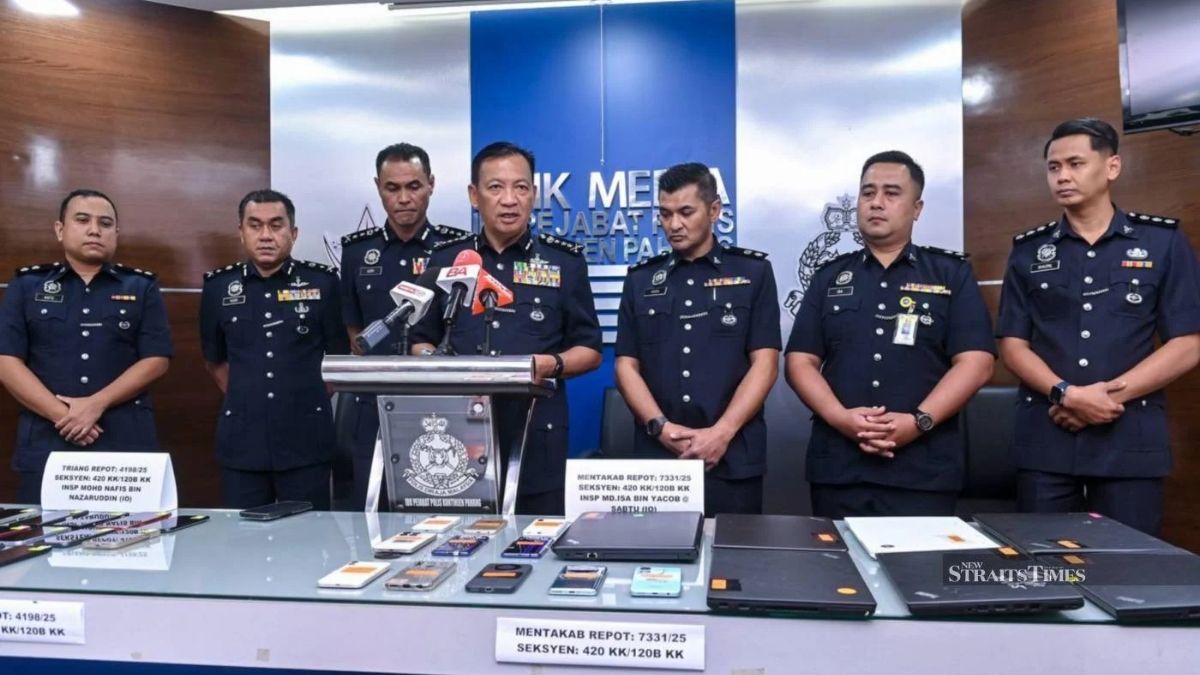
- Police arrested five suspects in Mentakab after uncovering a scam call centre targeting victims abroad.
- Investigators said the syndicate developed its own mobile application to facilitate foreign currency exchange fraud.
- Authorities warned that scam groups are increasingly operating from smaller towns and low-profile premises to evade detection.
PAHANG, MALAYSIA: Malaysian police have dismantled a scam call centre in central Pahang that investigators said had developed its own mobile application to facilitate fraud against victims overseas.
Five suspects were arrested during a raid on a rented premises in Puncak Lestari, Mentakab, at about 6.50pm on 2 December, according to police.
The syndicate is believed to have offered non-existent foreign currency exchange services through online messaging platforms, targeting victims outside Malaysia.
Raid and arrests in Mentakab
NST reported that the raid was carried out by the Pahang Commercial Crime Investigation Department’s intelligence and operations unit, together with officers from Temerloh.
The operation was conducted under the Royal Malaysia Police, formally known as Polis Diraja Malaysia (PDRM).
Pahang police chief Datuk Seri Yahaya Othman said those detained included two Chinese nationals, an Indonesian woman, and two Malaysians — a man and a woman — aged between 29 and 39.
“The five arrested comprise two Chinese nationals, an Indonesian woman, and a local man and woman,” Yahaya was quoted as saying at a press conference.
Police seized 11 mobile phones, seven laptops, as well as computer monitors and modems, with items valued at about RM30,000.
App developed to deceive victims overseas
Investigations found that the syndicate targeted Chinese nationals by advertising non-existent foreign currency exchange services on Telegram. Victims were reportedly persuaded to transfer funds, resulting in losses amounting to thousands of ringgit.
Two of the Chinese suspects, both men with information technology expertise, were responsible for developing a fraudulent application used in the scam.
“The application was used by syndicate members believed to be operating elsewhere to trick victims in China,” he said.
Police believe the group chose to base its operations in Malaysia to avoid scrutiny from Chinese authorities. Mule accounts linked to the scam were traced to China, while investigations into the wider network are continuing.
Recruitment through social media
Several of the suspects were recruited through Facebook and instructed via WhatsApp to report for work in Mentakab in July.
They were employed as customer service officers, earning between RM2,500 and RM4,000 (approx US$979) a month.
Investigators said the two Malaysians were involved in compiling data on potential victims, while the Indonesian woman was employed as a cook at the premises.
Pattern of low-profile locations
The Mentakab case marks the third scam call centre uncovered in Pahang this year.
Yahaya noted that earlier raids included an operation at an apartment in Bentong on 7 February, which resulted in 12 foreign nationals being detained, and another at a budget hotel in Bera on 27 November, where eight Chinese nationals were arrested.
This pattern aligns with a broader trend identified by police nationwide.
Police have previously warned that scam syndicates in Malaysia are increasingly shifting away from major cities and high-end condominiums to smaller towns and budget accommodation in an effort to evade detection.
The scam groups are moving away from high-end condominiums and instead favour budget hotels or rented premises that allow them to operate quietly with minimal attention from local communities.
In one recent case, eight Chinese nationals were arrested at a budget hotel in Triang, Pahang, where they had occupied upper-floor rooms for weeks while running call-centre-style scams. Police said the suspects rarely left the premises and relied on local support to deliver food and daily necessities directly to their rooms