At least 36 killed as Iran protests enter 10th day amid deepening economic crisis
At least 36 people have been killed and more than 2,000 arrested during 10 days of protests across Iran, according to a human rights group, as demonstrations driven by economic hardship spread nationwide.
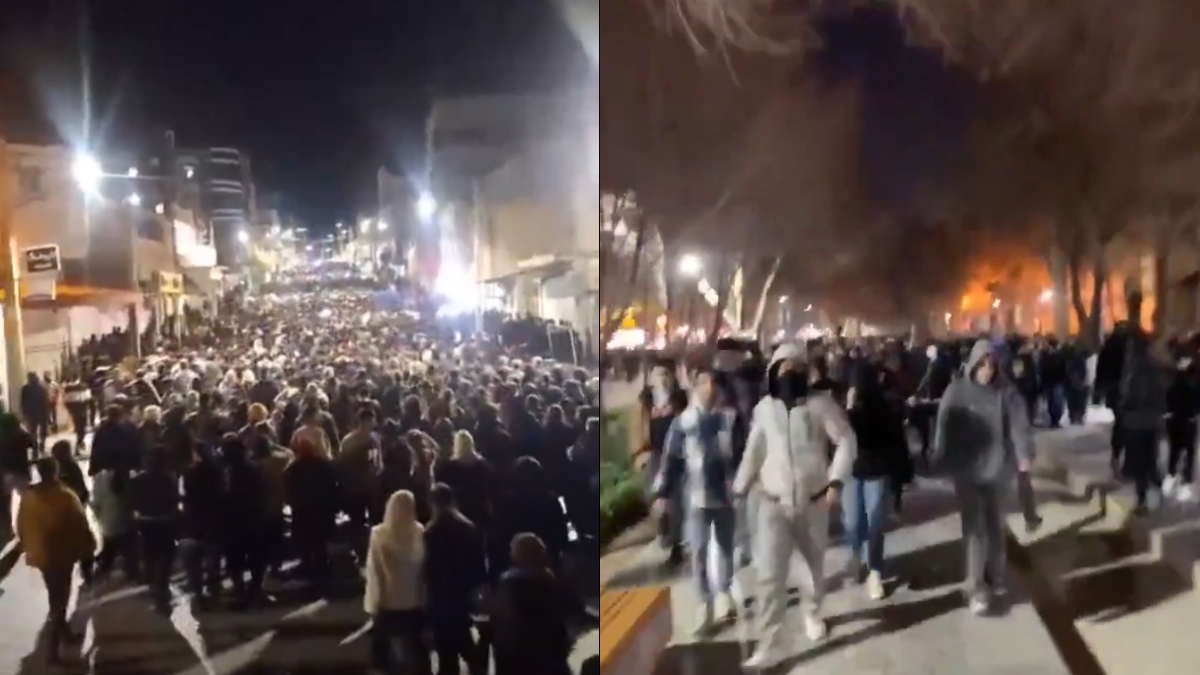
- At least 36 people have been killed during 10 days of protests across Iran, according to HRANA, with most fatalities reported among protesters.
- Demonstrations have spread nationwide, driven by economic pressure, falling purchasing power and a collapsing currency.
- Authorities have pledged investigations into alleged abuses, while security forces continue arrests and dispersals.
IRAN: At least 36 people have been killed during the past 10 days of protests across Iran, according to the foreign-based Human Rights Activists News Agency (HRANA). The group said 34 of those confirmed dead were protesters, while two were affiliated with security forces.
According to HRANA, protest gatherings have taken place at at least 285 locations in 92 cities across 27 provinces. The organisation reported that at least 2,076 citizens have been arrested during the unrest, alongside dozens of injuries.
Iranian authorities have not released an official death toll. However, state statements have acknowledged that three members of the security forces were killed during the protests, without providing further details.
From labour strikes to street demonstrations
The demonstrations initially emerged through strikes and labour-related gatherings. Reports now indicate a shift towards street protests, expanded strikes by shopkeepers, and student demonstrations at several universities across the country.
HRANA and other rights groups have also reported an escalation in the use of force by security personnel. These allegations include violence extending into medical facilities, with reports of hospitals being targeted during security operations.
Hospital raid allegations and injuries
One such incident was reported in Illam province, where video footage appeared to show security forces in riot gear entering a hospital in search of protesters. According to HRANA, more than 60 protesters have been injured nationwide.
Despite the violence, protests have shown little sign of slowing. HRANA data indicated demonstrations in at least 257 locations across 88 cities, underscoring the breadth and persistence of the movement.
Clashes at Tehran’s grand bazaar
Clashes have also been reported in Tehran, including at the capital’s grand bazaar. Security forces reportedly fired teargas and expelled protesters staging a sit-in at the site, which holds historic significance as a centre of activism during the 1979 revolution.
Rights groups have accused authorities of cracking down on demonstrators, while the government has sought to balance enforcement with calls for dialogue. Arrests have continued even as officials emphasised restraint.
Economic pressures fuel unrest
The current wave of unrest has coincided with mounting economic pressure on households. The Iranian rial has fallen to a historic low of about 1.46 million to the US dollar, losing roughly two-thirds of its value over the past three years, according to market data.
The currency’s decline has accelerated in recent months, further eroding purchasing power. The falling rial was a central factor behind the initial protests, which have since broadened in scope.
Inflation fears and shortages
Iran’s central bank has announced it would curb a programme providing businesses with preferential exchange rates for dollars. Analysts warn the move could lead to further price increases and shortages for consumers.
Iran’s state news agency reported that the average price of a bottle of cooking oil has recently doubled. Other basic goods have become scarce, with traders accused of hoarding products in anticipation of further inflation.
Government response and investigation pledge
President Masoud Pezeshkian addressed protesters on Tuesday, saying much of the economic situation was beyond the government’s control. He warned that intervention could worsen inflation by increasing pressure on lower-income households.
“The government basically does not have such power,” Pezeshkian said in a speech. “Even if it wants to do this, it will be forced to put heavy pressure on the lower deciles of society by printing money.”
He added that Iran’s income was limited, citing sanctions and restrictions on oil exports. “Oil is under embargo and sources of income are limited,” the president said.
Pezeshkian said the government would open an investigation into allegations of violence by security forces in Illam province. He specifically referenced reports of an incident at a hospital in the city of Illam.
International scrutiny and mixed signals from leadership
The footage from Illam was cited by the US State Department, which described the alleged actions as a crime against humanity.
In a post on its Farsi-language X account, it condemned attacks on medical staff and wounded protesters.
Iran’s leadership has sent mixed messages regarding the protests. Supreme leader Ayatollah Ali Khamenei said the demands of protesters were legitimate, but warned that those he described as rioters should be “put in their place”.
State-aligned Fars news agency reported that 250 police officers and 45 members of the Basij paramilitary force were injured during the demonstrations, highlighting the scale of confrontations.
International reactions have added to tensions. US president Donald Trump warned that Washington would intervene if Iranian authorities killed protesters, prompting strong responses from senior Iranian officials.