More than 500 killed as Iran protests escalate into biggest unrest since 2022
More than 500 people have reportedly been killed in Iran’s latest wave of unrest, as Tehran warned it could target US bases if President Donald Trump intervenes on behalf of protesters.
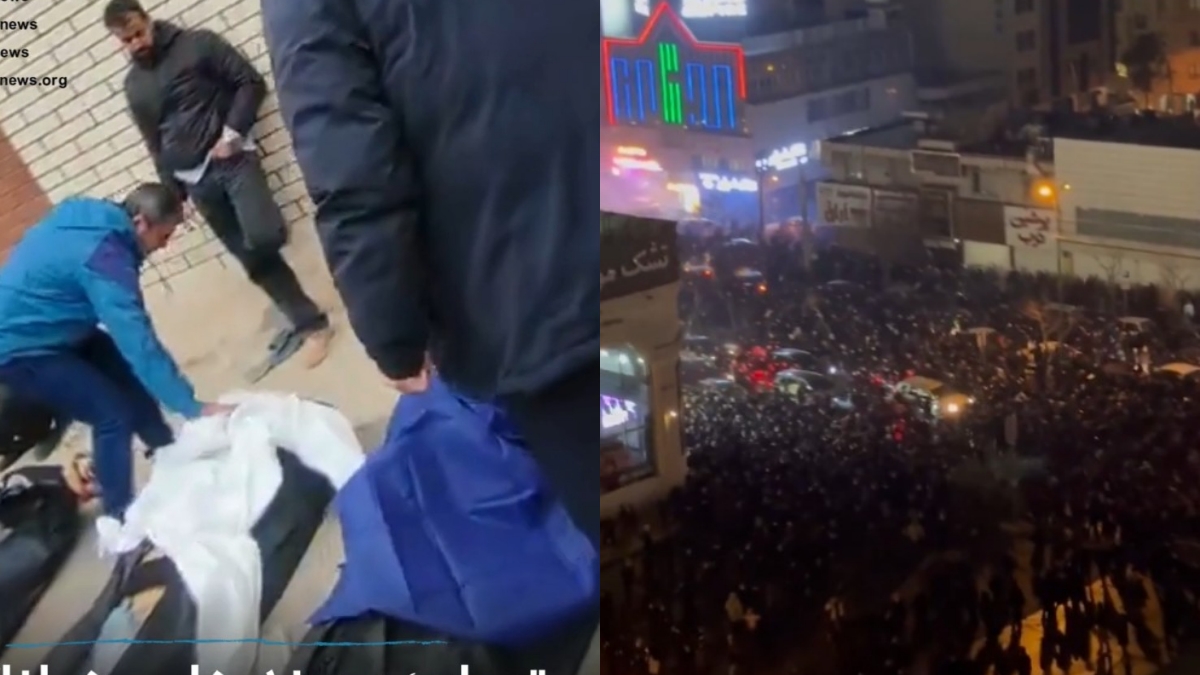
- A rights group says more than 500 people have been killed during two weeks of unrest in Iran, with over 10,600 arrests reported.
- Iran has warned that US military bases and Israel would be targeted if President Donald Trump intervenes militarily.
- Protests over soaring prices have escalated into the biggest challenge to Iran’s clerical establishment since 2022.
Unrest in Iran has killed more than 500 people, according to a rights group, as Tehran warned it could target US military bases if President Donald Trump intervenes on behalf of protesters.
The United States-based Human Rights Activists News Agency (HRANA) said on 11 January 2026 that it had verified the deaths of 490 protesters and 48 security personnel.
According to HRANA, more than 10,600 people have been arrested during roughly two weeks of demonstrations, based on information from activists inside and outside the country.
Iran has not released an official death toll. Reuters said it was unable to independently verify the figures provided by the rights group.
The protests represent the biggest demonstrations faced by Iran’s clerical establishment since 2022, with crowds taking to the streets across multiple cities despite an internet blackout imposed since Thursday.
President Donald Trump said on Sunday that he was weighing a range of responses to the escalating unrest, including possible military options.
He has repeatedly warned that the United States could intervene if Iranian authorities use force against protesters, as demonstrations continue to spread nationwide.
US media reported that Trump was expected to meet senior advisers on Tuesday to discuss options regarding Iran.
A US official told Reuters that options under discussion included military strikes, covert cyber operations, expanding sanctions, and providing online assistance to anti-government groups.
Iranian Parliament Speaker Mohammad Baqer Qalibaf warned Washington against what he described as a serious miscalculation.
“Let us be clear: In the case of an attack on Iran, the occupied territories as well as all US bases and ships will be our legitimate target,” Qalibaf said, according to state-linked comments.
Qalibaf is a former commander in Iran’s elite Revolutionary Guards, an institution that plays a central role in the country’s security and political structure.
Oil prices extended gains on Monday amid growing concerns that intensifying protests could disrupt supply from Iran, a major OPEC producer.
However, analysts said price increases were being limited by efforts to quickly resume oil exports from Venezuela, easing broader supply fears.
Protests enter 14th days amid deepening economic crisis
The protests began on 28 December 2025, initially sparked by soaring prices and economic pressures.
They later evolved into direct challenges against Iran’s clerical rulers, who have governed since the 1979 Islamic Revolution.
Iranian authorities accused the United States and Israel of fomenting unrest and called for a nationwide rally on Monday to condemn what they described as “terrorist actions”.
State media reported that the rally was aimed at denouncing actions allegedly led by Washington and Israel.
The flow of information from Iran has been severely restricted by an internet blackout, complicating independent verification of events on the ground.
Despite the restrictions, footage posted on social media on Saturday appeared to show large crowds marching at night in Tehran, clapping and chanting slogans.
In one video, a man can be heard saying the crowd “has no end nor beginning”.
Separate footage from the northeastern city of Mashhad showed smoke rising from street fires, masked protesters, and debris scattered across roads.
Explosions could be heard in the background of one video posted on Saturday, though the circumstances were unclear.
Iranian President described protesters as “terrorists”
Iranian state television aired images of dozens of body bags at Tehran’s coroner’s office, claiming the dead were victims of events caused by “armed terrorists”.
It also broadcast footage of families waiting outside the Kahrizak Forensic Medical Centre in Tehran to identify bodies.
United Nations Secretary-General Antonio Guterres said he was shocked by reports of violence by Iranian authorities and urged restraint.
“The rights to freedom of expression, association and peaceful assembly must be fully respected and protected,” he said in a post on X.
Authorities declared three days of national mourning from Sunday, according to state media, in honour of those described as martyrs killed in resistance against the United States and Israel.
Three Israeli sources cited by Reuters said Israel was on high alert over the possibility of US intervention.
Israel and Iran fought a 12-day war in June 2025, during which the United States briefly joined by striking Iranian nuclear installations.
Iran retaliated at the time by firing missiles at Israel and at an American air base in Qatar.
Iranian President Masoud Pezeshkian said Israel and the United States were orchestrating destabilisation inside the country.
He accused Iran’s enemies of bringing in “terrorists” who, he said, had set mosques on fire and attacked banks and public property.
In a televised interview, Pezeshkian urged families not to allow young people to join what he described as rioters and terrorists.
He added that the government was ready to listen to public grievances and to address economic problems.
Iran also summoned Britain’s ambassador on Sunday over what it described as interventionist comments by the British foreign minister.
State media said the summons followed an incident in which a protester removed the Iranian flag from the London embassy building and replaced it with a pre-1979 style flag.
Britain’s Foreign Office did not immediately respond to a request for comment.
Alan Eyre, a former US diplomat and Iran expert, told Reuters he believed it was unlikely the protests would topple the political system.
He said it was more likely the authorities would eventually suppress the unrest but emerge significantly weakened, noting the absence of an organised opposition.
Iranian state television broadcast funeral processions in western cities including Gachsaran and Yasuj for security personnel killed during the protests.
It said 30 members of the security forces would be buried in Isfahan, while six others were killed in Kermanshah, allegedly by rioters.