UNICEF delivers first school kits to Gaza in 2.5 years as children struggle with education amid conflict
UNICEF has delivered school kits to Gaza for the first time in more than two years after previous restrictions eased, bringing in thousands of learning materials as the agency works to restore education for hundreds of thousands of children affected by the conflict.
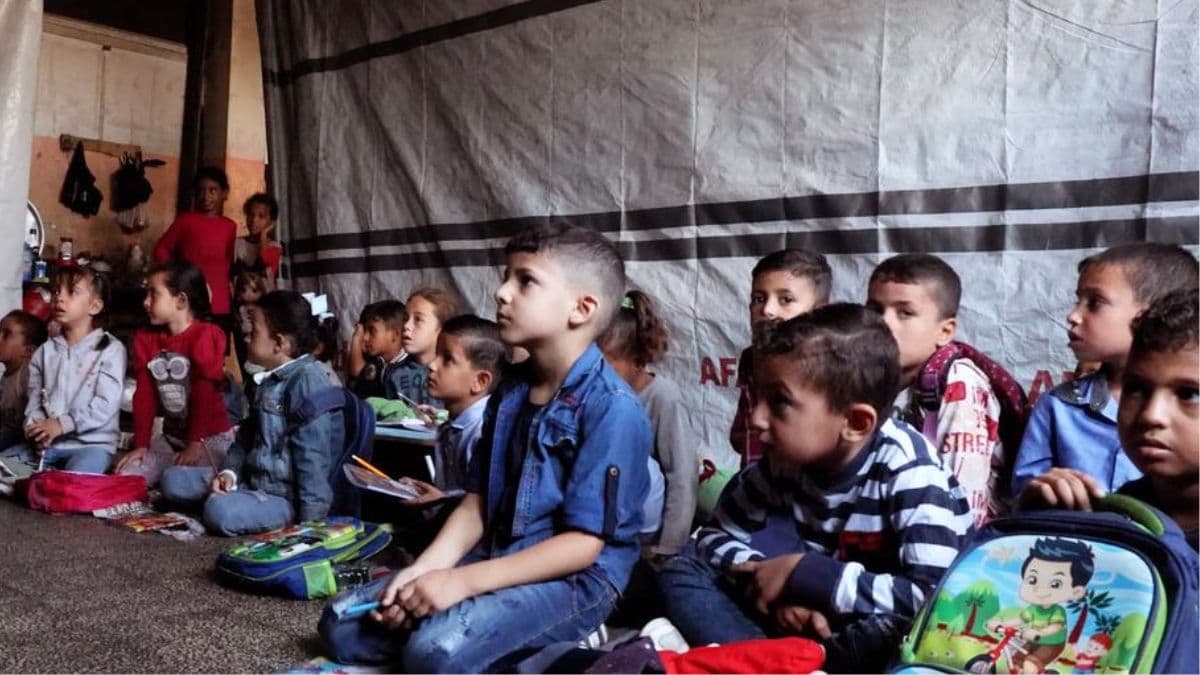
- UNICEF has delivered school kits to Gaza for the first time in over two years.
- More than 700,000 children remain out of formal education, as most schools have been damaged.
- UNICEF is expanding learning support for about 336,000 children amid a worsening humanitarian crisis.
The United Nations children’s agency UNICEF has, for the first time in two and a half years, been able to deliver school kits containing learning materials to Gaza after previous shipments were blocked by Israeli authorities, the agency said on Tuesday (27 Jan).
Thousands of kits — including pencils, exercise books and wooden play cubes — have now entered the enclave, according to UNICEF.
UNICEF spokesperson James Elder said the agency had delivered thousands of recreational kits in recent days, alongside hundreds of “school-in-a-carton” kits.
“We have, in the last days, brought in thousands of recreational kits and hundreds of school-in-a-carton kits,” Elder said.
UNICEF has already delivered more than 4,400 recreational kits and 240 school-in-a-carton kits to Gaza.
By the end of this week, it plans to deliver approved quantities of 2,875 recreational kits, about 2,500 school-in-a-carton kits and more than 1,000 early childhood development (ECD) kits, bringing total deliveries to more than 11,000 kits.
Nearly 7,000 additional kits are in the pipeline for the coming weeks, Elder added.
He explained that the school-in-a-carton kits are designed to allow classrooms to function immediately, and include writing materials, exercise books, slates, teaching aids such as clocks and globes, as well as basic classroom maintenance supplies.
COGAT, the arm of the Israeli military responsible for overseeing aid flows into the Gaza Strip, did not immediately respond to a request for comment.
Education system devastated by conflict
Children in Gaza have faced what UNICEF described as an unprecedented assault on the education system, compounded by restrictions on the entry of aid materials such as school books and pencils.
As a result, teachers have been forced to make do with extremely limited resources, while children attempted to study at night in tents without lighting, Elder said.
During the conflict, some children missed out on education entirely, instead grappling with basic survival needs such as access to water, amid widespread malnutrition and a severe humanitarian crisis.
“It’s been a long two years for children and for organisations like UNICEF to try to deliver education without those materials. It looks like we’re finally seeing a real change,” Elder said.
Teaching to continue in tents as schools remain damaged
UNICEF is scaling up its education response to support around half of Gaza’s school-aged children — approximately 336,000 — with learning support.
Teaching will largely take place in tents due to the extensive destruction of school infrastructure during the conflict, Elder said.
According to the most recent UN satellite assessment conducted in July, at least 97 per cent of schools in Gaza have sustained some level of damage.
More than 700,000 school-aged children across the Gaza Strip have been out of formal education since October 2023, UNICEF said.
The agency is currently supporting more than 135,400 children across over 110 learning spaces in the territory.
Most UNICEF-supported learning spaces will be located in central and southern Gaza, as operations remain difficult in the north, where large areas were badly destroyed during the final months of the conflict, Elder added.
Casualties and ongoing dispute
Since 7 October 2023, Israeli attacks have killed at least 71,657 people and injured 171,399 others, according to available figures.
More than 20,000 children were reported killed, including 110 since the ceasefire on 10 October last year, UNICEF said, citing official data.
Israel has previously accused Hamas and other militant groups of systematically embedding themselves in civilian areas and structures, including schools, and of using civilians as human shields.