UAE withdraws remaining forces from Yemen after rift with Saudi Arabia
The United Arab Emirates has ended its military presence in Yemen, following accusations from Saudi Arabia that it supported separatist forces. The withdrawal marks a major rift between the long-standing allies amid renewed instability in southern Yemen.
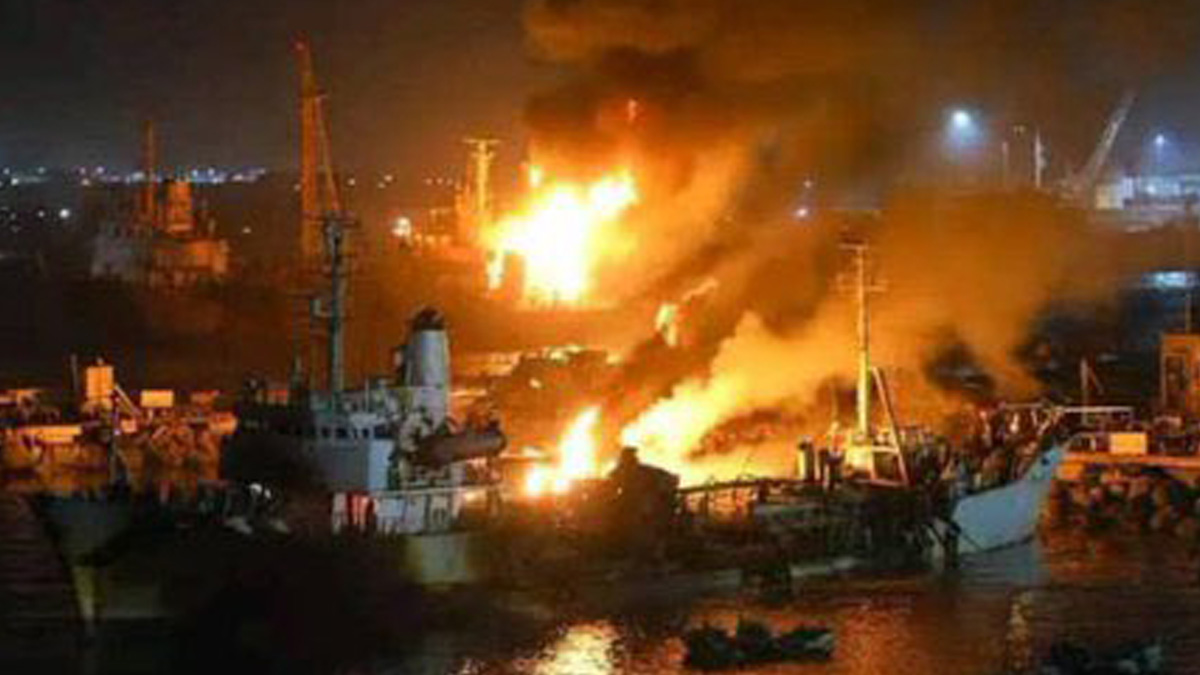
- UAE has withdrawn all remaining forces from Yemen amid escalating tensions with Saudi Arabia.
- Saudi Arabia accused UAE of backing separatist forces threatening its security in southern Yemen.
- The rift exposes fractures in the Gulf coalition that has been active in Yemen since 2015.
The United Arab Emirates (UAE) announced on 30 December, 2025, that it would withdraw its remaining military personnel from Yemen, bringing an end to its participation in what it described as "counterterrorism operations" in the country. The move followed a sharp diplomatic and military escalation with Saudi Arabia.
The decision came hours after Saudi Arabia launched airstrikes on Yemen’s southern port city of Mukalla. Riyadh alleged that the strikes targeted a weapons shipment linked to the UAE and destined for the separatist Southern Transitional Council (STC), a group that has recently turned against Yemen’s Saudi-backed government.
The airstrikes marked a significant rupture in the coalition between the two Gulf nations, who have jointly led military operations in Yemen since 2015 against the Houthi rebel movement.
Saudi accusations and military escalation
According to a statement by the Saudi Ministry of Foreign Affairs, the UAE had placed "pressure" on the STC to conduct military offensives in Hadramout and Mahara provinces, areas of strategic importance near the Saudi border. The Ministry warned that any threat to Saudi national security constituted a "red line".
The Saudi-led coalition’s airstrike reportedly caused no casualties but ignited tension. Yemeni state television showed black smoke rising from the port area and reported that several vehicles were destroyed.
Following the strike, Yemen’s Presidential Council, led by Rashad al-Alimi and backed by Riyadh, dissolved its defence pact with the UAE. Al-Alimi accused the UAE of orchestrating and supporting the STC's rebellion and issued a 24-hour ultimatum for all Emirati troops to leave the country.
UAE’s response and withdrawal
In response, the UAE Ministry of Defence issued a statement expressing surprise at the airstrikes and rejecting the accusation that it had supplied weapons to the STC. The ministry claimed the shipment targeted by Saudi forces had been intended for Emirati personnel, not the separatists.
Despite the denial, the UAE announced it had conducted a “comprehensive assessment” of its mission in Yemen and concluded that it would end its military involvement.
“The Ministry of Defence announces the termination of the remaining counterterrorism personnel in Yemen of its own volition, in a manner that ensures the safety of its personnel,” the statement read.
The decision was framed as an effort to prevent further escalation and maintain regional stability. It also coincided with calls from regional actors for de-escalation.
Regional reactions and diplomacy
Qatar’s Ministry of Foreign Affairs welcomed both countries’ statements, citing a “commitment to prioritising regional interests” and adherence to the Gulf Cooperation Council (GCC) Charter. The GCC, which includes Qatar, Saudi Arabia, the UAE, Bahrain, Kuwait and Oman, has faced internal fractures in recent years, notably during the Qatar diplomatic crisis between 2017 and 2021.
Meanwhile, Saudi Foreign Minister Prince Faisal bin Farhan Al Saud held telephone discussions with US Secretary of State Marco Rubio and Pakistan’s Deputy Prime Minister Ishaq Dar to address the regional implications of the crisis.
According to the US State Department, Rubio reiterated Washington’s support for diplomatic solutions and stressed the importance of stability in southeastern Yemen.
Southern Transitional Council’s position
The Southern Transitional Council, originally aligned with the Saudi-backed Yemeni government in its fight against the Houthis, has increasingly pursued its aim of establishing an independent southern Yemeni state.
Earlier in December 2025, the STC launched a military offensive and seized several governorates in southern Yemen, including oil-rich Hadramout and Mahara. These advances broke a years-long stalemate and shifted the dynamics of Yemen’s civil war.
Following the airstrikes and UAE’s withdrawal, STC spokesman Anwar al-Tamimi said the group had no intention of retreating. “It is unreasonable for the landowner to be asked to leave his own land,” he told AFP.
He added that any movement toward STC positions would be met with a defensive response.
Broader implications and historical context
The escalation reveals widening cracks within the Saudi-led coalition in Yemen, once unified in its goal to restore the internationally recognised government and fight the Iran-backed Houthi insurgency.
The UAE had largely drawn down its military presence in Yemen by 2019, though it retained a limited number of personnel to support counterterrorism efforts and allied groups such as the STC.
Yemen’s protracted conflict, now entering its second decade, has resulted in one of the world’s worst humanitarian crises. The war has devastated infrastructure, crippled the economy, and displaced millions.
The current rift between Saudi Arabia and the UAE threatens to complicate efforts to stabilise Yemen and could further fragment opposition to the Houthis, who continue to control much of northern Yemen.