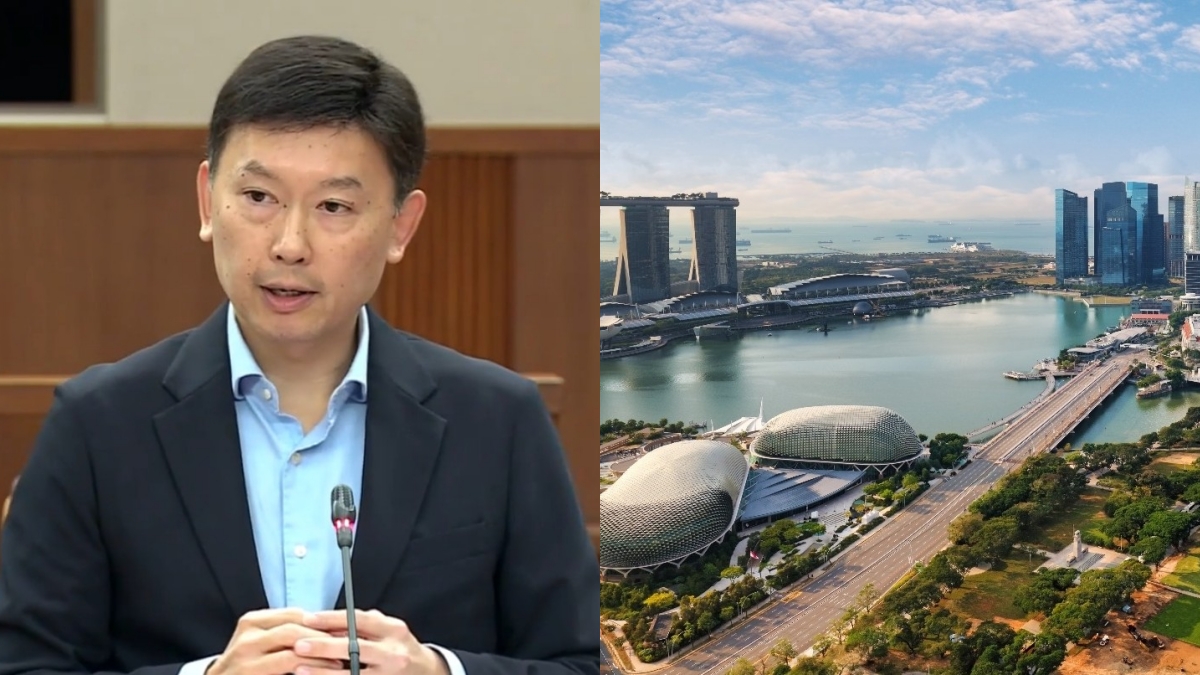

Chee Hong Tat: Government studying clustered voting for HIP to help small HDB blocks meet threshold
The Government is studying whether smaller HDB blocks can be grouped to vote together for HIP, after several blocks narrowly missed the 75 per cent threshold needed to proceed with upgrading works.
- Authorities are studying allowing smaller HDB blocks to vote as clusters for the Home Improvement Programme (HIP).
- The move aims to address difficulties faced by blocks with few units in reaching the 75 per cent voting threshold.
- Six blocks failed to meet the threshold in the past decade, with four later passing HIP after re-polls.
SINGAPORE: The Government is studying whether HDB blocks with fewer units can be grouped together to vote as a cluster for the Home Improvement Programme (HIP), in a move aimed at addressing challenges faced by smaller blocks.
National Development Minister Chee Hong Tat said this was among the options being considered to ensure sufficient household participation in the HIP voting process, while continuing to respect flat owners’ decisions.
In a written parliamentary reply dated 14 January 2026, Chee noted that blocks with fewer eligible units face a higher risk of failing to meet the required 75 per cent support threshold.
“We understand that under the current voting process, blocks with fewer eligible units may face greater risks of not reaching 75 per cent of votes to proceed with HIP,” he said.
The review follows recent cases in which two HDB blocks in Tiong Bahru narrowly missed the voting threshold in November 2025, disappointing residents who had hoped to see upgrades to their ageing flats.
Chee said the authorities are reviewing the voting process for such blocks, seeking to strike a balance between upgrading older flats and respecting the collective decisions of flat owners.
He was responding to a parliamentary question filed by West Coast–Jurong West GRC MP Ang Wei Neng on the number of blocks that had failed HIP votes in the past decade and the outcomes of any re-polls.
Six HDB blocks failed HIP votes over past 10 years
According to Chee, six HDB blocks were unable to garner the required 75 per cent support over the last 10 years.
These included one block in Serangoon Avenue 2 in 2017, three blocks in Lengkong Tiga in 2023, and the two blocks in Tiong Bahru that failed in 2025.
For the Serangoon and Lengkong Tiga cases, HDB received appeals from flat owners and the respective MP requesting a re-poll.
“After careful review, HDB allowed these blocks to re-poll after about one year from the first poll. All four blocks re-polled successfully for HIP,” Chee said.
Checks showed that the Serangoon Avenue 2 block, built in 1984, comprises eight executive flats.
The three Lengkong Tiga blocks, completed between 1988 and 1989, contain between 10 and 55 executive flats each.
In contrast, the two Tiong Bahru blocks fell short by especially slim margins.
Block 34 Kim Cheng Street missed the threshold by two votes, while Block 35 Lim Liak Street fell short by one vote.
Block 34 comprises 24 units, and Block 35 has 15 units.
They were among 29 blocks in the neighbourhood that voted on whether to carry out HIP improvements, with the other 27 blocks passing the vote.
All the blocks are four-storey walk-up flats built in 1949 by the Singapore Improvement Trust, HDB’s predecessor.
Tanjong Pagar GRC MP Foo Cexiang told The Straits Times in December 2025 that residents in the two unsuccessful blocks could get a second chance to vote in 2026, depending on resident support.
He said a “sizeable proportion” of units in the neighbourhood were rented out, with some owners uncontactable or lacking incentive to support HIP.
This included owners who had recently moved in after completing major renovation works.
HIP was launched in 2007 to upgrade older public housing estates and address common maintenance issues, such as spalling concrete and ageing infrastructure.
The programme proceeds only after at least 75 per cent of a block’s eligible Singaporean households vote in favour.
Permanent resident households are not eligible to vote in HIP polls.
Chee added that beyond HIP, HDB continues to support flat owners facing maintenance problems through other schemes.
These include the Goodwill Repair Assistance scheme, under which HDB subsidises 50 per cent of repair costs for ceiling leaks and spalling concrete.
The remaining cost is shared equally between the upper- and lower-floor flat owners involved.
Households with seniors may also apply directly to HDB for senior-friendly fittings under the Enhancement for Active Seniors programme.
In February 2025, then-Minister for National Development Desmond Lee said about 29,000 flats built in 1997 or earlier had been selected for HIP.
According to his remarks, the flats span 371 blocks in areas including Bedok, Choa Chu Kang, Pasir Ris, Hougang, Tampines, and Jurong West.
The government has allocated more than S$407 million for the latest round of improvements.
According to HDB, about S$4 billion has been spent on the programme as of 31 March 2024.