Ousted Venezuelan President Nicolas Maduro pleads not guilty in New York as power shifts in Caracas
Former Venezuelan leader Nicolas Maduro has pleaded not guilty in a New York court to narcotics charges after a US operation removed him from power, prompting international backlash and an interim leadership shift in Caracas.
- Nicolas Maduro pleaded not guilty in a New York federal court to multiple narcotics-related charges following a US operation that removed him from Venezuela.
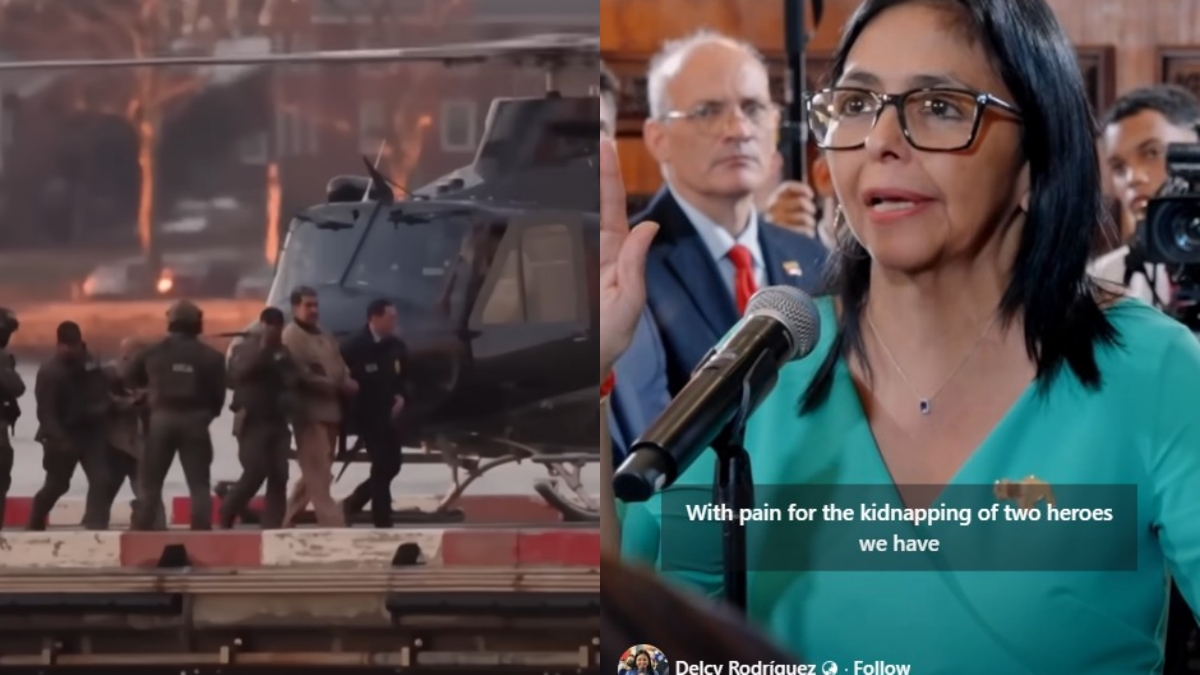
- In Caracas, Vice President Delcy Rodriguez was sworn in as interim president, signalling continuity rather than an immediate opposition takeover.
- The unprecedented US action has triggered international condemnation, legal scrutiny, and renewed focus on Venezuela’s oil sector.
UNITED STATES: Former Venezuelan president Nicolas Maduro pleaded not guilty on 5 January 2026 to a series of US federal narcotics charges, days after a dramatic American military operation removed him from power in Caracas.
Speaking through a Spanish interpreter in Manhattan federal court, Maduro said he had been abducted from his home and insisted he remained Venezuela’s legitimate president.
“I am innocent. I am not guilty. I am a decent man. I am still president of my country,” Maduro told the court, before being interrupted by United States District Judge Alvin Hellerstein.
Claims of abduction and assertion of legitimacy
Maduro, aged 63, said he had been captured on 3 January and transported to the United States against his will. Judge Hellerstein curtailed his remarks during the brief hearing.
Maduro’s wife, Cilia Flores, also pleaded not guilty. The court scheduled the next hearing for 17 March 2026.
In Caracas, the political focus swiftly shifted. Vice President Delcy Rodriguez was sworn in hours later as Venezuela’s interim president, offering public support for Maduro but stopping short of challenging Washington’s actions.
According to a report by the Wall Street Journal, a recent US intelligence assessment concluded Rodriguez was best positioned to lead a temporary government during Maduro’s absence.
The assessment reportedly found that opposition figures such as Nobel Peace Prize laureate Maria Corina Machado or former presidential candidate Edmundo Gonzalez would struggle to secure legitimacy or maintain order.
Power shift in Caracas as Delcy Rodriguez sworn in
The report suggested Rodriguez, alongside the interior and defence ministers, could preserve stability within a state apparatus dominated by long-standing ideological opponents of the United States.
Many anti-Maduro activists had expected the moment to mark a transfer of power to the opposition. Instead, President Donald Trump appeared to sideline opposition leaders, at least in the short term.
Trump indicated Rodriguez was willing to engage with Washington, signalling a pragmatic approach rather than an immediate political overhaul.
Senior figures from Maduro’s 13-year-old administration remain in control of key institutions, oscillating between defiant rhetoric and cautious openness to cooperation with the Trump administration.
Rodriguez’s brother, Jorge Rodriguez, was reappointed president of the overwhelmingly pro-Maduro National Assembly. He pledged to use “all procedures, forums and spaces” to secure Maduro’s return.
Trump rejected suggestions the United States was at war with Venezuela. In an interview with NBC News, he said: “We’re at war with the people that sell drugs.”
Trump rejects war narrative, delays elections
He added that Venezuela’s internal conditions made rapid elections impossible, dismissing proposals for a vote within 30 days as unrealistic.
“We have to fix the country first. You can’t have an election. There’s no way the people could even vote,” Trump said.
US prosecutors accuse Maduro of overseeing a vast cocaine-trafficking network allegedly linked to groups including Mexico’s Sinaloa and Zetas cartels, Colombia’s FARC rebels, and Venezuela’s Tren de Aragua gang.
Maduro faces four criminal counts, including narco-terrorism, conspiracy to import cocaine, and possession of machine guns and destructive devices.
He has consistently denied the allegations, arguing they mask imperialist ambitions targeting Venezuela’s vast oil reserves.
Oil interests loom large after Maduro’s removal
Trump has openly expressed interest in Venezuela’s energy resources. US oil company shares rose sharply following the operation, driven by expectations of renewed access to the country’s reserves.
An emergency order published in Venezuela on Monday authorised police to search for and detain individuals accused of supporting the US action, further heightening domestic tensions.
At the United Nations, the Security Council convened an emergency debate. Russia, China and several left-leaning governments condemned the US raid.
UN Secretary-General Antonio Guterres raised concerns over regional instability and questioned the legality of the operation, describing it as the most dramatic US intervention in Latin America since the 1989 invasion of Panama.
Details emerge of US raid and court transfer
According to US officials, Special Forces entered Caracas by helicopter, breached Maduro’s security perimeter and removed him from a safe room in his residence.
On Monday morning, Maduro and Flores were transferred from a Brooklyn detention facility to Manhattan federal court, escorted by armed guards in tactical gear.
Shackled at the ankles and wearing prison clothing, Maduro listened via headphones as Judge Hellerstein outlined the charges and informed the couple of their right to notify the Venezuelan consulate.
Prosecutors allege Maduro’s involvement in drug trafficking dates back to his tenure in the National Assembly from 2000, continuing through his time as foreign minister and after his election in 2013.
Maduro’s lawyer, Barry Pollack, said extensive litigation was expected over what he described as his client’s “military abduction”.
Flores’s lawyer, Mark Donnelly, told the court she had suffered significant injuries, including severe bruising to her ribs, and requested medical imaging and evaluation.
US authorities first indicted Maduro in 2020 as part of a long-running case against Venezuelan officials and Colombian guerrilla groups. An updated indictment released on Saturday added new details and co-defendants.
Washington has regarded Maduro as an illegitimate ruler since the 2018 election, which was widely criticised for alleged irregularities.
Questions over legality and future US role
International law experts have questioned the legality of the US operation, with several describing it as a rejection of a rules-based international order.
Trump said American oil companies would return to Venezuela and rebuild its energy infrastructure, claiming the United States was “taking back what they stole”.
He added the administration had broadly signalled its intentions to oil companies, while denying they were informed of the precise timing of the operation.