Aceh journalists condemn alleged military intimidation after phone seizure during protest over flood response
Indonesia’s journalists’ association has condemned the forcible seizure of a reporter’s phone by an alleged soldier during protest coverage in Aceh, warning the incident reflects press intimidation and threatens democratic freedoms.
- Indonesia’s journalists’ association condemned the seizure of a reporter’s phone by an alleged soldier during flood protest coverage in Aceh.
- AJI described the incident as unlawful intimidation and obstruction of journalistic work protected under the Press Law.
- The army acknowledged the action was unjustified, while press groups demanded accountability and stronger protections.
Indonesia’s leading journalists’ association, the Alliance of Independent Journalists (AJI), has condemned what it describes as a serious act of intimidation against the press after a journalist’s mobile phone was forcibly seized by an alleged member of the Indonesian National Armed Forces during coverage of a peaceful protest in Aceh.
In a statement issued on 30 December 2025, the Lhokseumawe branch of the Aliansi Jurnalis Independen (AJI) said the incident reflected a “repressive mentality” within security forces and posed a direct threat to press freedom and democratic principles.
The case occurred on 25 December, when Muhammad Fazil, a journalist with Portalsatu.com and Coordinator of AJI Lhokseumawe’s Advocacy Division, was reporting on a demonstration outside the North Aceh Regent’s Office in Landing, Lhoksukon.
Protesters were calling on the central government to declare a national disaster following deadly flash floods that struck Aceh, North Sumatra and West Sumatra.
Phone seized while documenting alleged violence
According to AJI, Fazil was recording alleged acts of violence by security personnel against demonstrators—footage that the organisation stressed formed part of legitimate journalistic work protected under Indonesia’s 1999 Press Law.
AJI said Fazil was initially approached by a member of the military who demanded that the video be deleted.
After Fazil explained that the footage had not been published and remained part of the reporting process, the officer left the scene.
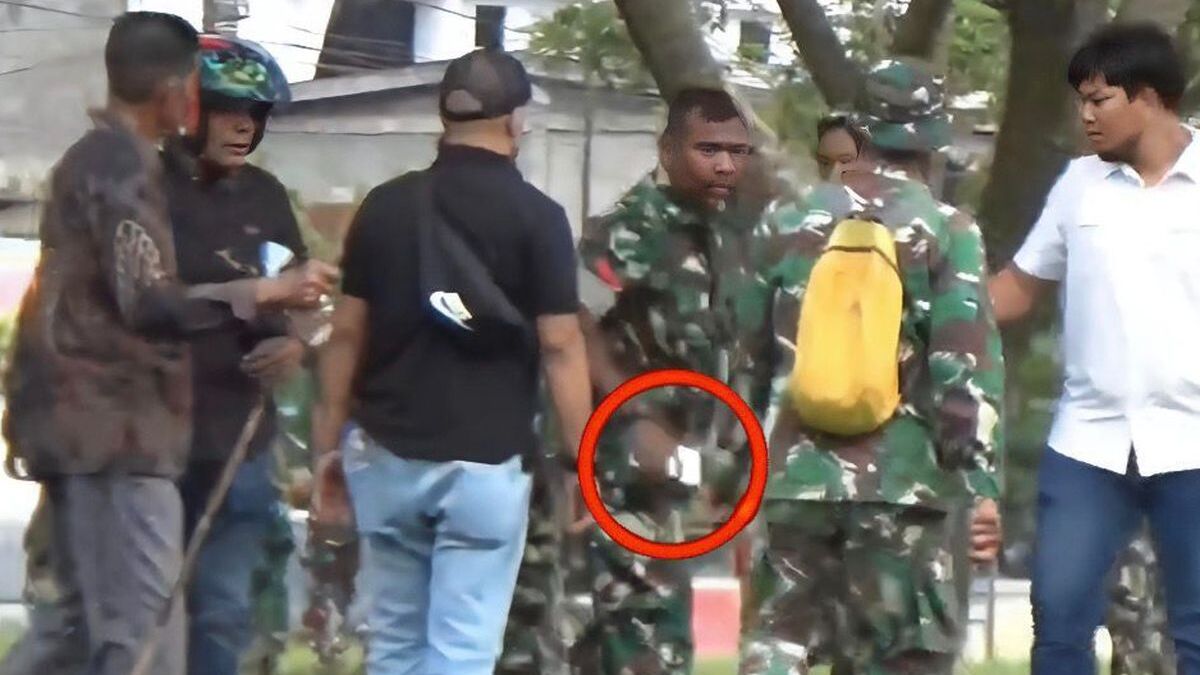
Moments later, another soldier identified as Private First Class Junaidi allegedly returned and attempted to forcibly seize Fazil’s phone, threatening to throw the device if the footage was not erased.
During a brief physical struggle, the phone was damaged and rendered unusable, directly disrupting Fazil’s work. AJI said the video itself remained intact.
Fazil told the officer that he was not a social media content creator but a professional journalist working under the Press Law and bound by the Journalistic Code of Ethics.
“A blatant abuse of power”
The chair of AJI Lhokseumawe, Zikri Maulana, described the incident as more than a disciplinary lapse.
“This act of coercion shows a lack of understanding by the authorities of press law and freedom of expression,” he said, calling the threat and seizure “blatant intimidation” by an armed state agent against a civilian journalist.
AJI argued that the actions amounted to an unlawful obstruction of journalistic work, which carries criminal sanctions under Article 18(1) of Law No. 40 of 1999 on the Press. The provision allows for penalties of up to two years’ imprisonment or fines of up to IDR 500 million for anyone who deliberately hinders press freedom.
“Journalists are protected by law,” AJI said, adding that state officials are obligated to safeguard the press—not become a source of fear.
Military acknowledges wrongdoing
The Indonesian Army later acknowledged the incident. Lieutenant Colonel Jamal Dani Arifin, Commander of Military District Command (Kodim) 0103 North Aceh, confirmed that one of his personnel had seized Fazil’s phone.
“Honestly, I admit that the action cannot be justified,” Jamal Dani said on 26 December. He said disciplinary measures would be taken in accordance with military regulations and emphasised that the army regarded journalists as partners.
“We share the same role in creating objective and balanced reporting,” he said, characterising the incident as a technical error arising from tensions at the protest site.
Kodim officials also confirmed that the phone was returned shortly after the incident, and said efforts were under way to resolve the matter amicably. A mediation meeting had yet to take place, as Fazil remained in the field covering flood-related reporting.
AJI demands accountability and protection
Despite the acknowledgement, AJI Lhokseumawe said the case must not be treated lightly.
The organisation demanded a thorough investigation and firm sanctions against the alleged perpetrator by the Commander of the Indonesian National Armed Forces, Agus Subiyanto, and the Commander of the Iskandar Muda Military Region, Joko Hadi Susilo.
AJI also called for compensation for the damaged equipment and concrete guarantees of safety for journalists reporting in Aceh, particularly in disaster-prone or high-tension situations.
“The press is not an enemy of the state,” the statement said. “Journalists’ cameras are not a security threat. If armed officers are allergic to journalistic work, then the problem lies not with the press, but with the repressive mentality of those officers.”
Part of a broader pattern of pressure
The incident has heightened concern among media advocates about growing pressure on journalists covering disasters in Sumatra.
Earlier in December, AJI at the national level criticised statements by senior military and government figures urging journalists to avoid highlighting shortcomings in the state’s disaster response, warning that such rhetoric risked encouraging censorship and self-censorship.
Press freedom groups argue that intimidation—whether through direct actions in the field or indirect pressure to produce “positive” coverage—undermines public access to accurate information, particularly during emergencies when scrutiny of authorities is most critical.
“Violence against journalists is a crime against democracy,” AJI Lhokseumawe said, urging authorities to ensure the incident in North Aceh does not set a precedent for future restrictions on the press.